
Ukrainian Drones Target Russian Oil Production in Caspian Sea, Halting Key Operations
 Aime Summary
Ukrainian long-range drones have launched a third strike in less than a week against a Russian oil production platform in the Caspian Sea, targeting the Korchagin oil and gas condensate field and forcing a halt in operations. The attack was carried out by the Security Service of Ukraine (SBU), according to sources within the agency, marking a significant escalation in Kyiv’s campaign against Moscow’s energy infrastructure.
The Korchagin platform, operated by Lukoil-Nizhnevolzhskneft, suffered critical damage in the drone strike, disrupting production and contributing to Ukraine’s broader strategy to cut Russia’s oil revenues. The operation follows two previous attacks on the same field and the nearby Filanovsky field, both of which were also operated by Lukoil-Nizhnevolzhneft and located within Russia’s Caspian Sea sector. The Filanovsky field is estimated to hold reserves of 129 million tons of oil and 30 billion cubic meters of gas, making it one of Russia’s largest offshore deposits.
The repeated targeting of these facilities signals a strategic shift in Ukraine’s deep-strike campaign, which has expanded from land-based refineries and ports to include maritime energy infrastructure. The SBU’s Alpha Special Operations Center has been responsible for all three attacks, deploying long-range drones to inflict damage on critical equipment and operations at the targeted platforms.
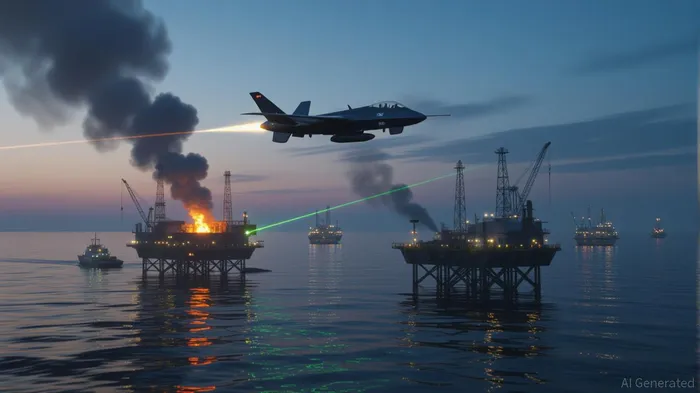
These strikes align with Kyiv’s broader efforts to weaken Russia’s ability to fund its war in Ukraine. According to an SBU source, the agency is systematically working to reduce the flow of petrodollars into Moscow’s budget, emphasizing that “no Russian facility working for the war is safe, regardless of its location.” The attacks have not only disrupted oil production but also sent a clear message that Ukraine’s reach now extends deep into Russia’s energy supply chain, including remote and previously less-accessible areas.
The Korchagin field, which has a reported annual production capacity of 1 billion cubic meters of gas and about 7.33 million barrels of oil in 2023, plays a critical role in Russia’s energy exports. The recent suspension of operations at the site could have short-term impacts on Lukoil’s output, though the long-term economic effect remains to be seen. Still, the cumulative effect of multiple strikes on Russian energy assets may contribute to a gradual decline in Moscow’s ability to generate war-related revenues through oil and gas.
Ukraine has been increasingly leveraging advanced drone technology to conduct precision strikes on key sectors of Russia’s economy, with a focus on energy infrastructure. The campaign reflects a broader strategy to apply economic pressure on Russia by disrupting its financial lifelines. As Kyiv continues to expand its targeting of energy assets, the implications for Russia’s war economy could intensify, particularly if the attacks are sustained and repeated over time.
The attacks come amid diplomatic efforts to mediate the conflict, with Ukrainian President Volodymyr Zelenskyy and U.S. envoys meeting with European leaders to advance a potential peace agreement. While the strikes could influence negotiations by reducing Russia’s financial resources, analysts warn that the effectiveness of such campaigns depends on the scale and continuity of the operations. Ukraine’s continued ability to conduct these deep-strike operations will be a key factor in determining their strategic and economic impact.
In summary, the third drone attack on the Korchagin platform underscores Ukraine’s growing capacity to strike at the heart of Russia’s energy sector. With repeated attacks on key offshore fields, Kyiv is deepening its campaign to weaken Moscow’s financial support for the war, shifting from a focus on land-based infrastructure to a broader, more diversified strategy that includes maritime and deep-rear operations.

Stay ahead of the market.
Get curated U.S. market news, insights and key dates delivered to your inbox.


AInvest
PRO
AInvest
PRO



Comments
No comments yet