
The Ukrainian Defense Revolution: How War is Fueling a New Era of Military Innovation and Investment Opportunities


 Aime Summary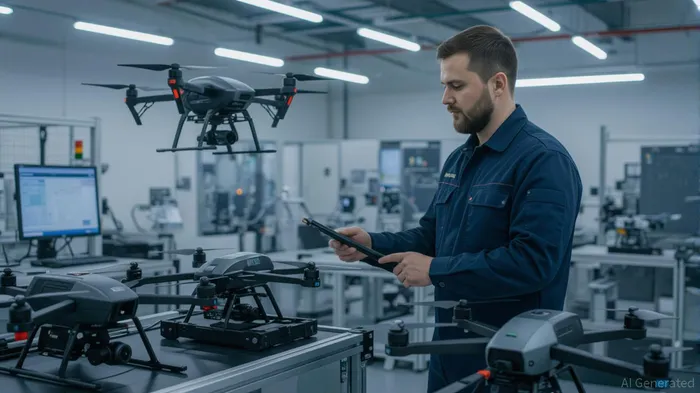
The war in Ukraine has become an unlikely catalyst for a defense industry renaissance. What began as a desperate scramble to survive has evolved into a global blueprint for rapid innovation, resilience, and industrial transformation. As Russia's invasion forced Ukraine to rebuild its military-industrial base from the ground up, the country has not only met the immediate demands of war but has also positioned itself as a leader in next-generation defense technologies. For investors, this represents a unique opportunity to capitalize on a sector reshaping the future of warfare—and the global markets that support it.
The Catalyst: War as a Driver of Innovation
When Russia launched its full-scale invasion in 2022, Ukraine's defense industry was ill-prepared. Reliant on foreign imports and plagued by inefficiencies, the sector faced an existential crisis. But necessity bred innovation. By 2024, Ukraine had transformed into a hub of military-industrial creativity, with over 500 active arms producers and nearly 300,000 employees. The government's Brave1 platform, which supports 1,500 military tech startups, has become a launchpad for breakthroughs in uncrewed aerial vehicles (UAVs), electronic warfare, and AI-driven logistics.
The results? Ukraine now produces over five million drones annually, with full localization of critical components like motorsGM--, flight controllers, and GPS-denied navigation systems. Companies such as DroneUA/Futurology, Bavovna, and Sine Engineering are not just surviving—they're thriving, developing technologies that outpace traditional defense contractors in speed, adaptability, and cost efficiency.
The Global Shift: From Aid Recipient to Defense Powerhouse
Ukraine's rise is not just a national story—it's a seismic shift in global defense markets. The country's wartime innovations are being studied by NATO allies and integrated into international supply chains. For example, Canada's $2 billion aid package includes partnerships to localize drone production using Canadian imaging tech and F-16 pilot training. This model—where aid is reinvested into local ecosystems—is being replicated by the EU and other partners, creating a new paradigm for defense industrialization.
The European Union's recent decision to grant Ukraine “associated country” status in its Defense Fund is a game-changer. This opens access to €1 billion in collaborative projects, with Ukrainian firms now competing on equal footing with European giants like Rheinmetall and Thales. Meanwhile, Denmark's Export and Investment Fund (EIFO) has injected $5 million into D3, a venture fund focused on Ukrainian defense startups, signaling growing confidence in the sector's potential.
Investment Opportunities: Where to Put Your Money
The Ukrainian defense sector is attracting a mix of domestic and international capital. Private investments in 2025 have already surpassed $45 million, with funds like MITS Capital and D3 leading the charge. Here are three key areas to watch:
Drone and AI Startups:
Companies like DroneUA/Futurology and Bavovna are redefining drone warfare. Their products, tested under real combat conditions, offer unmatched agility and cost efficiency. For investors, these firms represent high-growth opportunities, particularly as NATO allies seek to integrate their technologies into their own arsenals.Defense Partnerships with Western Firms:
Collaborations between Ukrainian companies and Western defense giants are accelerating. Rheinmetall and AeroVironment are already involved in joint ventures to modernize Ukraine's production lines. These partnerships not only boost Ukraine's capabilities but also create value for their Western counterparts, who gain access to cutting-edge Ukrainian tech.State-Led Industrial Programs:
The Zbroyari program, a $10 billion initiative to fund domestic arms production, is a critical driver. While it has secured $1.5 billion so far, its success hinges on continued Western support. Investors should monitor its progress, as it could unlock significant returns for firms involved in its supply chain.
Risks and Realities: Navigating the Challenges
Ukraine's defense industry is not without its hurdles. Fragmentation, outdated infrastructure, and reliance on Western aid remain pressing issues. The decentralized model that enabled rapid production in the war's early stages has also led to inefficiencies and interoperability problems. However, these challenges are being addressed through reforms like the corporatization of UkrOboronProm and the adoption of OECD governance standards.
For investors, the key is to focus on firms and funds that are actively solving these problems. Look for companies with strong partnerships, scalable technologies, and clear pathways to global markets. Avoid overexposure to firms that lack transparency or are overly dependent on short-term government contracts.
The Bottom Line: A War-Driven Revolution with Global Payoffs
Ukraine's defense industry is a testament to human ingenuity under pressure. What began as a survival strategy has evolved into a blueprint for the future of warfare—one that prioritizes speed, adaptability, and technological integration. For investors, this is more than a geopolitical story; it's a market transformation in motion.
As the war continues, so too will the innovations emerging from Ukraine. The question for investors is not whether to participate—but how to position themselves to benefit from a sector that is redefining the rules of modern conflict.
Final Call to Action:
- Short-Term: Consider exposure to Western defense firms partnering with Ukraine (e.g., AeroVironment, Rheinmetall).
- Long-Term: Monitor Ukrainian startups gaining traction in the EU Defense Fund and D3's portfolio.
- High-Risk/High-Reward: Invest in early-stage Ukrainian defense tech funds like D3 or MITS Capital.
The war in Ukraine is not just a crisis—it's an opportunity. And for those who act now, the rewards could be as transformative as the innovations themselves.

Blending traditional trading wisdom with cutting-edge cryptocurrency insights.
Latest Articles
Stay ahead of the market.
Get curated U.S. market news, insights and key dates delivered to your inbox.
AInvest
PRO
AInvest
PRO



Comments
No comments yet