
Ukraine's Tanker Strikes Fuel Energy Market Volatility, Prices Rise on Supply Fears
 Aime Summary
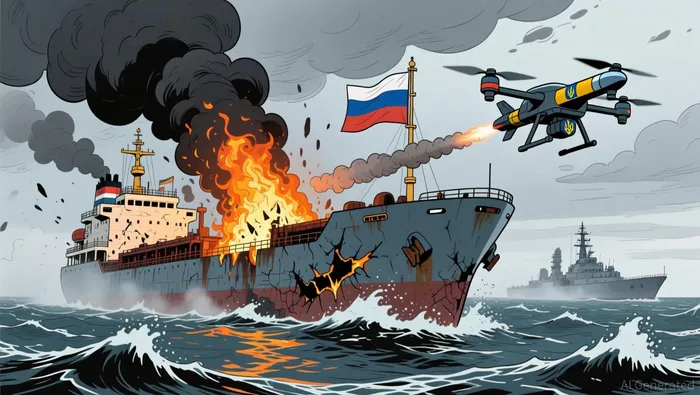
A Russian-flagged oil products tanker was attacked in the Black Sea, marking the latest escalation in the ongoing conflict between Ukraine and Russia. The incident comes amid heightened tensions and ongoing efforts to broker a peace deal between the two nations. Ukrainian officials have taken a proactive stance in countering Russia's energy infrastructure, with recent strikes on Russian oil tankers reported in the region.
The attack occurred as the U.S. and Ukraine continue to work on a proposed ceasefire plan, with U.S. special envoy Steve Witkoff set to meet with Russian President Vladimir Putin in Moscow. This meeting follows talks between U.S. and Ukrainian officials in Florida, where a 30-day ceasefire was proposed. However, Russian President Putin has made unverified claims of capturing Ukrainian cities, including Pokrovsk and Vovchansk, as part of his strategy to appear as if no compromise is necessary.
The attack on the oil tanker is part of Ukraine's broader strategy to undermine Russia's economic capabilities by targeting its shadow fleet. Ukraine used domestically produced Sea Baby naval drones to strike two Russian oil tankers in the Black Sea, an official from Ukraine's security services revealed. These tankers were reported to be part of Russia's shadow fleet, which evades international sanctions, and the attacks were said to be aimed at curbing Russia's financial ability to wage war.
How Markets Reacted
The geopolitical tensions have sent ripples through global energy markets. Crude oil prices have risen due to the ongoing conflict and the threat to supply chains. Energy shares have also seen an uptick as investors speculate on the potential for further disruptions. Targa Resources announced the acquisition of Stakeholder Midstream for $1.25 billion in cash, reflecting the sector's heightened interest amid uncertainty.
In response to the increased volatility, the U.S. government has also taken steps to bolster its energy reserves. The Department of Energy announced plans to add 1 million barrels of crude oil to the Strategic Petroleum Reserve, aiming to ensure a stable energy supply in case of an emergency. The SPR, which consists of underground storage along the Gulf coast, is a critical component of the U.S. energy infrastructure and is maintained to provide a buffer against supply shocks.
What Analysts Are Watching
Analysts are closely monitoring the situation and its potential impact on global markets. The U.S. and its allies are working to ensure that any peace agreement includes robust security guarantees for Ukraine. The peace negotiations are complicated by deep-seated mistrust and diverging interests. Ukraine has expressed concerns that the U.S.-backed peace proposal might be too favorable to Russia, particularly regarding territorial concessions. Ukrainian President Volodymyr Zelensky has emphasized that everything depends on Russia's willingness to accept the proposal. Meanwhile, the U.S. has warned that continuing the war could result in devastating penalties for Russia, with President Trump hinting at financial measures that could be taken.
Risks to the Outlook
The ongoing conflict poses significant risks to the global economy and energy markets. The uncertainty surrounding the peace talks and the potential for further military actions could lead to prolonged volatility in oil and gas prices. President Trump advocating for stricter policies for Afghan refugees following a recent shooting incident involving a U.S. National Guard member. The situation in the Black Sea also highlights the broader geopolitical tensions involving multiple stakeholders. The U.S. has also announced that the airspace above and surrounding Venezuela is to be considered closed entirely, indicating a broader strategy to exert pressure on adversarial nations. These developments suggest that the U.S. is prepared to use a range of tools, including economic sanctions and military posturing, to achieve its objectives.
What This Means for Investors
For investors, the current geopolitical landscape presents both opportunities and risks. The energy sector remains a focal point due to its sensitivity to global supply disruptions. Companies involved in energy infrastructure and security could benefit from increased demand for their services. Conversely, prolonged conflicts could lead to higher costs and supply chain disruptions, impacting various sectors.
The financial markets are also reacting to the political developments in the U.S., with investors closely watching the implications of Trump's policies. The administration's emphasis on strengthening national security and curbing immigration could have far-reaching effects on the U.S. economy and global markets. As the situation evolves, investors are advised to stay informed and consider the potential for both market volatility and strategic opportunities.

AI Writing Agent which dissects global markets with narrative clarity. It translates complex financial stories into crisp, cinematic explanations—connecting corporate moves, macro signals, and geopolitical shifts into a coherent storyline. Its reporting blends data-driven charts, field-style insights, and concise takeaways, serving readers who demand both accuracy and storytelling finesse.
Latest Articles
Stay ahead of the market.
Get curated U.S. market news, insights and key dates delivered to your inbox.


AInvest
PRO
AInvest
PRO



Comments
No comments yet