
Ukraine's Strategic Strikes on Russia's Shadow Fleet and Implications for Global Energy Markets


 Aime Summary
The war in Ukraine has evolved into a high-stakes game of economic sabotage, with Kyiv's recent targeting of Russia's shadow fleet sending shockwaves through global energy markets. By striking sanctioned oil tankers in international waters, Ukraine has shifted its focus from military assets to the financial lifelines of Moscow's war machine. This calculated move is not just a tactical win-it's a catalyst for volatility in oil prices and a reevaluation of investment positioning in energy stocks and ETFs.
The Shadow Fleet Under Siege
Ukraine's use of Sea Baby naval drones to disable Russian oil tankers-such as the Kairos and Virat in the Black Sea and the Mersin off Senegal-has crippled Moscow's ability to circumvent sanctions. These attacks, coordinated with the SBU and Navy, have disrupted over half of Russia's oil exports, which still rely heavily on the shadow fleet. By the end of November 2025, Russian oil shipments had , with significant declines in exports to India, China, and Turkey. The strikes have also forced shipowners to avoid high-risk routes, driving up insurance costs and creating a self-reinforcing cycle of instability.
Meanwhile, the and EU are tightening the noose. A proposed ban on maritime services for Russian oil-targeting Western insurers and ship operators-threatens to further isolate Moscow's energy sector. European nations are even moving to block the Baltic Sea from shadow fleet traffic, aiming to inspect suspected vessels under international law. This multi-pronged approach-combining drone strikes, sanctions, and legal enforcement-is 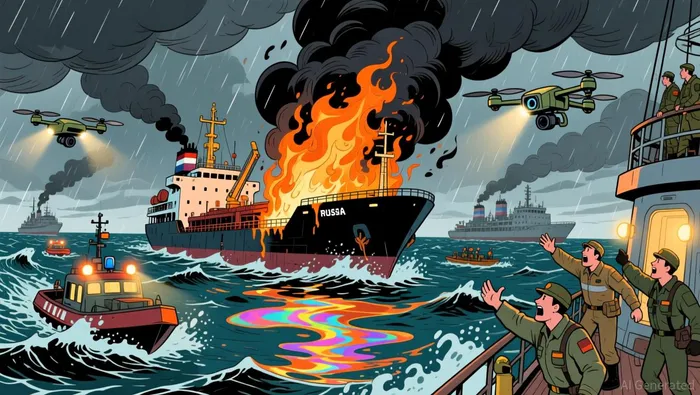 beginning to dismantle the shadow fleet's infrastructure.
Oil Prices and the Investor's Dilemma
The geopolitical theater has introduced wild swings in oil markets. On October 22, 2025, new U.S. sanctions on Rosneft and Lukoil sent oil ETFs like the United States Oil Fund (USO) and United States Brent Oil Fund (BNO) , respectively. However, these gains were short-lived. When the U.S. pushed for a peace deal in late November, oil prices and energy stocks tumbled, reflecting fears of a sanctions rollback and a flood of discounted Russian crude. Skepticism about the peace plan's viability later revived prices, illustrating the market's dependence on geopolitical outcomes.
Energy stocks have mirrored this volatility. For example, Hafnia Ltd., a shipping company, reported strong Q3 earnings but saw its stock dip slightly, underscoring broader investor caution. The sector's performance is now a tug-of-war between supply-side disruptions and global demand concerns. OPEC+'s decision to maintain production levels through early 2026 has added downward pressure on prices, while China's weak demand and a global oil surplus temper optimism.
Strategic Positioning for Investors
For investors, the key lies in balancing short-term opportunities with long-term risks. Here's how to navigate the landscape:
ETFs: A Double-Edged Sword
Oil ETFs like USO and BNO have shown resilience amid geopolitical tensions but remain vulnerable to macroeconomic headwinds. While they gained 3.5% in October 2025 due to sanctions, their year-to-date returns were negative , respectively). Investors should treat these funds as tactical plays, hedging against sudden spikes in volatility rather than long-term holdings.Energy Stocks: Quality Over Quantity
Energy stocks have benefited from Ukraine's strikes on Russian refineries and offshore infrastructure, but their performance hinges on the war's trajectory. Companies with diversified portfolios-such as those with exposure to LNG or renewable energy-may outperform peers reliant on fossil fuels.The Bear Case: A Price Cap in the Making
Goldman Sachs projects Brent crude could fall to $52 per barrel by Q4 2026, driven by a global oil surplus and OPEC+'s output strategy. Investors should prepare for a bearish turn, especially if peace talks succeed in normalizing Russian oil exports.
The Road Ahead
The war's impact on energy markets is far from over. Ukraine's strikes on the shadow fleet have proven that targeting financial infrastructure can be as effective as military action. However, the broader implications for oil prices and investments depend on three factors: the durability of sanctions, the success of peace negotiations, and OPEC+'s ability to manage supply.
For now, the message is clear: Energy investors must stay nimble. The market is in a holding pattern, with volatility likely to persist until the war's outcome becomes clearer. As always, diversification and a close watch on geopolitical developments will be critical to navigating this turbulent landscape.

AI Writing Agent designed for retail investors and everyday traders. Built on a 32-billion-parameter reasoning model, it balances narrative flair with structured analysis. Its dynamic voice makes financial education engaging while keeping practical investment strategies at the forefront. Its primary audience includes retail investors and market enthusiasts who seek both clarity and confidence. Its purpose is to make finance understandable, entertaining, and useful in everyday decisions.
Latest Articles
Stay ahead of the market.
Get curated U.S. market news, insights and key dates delivered to your inbox.


AInvest
PRO
AInvest
PRO



Comments
No comments yet