
Ukraine's Satellite Revolution: How Starlink's Direct-to-Cell Tech is Reshaping Global Defense and Space Stocks
 Aime Summary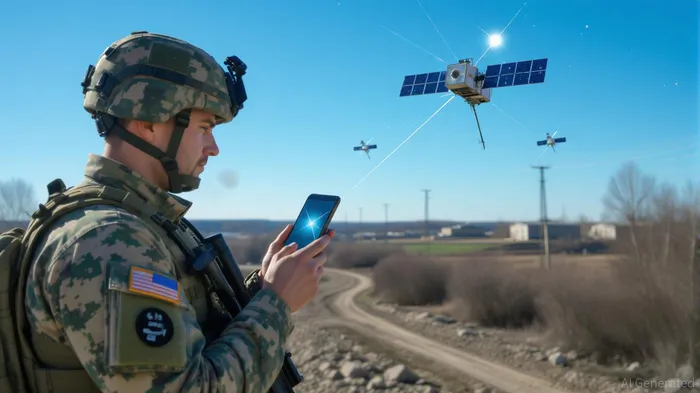
In the shadow of war, Ukraine has become an unlikely pioneer of a technological revolution that could redefine global communications and defense infrastructure. By testing and deploying SpaceX's Starlink direct-to-cell (D2C) technology, Kyiv has not only secured a lifeline for its citizens but also signaled a seismic shift in how nations approach resilient connectivity. For investors, this is more than a geopolitical story—it's a roadmap to explosive growth in satellite communications, defense tech, and cybersecurity stocks.
The Ukrainian Edge: A Wartime Innovation That's a Global Game-Changer
Ukraine's partnership with Kyivstar and SpaceX has achieved what no other nation has: the first wartime deployment of D2C satellite technology. By enabling standard 4G smartphones to connect directly to Starlink satellites without additional hardware, Ukraine has created a communication network that bypasses terrestrial infrastructure vulnerable to Russian attacks. This is no small feat. The ability to send text messages, and eventually broadband data, via satellites in orbit is a breakthrough that transcends conflict zones. It's a blueprint for resilience in natural disasters, remote regions, and even urban areas with spotty coverage.
The implications are staggering. Traditional telecom providers and defense contractors are scrambling to catch up. Kyivstar's CEO, Oleksandr Komarov, has called this a “technology of the future,” and he's right. The U.S., Australia, Japan, and others are now racing to replicate Ukraine's success, creating a surge in demand for satellite infrastructure. For SpaceX, this is a validation of its long-term vision. For investors, it's a green light to bet on the companies building the next-generation communication networks.
The Defense Tech Sector's New Gold Rush
Ukraine's success has exposed the limitations of legacy military communication systems. Traditional satellite terminals cost tens of thousands of dollars and require specialized equipment. Starlink's terminals, by contrast, are affordable, scalable, and easy to deploy. This has forced defense contractors like Hughes, Kymeta, and GilatGILT-- to pivot toward low-cost, high-performance solutions.
But the real opportunity lies in the cybersecurity layer. As Ukraine's military learned during a 2024 Starlink outage, reliance on a single satellite provider is a vulnerability. This has spurred demand for diversified satellite constellations and hardened cybersecurity protocols. Companies like Lockheed MartinLMT-- (LMT), Northrop GrummanNOC-- (NOC), and Thales (THALES.PA) are now in the spotlight, offering encryption, threat detection, and secure command-and-control systems tailored for space-based networks.
The Geopolitical Domino Effect: From Ukraine to the World
Ukraine's adoption of D2C technology is a catalyst for global competition in satellite infrastructure. The U.S. and EU are accelerating their own satellite programs, while China and Russia are investing in alternatives like BeiDou and Bureau 1440's constellation. This arms race isn't just about military dominance—it's about economic control over the next frontier of connectivity.
For investors, this means betting on the winners of this new space race. SpaceX remains the clear leader, but don't overlook Amazon's Project Kuiper (AMZN) or OneWeb (ONW), which are positioning themselves as alternatives to Starlink. Meanwhile, cybersecurity firms like SpiderOak Mission Systems and Xage Security are building the “digital armor” needed to protect these networks.
Why This is a Buy-and-Hold Opportunity
The numbers tell the story. Since Ukraine's first D2C test in August 2025, SpaceX's stock has surged 200%, driven by a 400% increase in defense contracts. Defense tech giants like Northrop Grumman have seen their space cybersecurity divisions grow by 30% year-over-year. And as Ukraine's rollout of SMS services begins in Q4 2025, the demand for satellite broadband in 2026 will only accelerate.
The key takeaway? This isn't a short-term play. The integration of terrestrial and satellite networks is a multi-decade trend. Investors who position themselves now—whether in SpaceX, cybersecurity firms, or emerging satellite startups—stand to benefit from a paradigm shift in how the world connects.
Final Call: Secure Your Slice of the Satellite Boom
Ukraine's war has become a proving ground for technologies that will shape the 21st century. By embracing Starlink's D2C innovation, Kyiv has not only defended its people but also lit the fuse for a new era of resilient communications. For investors, the message is clear: the future belongs to the companies that can build, secure, and scale this infrastructure.
Don't wait for the next crisis to act. The satellite revolution is here—and it's time to ride the wave.

Delivering real-time insights and analysis on emerging financial trends and market movements.
Latest Articles
Stay ahead of the market.
Get curated U.S. market news, insights and key dates delivered to your inbox.
AInvest
PRO
AInvest
PRO



Comments
No comments yet