
U.S.-Ukraine Minerals Deal: A Strategic Shift in Global Resources and Geopolitics
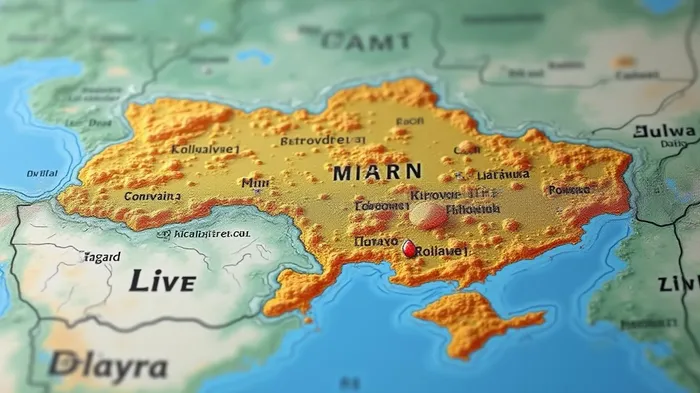
On April 30, 2025, the U.S. and Ukraine signed a landmarkLARK-- minerals agreement aimed at reshaping global resource dynamics and securing long-term strategic interests. The deal, dubbed the U.S.-Ukraine Reinvestment Fund, grants American access to Ukraine’s critical minerals in exchange for military and financial support, marking a pivotal moment in post-invasion geopolitics.
The Deal’s Terms: A Mutual Lifeline
The agreement centers on 55 minerals, including rare earth elements (REEs), titanium, lithium, and uranium. Ukraine will contribute 50% of future profits from government-owned natural resources to a joint fund managed equally by both nations. In return, the U.S. will provide direct financial aid, advanced military equipment (e.g., air defense systems), and technical expertise. Crucially, profits will not be withdrawn for the first 10 years, with proceeds reinvested into mining, energy infrastructure, and reconstruction.
This structure avoids the earlier controversial demand that Ukraine repay $500 billion in mineral profits as wartime compensation—a clause Kyiv had rejected as unsustainable. Instead, the deal emphasizes mutual benefit: the U.S. secures access to resources critical for technology and defense, while Ukraine gains the financial and military support needed to counter Russian aggression.
Key Data Points:
- The fund’s first decade will see $30 billion in projected reinvestment, per U.S. Treasury estimates.
- Ukraine’s titanium reserves rank among Europe’s largest, while its lithium deposits could supply 15% of global EV battery demand by 2030.
Geopolitical Stakes: Breaking China’s REE Monopoly
The U.S. has long sought to diversify its supply chains for REEs, which are vital for semiconductors, EVs, and defense systems. China currently controls 90% of global REE production, a leverage point in trade disputes. The Ukraine deal aims to reduce this dependency by tapping into Kyiv’s untapped reserves.
However, challenges loom. Nearly 40% of Ukraine’s mineral-rich regions remain under Russian occupation, and outdated Soviet-era geological surveys hinder accurate resource mapping. “The real prize is access to unexplored deposits,” said The New York Times analyst, noting that 70% of Ukraine’s mineral potential is unmapped.
Expert Take:
- Ukraine’s Economy Minister Yulia Svyrydenko: “This is not a sell-off—it’s a partnership to rebuild and secure our future.”
- U.S. Treasury Secretary Scott Bessent: “Reducing reliance on Chinese REEs is a national security imperative.”
War Context: Resources as a Weapon of Survival
The deal is inextricably tied to Ukraine’s ongoing war with Russia. Kyiv views the agreement as a guarantee of sustained U.S. military aid, which has totaled $100 billion since 2022. Meanwhile, the U.S. aims to incentivize Kyiv to engage in stalled peace talks, though Moscow remains defiant.
Critical Statistic:
- Over 20% of Ukraine’s territory is under Russian control, but the deal excludes occupied regions, focusing on areas Kyiv can access.
Conclusion: A High-Risk, High-Reward Gamble
The U.S.-Ukraine minerals deal is a bold strategic move with profound implications. For the U.S., it offers a pathway to resource independence and a counter to China’s dominance. For Ukraine, it provides the financial and military lifeline needed to survive and rebuild.
Yet risks abound: logistical hurdles, Russian resistance, and the 10-year reinvestment period could delay returns. Still, the deal’s success hinges on one key factor—security. As long as Kyiv holds the line against Russian advances, this agreement could redefine the 21st-century resource landscape.
Actionable Outlook: Investors should monitor rare earth prices and U.S.-Ukraine military coordination. For now, the deal is a win for both nations—but execution will determine its legacy.

Stay ahead of the market.
Get curated U.S. market news, insights and key dates delivered to your inbox.


AInvest
PRO
AInvest
PRO



Comments
No comments yet