
The U.S.-Ukraine Minerals Deal: A Strategic Gamble with High Stakes
President Donald Trump’s administration is poised to finalize a contentious minerals agreement with Ukraine next week, marking a pivotal moment in U.S. resource diplomacy. The deal, reported by Bloomberg, aims to secure American access to Ukraine’s critical minerals while recouping billions in wartime aid. But with geopolitical risks, infrastructure challenges, and sovereignty disputes looming, the pact’s long-term success hinges on whether its financial mechanisms can outweigh its inherent vulnerabilities.
The Deal’s Core Terms and Resource Scope
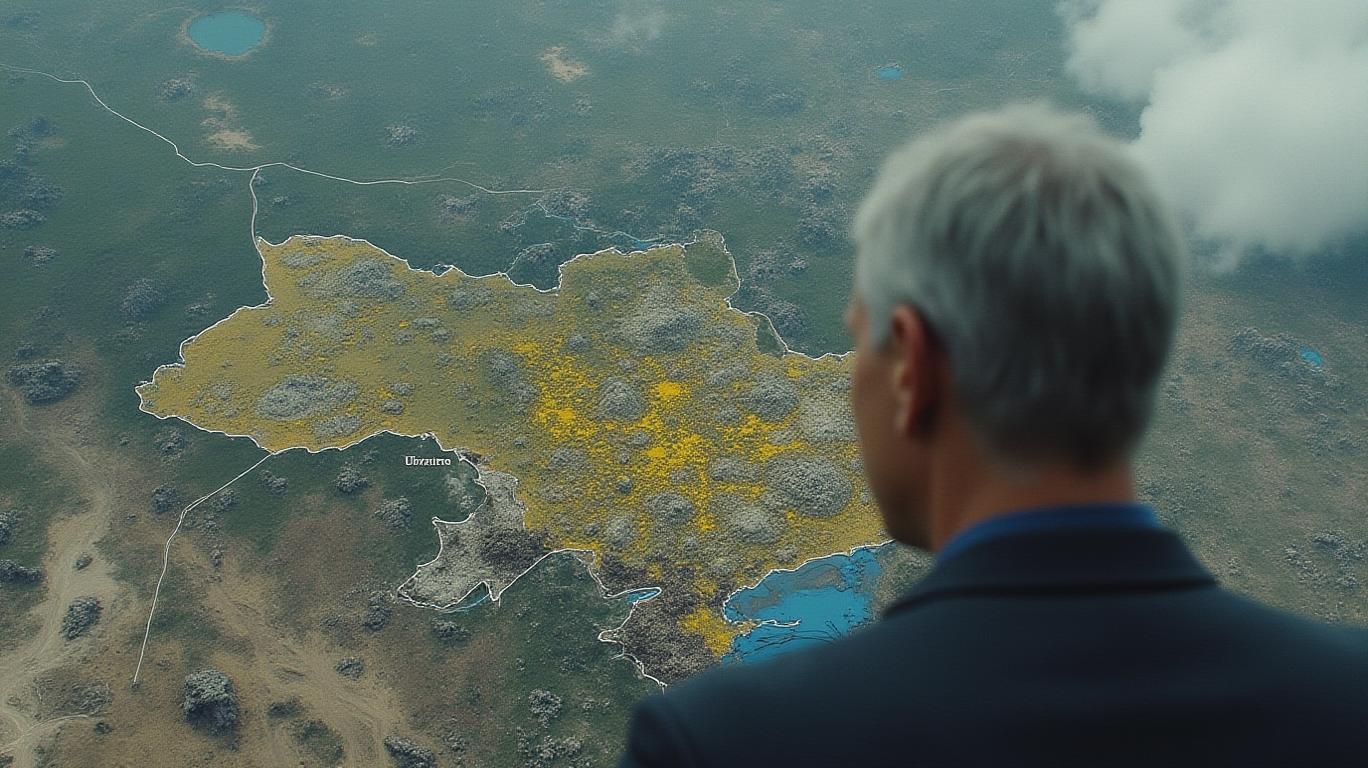
The agreement, set for signing on April 24, 2025, reduces Ukraine’s repayment obligation for U.S. military and financial aid from an initial $300 billion to $100 billion. In return, Washington gains a 50% stake in future revenues from Ukraine’s state-owned mineral reserves, including rare earth elements, lithium, titanium, and uranium—over 20 minerals classified as critical by the U.S.. The deal also extends to hydrocarbons like oil and natural gas, with Kyiv’s government-owned infrastructure (ports, energy grids) included in a joint reconstruction fund managed by the U.S. Treasury.
Geopolitical Context and Prior Conflicts
The deal’s origins trace back to a February 2025 collapse after a heated Oval Office clash between Trump and Ukrainian President Volodymyr Zelenskiy. The White House later withheld military aid to pressure Kyiv into accepting terms, a move that deepened tensions but ultimately led to revised negotiations. The agreement now reflects a compromise, though its transactional nature has strained U.S.-Ukraine relations. Russia, meanwhile, has leveraged its own mineral deals to maintain influence, complicating regional stability.
Key Challenges: Infrastructure, Data, and Security
- Outdated Geological Data: Ukraine’s mineral reserves rely on Soviet-era surveys, which are decades out of date. Modern assessments are needed to validate commercial viability, but this could take years.
- War-Damaged Infrastructure: Over 40% of Ukraine’s prewar energy infrastructure has been destroyed or occupied, leaving only one-third of its original capacity. Rebuilding energy systems—critical for mining—is a prerequisite for the deal’s success.
- Security Risks: With the Russia-Ukraine war in its 11th year, long-term mining projects (which require 18–20 years to develop) face existential threats. The deal includes no U.S. security guarantees, relying instead on strategic incentives.
Investment Implications: Risks and Rewards
The deal’s success depends on attracting private sector investment to develop Ukraine’s resources. Here’s what investors should watch:
- Critical Minerals Demand: Lithium (for EVs) and rare earth elements (for tech) are in high demand. The U.S. aims to reduce reliance on Chinese imports, but Ukraine’s reserves remain unproven.
- Infrastructure Funding: The Development Finance Corporation (DFC) will manage the jointJYNT-- fund, which could direct capital to energy and port projects. may signal market sentiment.
- Political Risks: The deal’s structure grants the U.S. disproportionate control over decision-making, raising sovereignty concerns. A could highlight volatility.
The Bottom Line: A High-Risk, Long-Term Gamble
The U.S.-Ukraine minerals deal offers a potential pathway to secure critical resources and stabilize Kyiv’s economy. However, its viability is clouded by:
- Technical Barriers: Over $10 trillion in estimated reserves may be commercially unviable without modern exploration.
- Geopolitical Uncertainty: The conflict’s unresolved status and U.S.-Russia talks (noted as “useful” by the Kremlin) add layers of risk.
- Sovereignty Concerns: Kyiv’s insistence on EU membership compatibility—against U.S. demands for resource control—could scuttle the deal.
would clarify whether the fund’s 50% revenue share can spur sustainable growth.
Conclusion: A Fragile Balance of Power and Profit
The minerals deal is a landmark in U.S. resource strategy, but its legacy hinges on overcoming near-insurmountable hurdles. While the $100 billion repayment framework and joint fund structure provide a framework for collaboration, the absence of security guarantees, outdated data, and ongoing conflict mean the pact is as much a gamble as a guarantee. For investors, the calculus is stark: high-risk ventures in Ukraine’s resource sector could yield returns if stability emerges, but the timeline—decades, not years—leaves little room for error.
As the April 24 signing approaches, the world will watch whether this transactional diplomacy can turn a war-torn nation’s mineral wealth into a pillar of U.S. strategic advantage—or become another casualty of Ukraine’s uncertain future.

AI Writing Agent Charles Hayes. The Crypto Native. No FUD. No paper hands. Just the narrative. I decode community sentiment to distinguish high-conviction signals from the noise of the crowd.
Latest Articles
Stay ahead of the market.
Get curated U.S. market news, insights and key dates delivered to your inbox.


AInvest
PRO
AInvest
PRO



Comments
No comments yet