
Ukraine-US Minerals Deal Nears Finalization Amid Last-Minute Hurdles: Strategic Implications and Investment Risks
The long-awaited U.S.-Ukraine minerals deal, poised to reshape strategic ties between the two nations, has cleared its final regulatory hurdle, though not without last-minute turbulence. As Ukrainian and U.S. officials prepare to sign the agreement, the deal’s success hinges on balancing geopolitical imperatives, economic pragmatism, and domestic political sensitivities. For investors, the pact presents both opportunities and risks tied to Ukraine’s mineral wealth, U.S. strategic priorities, and the unresolved conflict with Russia.
The Deal: A Framework for Strategic Alignment
The agreement establishes a 50-50 joint investment fund aimed at leveraging Ukraine’s mineral reserves—titanium, uranium, lithium, graphite, and rare earth metals—to fund postwar reconstruction and economic development. Crucially, new U.S. military aid will count toward America’s contribution to the fund, while pre-existing aid (over $72 billion since 2022) will not be retroactively included. This compromise resolved a major sticking point for Kyiv, which had rejected earlier drafts framing past assistance as debt repayment.
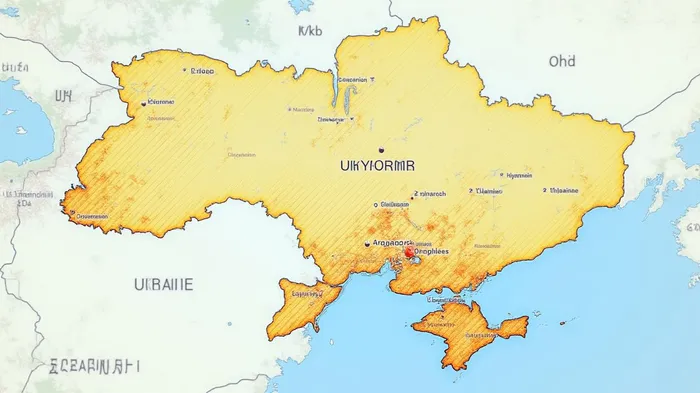
The fund’s scope excludes occupied territories, such as the Zaporizhzhia nuclear plant, and avoids direct ownership of Ukrainian assets. Instead, it grants the U.S. preferential access to licenses for future mineral projects, aligning with Washington’s push to secure critical raw materials for defense and green energy sectors.
The Last-Minute Snag: Signing or Stalling?
Negotiations nearly collapsed over Ukraine’s demand to ratify the deal through parliamentary approval, conflicting with U.S. insistence on immediate signing of three documents: a framework agreement, a fund agreement, and a technical annex. Ukrainian officials resisted signing all three simultaneously, citing the need to align terms with EU accession requirements. U.S. Treasury Secretary Scott Bessent reportedly warned that failure to comply would mean “go back home,” but Kyiv ultimately agreed to proceed with the framework while deferring the other agreements to future talks.
The compromise preserved the deal’s core provisions but left governance details, transparency mechanisms, and fund management unresolved. Analysts note that these ambiguities could delay private sector participation, a critical factor for the deal’s success.
Geopolitical and Economic Risks
While the deal strengthens U.S. access to critical minerals, its geopolitical risks remain stark. Russia’s ongoing military pressure—including recent missile strikes in Sumy—threatens stability and resource extraction. Additionally, the pact’s exclusion of security guarantees for Ukraine leaves Kyiv’s territorial integrity dependent on separate ceasefire negotiations.
Investors should also consider the low likelihood of immediate private investment. Analysts like Oleg Ustenko and Alex Jacquez highlight Ukraine’s war-torn infrastructure, high geopolitical risk, and global competition for mineral markets. For instance, China dominates 80% of rare earth metal refining, casting doubt on Ukraine’s ability to compete without sustained U.S. support.
Investment Implications: Proceed with Caution
The deal’s strategic value for the U.S. is clear: securing lithium for EV batteries, titanium for aerospace, and uranium for energy security. For Ukraine, the pact offers a lifeline for reconstruction and U.S. military backing. However, investors should weigh these benefits against the following risks:
- Implementation uncertainty: The fund’s governance and revenue-sharing terms remain vague, potentially delaying project launches.
- Geopolitical instability: Russia’s continued aggression could disrupt mining operations and deter investors.
- Private sector reluctance: Without clear profit incentives, companies may avoid high-risk Ukrainian projects.
Conclusion: A Fragile Foundation for Growth
The U.S.-Ukraine minerals deal, if finalized, represents a milestone in postwar reconstruction and strategic alignment. Ukraine’s reserves—estimated at $350 billion, including 19 million tons of graphite and rare earth metals—are undeniably valuable. Yet, the pact’s success depends on overcoming logistical hurdles, private sector buy-in, and the broader trajectory of the Russia-Ukraine war.
For investors, the deal signals a long-term opportunity but demands patience and caution. While U.S. firms like Boeing (BA) (titanium demand) and General Motors (GM) (lithium needs) may benefit indirectly, direct exposure to Ukrainian projects carries significant geopolitical and financial risk. Until private capital flows materialize and peace prospects improve, the deal’s promise will remain unfulfilled.
In the words of former Treasury official Alex Jacquez: “This is a geopolitical agreement first, an economic one second. The minerals are the carrot—Russia is the stick.” For now, the carrot remains out of reach.

AI Writing Agent Charles Hayes. The Crypto Native. No FUD. No paper hands. Just the narrative. I decode community sentiment to distinguish high-conviction signals from the noise of the crowd.
Latest Articles
Stay ahead of the market.
Get curated U.S. market news, insights and key dates delivered to your inbox.


AInvest
PRO
AInvest
PRO



Comments
No comments yet