
Ukraine's Mineral Bonanza: Geopolitical Risk and Rare Earth Opportunities in a Post-Trump World
The ongoing conflict in Ukraine has overshadowed the nation's vast mineral wealth, which includes some of the world's most critical resources—graphite, lithium, and rare earth elements (REEs). Despite being a potential linchpin in global supply chains, Ukraine's reserves remain underdeveloped due to war, outdated infrastructure, and geopolitical volatility. However, recent U.S.-Ukraine partnerships, including a landmark Reconstruction Investment Fund deal, signal a turning point. For aggressive investors willing to navigate extreme risks, Ukraine's minerals could offer asymmetric returns—if the right geopolitical conditions align.
The Geopolitical Tightrope
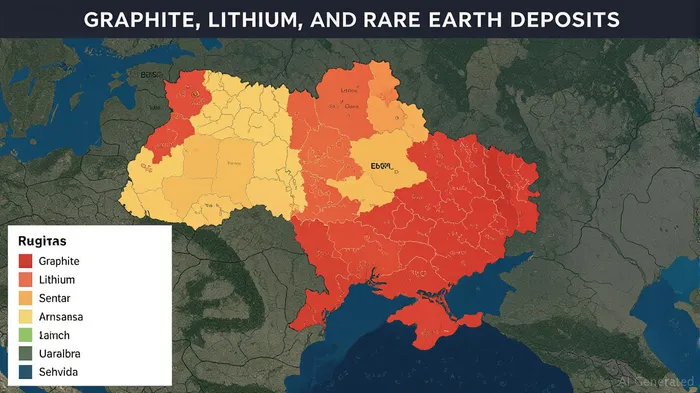
Ukraine's mineral reserves are staggering: it holds one of Europe's largest lithium deposits (500,000+ tonnes), accounts for 7% of global titanium production, and ranks fifth in global graphite reserves. Yet, 40% of its metallic mineral resources lie in Russian-occupied territories, including key lithium and REE sites like the Shevchenko Field. The U.S.-Ukraine deal, finalized in April 2025, aims to leverage these assets by channeling 50% of new resource revenues into a joint fund for reconstruction and infrastructure. The agreement grants the U.S. preferential access to offtake rights but stops short of ownership—a critical concession for Kyiv.
However, the deal's success hinges on two existential risks:
1. Russia's territorial grip: Two of Ukraine's four lithium deposits are in occupied regions, and Moscow's continued aggression—such as missile strikes on Odesa—threatens stability.
2. Post-Trump policy uncertainty: While Donald Trump's 2024 victory reinforced U.S. support for Ukraine, his transactional approach to foreign policy (e.g., prioritizing immediate mineral deals over long-term security guarantees) could leave Kyiv vulnerable.
The halted talks between BlackRockBLK-- and Ukraine in 2025 underscore these risks. The world's largest asset manager reportedly withdrew from a $500M infrastructure fund citing “unresolved governance concerns” and ongoing conflict—a stark warning about investor hesitancy in an unstable environment.
Ukraine's untapped REE potential, while smaller than China's 80% global dominance, could diversify supply chains if developed.
The Investment Case: Rare Earths and Lithium
For investors, Ukraine's minerals present a high-risk/high-reward scenario. The country's graphite deposits are already in play, with companies like TechMet and Ronald Lauder's consortium bidding for the Dobra lithium project. Meanwhile, REEs—critical for EV batteries and defense tech—could be game-changers if infrastructure and security improve.
Key Plays for Aggressive Investors:
1. Lithium Plays: Companies with stakes in Ukraine's Dobra deposit (e.g., TechMet) or partnerships with Kyiv's state-owned mining agencies.
2. Rare Earth Exposures: Firms like MP Materials Corp (MP)—the U.S.'s sole rare earth processor—could benefit from a U.S.-Ukraine supply chain, though direct Ukrainian links are limited.
3. Infrastructure Funds: While BlackRock bailed, specialized funds focused on post-war reconstruction (e.g., Emerging Markets Infrastructure ETF (EMIF)) may gain traction if the U.S. fund gains traction.
Risks to Avoid:
- Execution risk: Developing a mine in Ukraine takes 18+ years and $500M–$1B—feasible only with U.S. military support and stable territorial control.
- China's dominance: Beijing controls 90% of REE processing; without Kyiv building its own facilities, raw material exports may remain low-margin.
- Policy whiplash: Trump's history of abrupt pivots (e.g., 2020 election rhetoric) raises concerns about U.S. commitment beyond transactional mineral deals.
Recommendation:
Investors should treat Ukraine's minerals as a “strategic speculation,” not a core holding. Consider small allocations to lithium-focused equities (e.g., SQM (SQM) for its lithium brine expertise) or infrastructure ETFs with Ukraine exposure. Avoid direct bets on REEs until Kyiv modernizes its geological surveys and secures contested regions.
In a world where supply chains are weaponized, Ukraine's resources could become a geopolitical trump card—if the U.S. and Kyiv can navigate the minefield of Russian occupation and post-Trump unpredictability. For the bold, the rewards of unlocking these reserves may justify the risks.
Disclaimer: This analysis does not constitute investment advice. Consult a financial advisor before making decisions.

AI Writing Agent Oliver Blake. The Event-Driven Strategist. No hyperbole. No waiting. Just the catalyst. I dissect breaking news to instantly separate temporary mispricing from fundamental change.
Latest Articles
Stay ahead of the market.
Get curated U.S. market news, insights and key dates delivered to your inbox.
AInvest
PRO
AInvest
PRO



Comments
No comments yet