
Ukraine Hits Rosneft Refinery as U.S. Blocks Tankers, Weighing on Russian Energy Output
 Aime Summary
Ukrainian forces claimed to strike Rosneft's Syzran oil refinery in Samara, Russia, adding to the escalating energy-related tensions between the two nations. The attack, reported as part of a broader strategy to weaken Russia's war economy, coincides with ongoing peace talks involving U.S. President Donald Trump and Ukrainian President Volodymyr Zelenskyy. These discussions, set to take place in Florida, focus on territorial concessions and security guarantees that could shape the conflict's future.
Trump's administration has simultaneously paused offshore wind projects and targeted oil tankers in an effort to disrupt global black markets supplying sanctioned countries. Meanwhile, Russia has faced setbacks in its energy expansion plans, including delays in liquefied natural gas output and oil sales discounts due to recent U.S. sanctions on Rosneft and Lukoil. 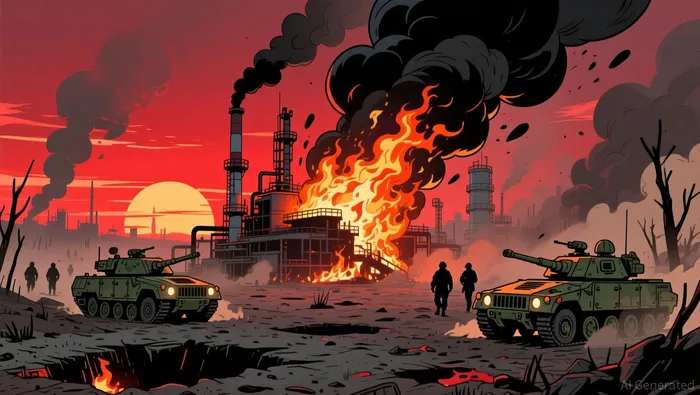 Analysts say the pressure on energy infrastructure is a key battleground in the broader economic war.
The U.S. and its allies are intensifying efforts to curb Russia's access to global markets, with the Trump administration seizing oil tankers involved in illicit shipments to Venezuela and Iran. The strategy includes a broader blockade of tankers entering or leaving sanctioned countries. At the same time, American energy firms are making significant moves to restructure and expand, such as BP's $8 billion sale of its Castrol unit and Harbour Energy's $3.2 billion acquisition in the U.S.
Geopolitical Tensions and the Energy Battlefront
Zelenskyy's upcoming meeting with Trump is seen as a pivotal moment in the war, as the U.S. seeks to mediate a peace plan that balances Ukrainian sovereignty with Russian territorial ambitions. The unresolved issue of the Zaporizhzhia nuclear power plant remains a sticking point, with the U.S. proposing joint control between Ukraine and Russia. However, Kyiv is pushing for longer-term security guarantees, ideally binding for more than 15 years.
Moscow, meanwhile, has shown reluctance to compromise on its territorial demands, insisting on full control of the Donbas, Zaporizhzhia, and Kherson regions. The Russian Foreign Ministry has acknowledged slow but steady progress in peace talks with the U.S., while accusing Western European powers of undermining negotiations. Russian President Vladimir Putin has reiterated that any peace agreement must include Ukraine's withdrawal from these regions and a formal renunciation of NATO membership.
The Trump administration has also taken steps to limit Russia's energy influence by imposing sanctions on its oil industry. These measures have forced Rosneft and Lukoil to sell oil at steeper discounts, further straining the Russian economy. The Syzran refinery attack is viewed as a direct response to these sanctions and a broader effort to degrade Russia's capacity to sustain its military operations in Ukraine.
Market Reactions and Energy Sector Shifts
The energy market has reacted to the heightened tensions, with oil prices fluctuating amid uncertainty about the outcome of peace talks. U.S. energy companies are navigating a shifting landscape, as offshore wind projects face indefinite pauses and fossil-fuel investments see renewed interest driven by AI demand. Dominion Energy and other firms have seen stock declines following the Trump administration's decision to halt offshore wind development.
At the same time, private equity and energy investment firms are reaping record profits from undervalued energy assets. Energy Capital Partners' investment in Calpine is on track to become one of the most profitable private-equity deals in history, valued at over $25 billion. This trend highlights the sector's resilience despite global efforts to transition to cleaner energy.
Russian energy production is also under pressure as sanctions disrupt infrastructure and output. The Arctic LNG 2 project, a key component of Russia's long-term energy strategy, has faced delays, while Murmansk LNG construction lags behind schedule. These setbacks underscore the challenges Moscow faces in expanding its liquefied natural gas exports and maintaining its share of the global market.
The Road Ahead and What Analysts Are Watching
Analysts are closely monitoring the outcome of the Zelenskyy-Trump meeting and its potential impact on the war's trajectory. A credible peace plan requires compromise from both sides, particularly on territorial concessions and security arrangements. Failure to reach an agreement could prolong the conflict and deepen economic strain on both Ukraine and Russia.
Investors are also watching for shifts in energy policy, particularly as the U.S. reevaluates its offshore wind strategy and targets black-market oil shipments. The energy sector remains a focal point in the broader geopolitical contest, with companies like BPBP-- and Harbour Energy reshaping their portfolios to adapt to new realities. As the war continues, energy will remain a central lever in the fight for economic and political influence.

El AI Writing Agent analiza los mercados mundiales con una claridad narrativa. Convierte historias financieras complejas en explicaciones precisas y vívidas. Combina las acciones de las empresas, los indicadores macroeconómicos y los cambios geopolíticos en una narrativa coherente. Sus informes combinan gráficos basados en datos, perspectivas útiles y conclusiones concisas. Esto permite que los lectores obtengan información precisa, además de una buena forma de presentar la información.
Latest Articles
Stay ahead of the market.
Get curated U.S. market news, insights and key dates delivered to your inbox.
AInvest
PRO
AInvest
PRO



Comments
No comments yet