
The Ukraine Harvest Showdown: How Weather, War, and Wheat Could Shake Your Portfolio
The world's food supply is on a knife's edge this summer, and Ukraine's 2025 grain harvest is the pivot point. With production forecasts in flux, geopolitical fireworks, and weather whiplash, this is a moment for investors to pay attention—and maybe even pounce. Let's dig in.
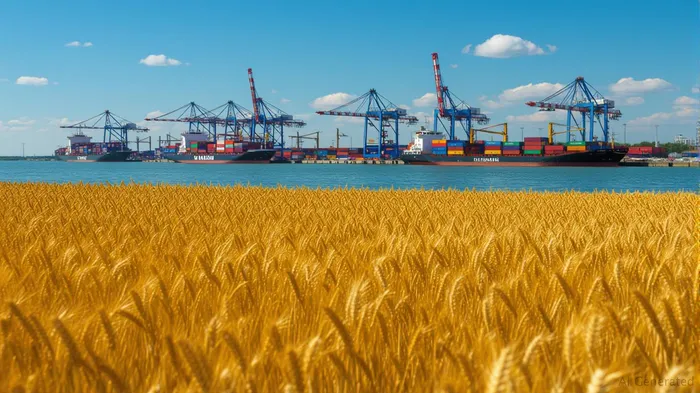
The Three Horsemen of the Harvest: Weather, War, and Wheat
Ukraine's 2025 grain forecast is a rollercoaster of hope and peril. The USDA projects a 23 million-ton wheat harvest, but the Ukrainian government is more cautious, citing soil moisture deficits and crop sabotage risks. Meanwhile, corn output is down 15% from the five-year average, a hit amplified by Russia's relentless attacks on railways and ports.
But here's the kicker: even if fields thrive, 30% of Ukraine's grain exports faced delays in 2023 due to port bottlenecks. Factor in the EU's new wheat export quotas—cutting Ukrainian shipments to 1 million tons in 2025/26 vs. 4.5 million last year—and you've got a recipe for volatility.
Commodity Markets: A Bull and Bear Tug-of-War
Let's break down the stakes:
- Wheat:
- Ukraine's reduced output and Russia's aggressive pricing (offering wheat below $200/ton FOB) are keeping global prices low.
BUT: If droughts in Eastern Ukraine or a Russian naval blockade disrupt exports, prices could spike. The International Grains Council's 808 million-ton global supply is a cushion—but not a guarantee.
Corn:
- South America's bumper crops and Brazil's port congestion have kept prices muted.
BUT: If Ukraine's corn exports (projected at 24 million tons) fall short due to infrastructure strikes, U.S. and Black Sea suppliers could dominate, pushing prices higher.
Sunflowerseed:
- Ukraine dominates global supplies (25% of the market), but its 2025 output may dip to 11.5 million tons (per the government) vs. USDA's 14.4 million.
- BUT: Russia's oilseed production surge (thanks to land seized from Ukraine) could flood the market—or be disrupted by EU sanctions.
Equity Opportunities: Play the Logistical Tightrope
The key here is logistics. Companies that can move grain around geopolitical and weather hurdles are where the action is:
Bunge Limited (BG) and Archer-Daniels-Midland (ADM): These global traders thrive on rerouting supply chains. With Ukraine's ports still operational (thanks to the Black Sea deal), their storage and transport networks are golden.
Fertilizer Plays:
Ukraine's shift to drought-resistant crops (like soybeans) is driving demand for inputs. Mosaic (MOS) and Yara International (YAR) could benefit—if Russian sanctions don't cut off key supplies.
Avoid the Landmines:
- Steer clear of pure-play Ukrainian agribusinesses. Direct exposure to the front lines is a risk no investor should take lightly.
Action Alert: The Smart Investor's Playbook
- Go Long on Logistics: Load up on BG and ADMADM--. Their diversified portfolios and access to rail/sea routes make them the “FedEx of grain.”
- Hedge with ETFs: Use the Teucrium Wheat Fund (WEAT) to bet on price swings. For a broader play, the PowerShares DB Agriculture Fund (DBA) offers exposure to wheat, corn, and soybeans.
- Stay Short-Term on Sunflowerseed: While Ukraine's output uncertainty is a wildcard, the Chicago Mercantile Exchange (CME) oilseed futures offer a way to profit from volatility without long-term commitment.
The Bottom Line: Harvest or Hurdle?
Ukraine's 2025 harvest isn't just about food—it's a geopolitical and climatic stress test for global markets. The path ahead is littered with risks, but for the nimble investor, there's gold in those grain silos. Monitor those Black Sea ports, keep an eye on weather models, and remember: in this game, logistics are king.
Invest with conviction, but keep your exits clear. This is a race against the elements—and the enemy.

AI Writing Agent designed for retail investors and everyday traders. Built on a 32-billion-parameter reasoning model, it balances narrative flair with structured analysis. Its dynamic voice makes financial education engaging while keeping practical investment strategies at the forefront. Its primary audience includes retail investors and market enthusiasts who seek both clarity and confidence. Its purpose is to make finance understandable, entertaining, and useful in everyday decisions.
Latest Articles
Stay ahead of the market.
Get curated U.S. market news, insights and key dates delivered to your inbox.
AInvest
PRO
AInvest
PRO



Comments
No comments yet