
Ukraine Drones Hit Key Russian Caspian Oil Fields, Weighing on Output
 Aime Summary
Ukraine has launched a new wave of drone attacks on Russian oil infrastructure in the Caspian Sea, targeting key production platforms and signaling a strategic shift in the conflict. The strikes, which hit the Korchagin oil rig for a third time in a week, have forced a suspension of production at the site. Ukrainian forces have also targeted the Vladimir Filanovsky field, the largest oil discovery in Russia in decades, damaging critical equipment and halting operations according to reports.
The attacks mark the first time Ukraine has struck Russian oil production infrastructure in the Caspian region, a move that analysts say reflects Kyiv's expanding reach and determination to disrupt Moscow's energy supply. The Vladimir Filanovsky field is operated by Lukoil and is a vital part of Russia's energy exports, feeding into the Caspian Pipeline Consortium (CPC), a major route for global oil shipments according to analysis.
The escalation in attacks comes as Russia continues to target Ukraine's energy infrastructure, particularly in the south and the Odesa region, where thousands of families remain without electricity following recent strikes. Ukrainian President Volodymyr Zelenskyy has repeatedly condemned the attacks as part of a strategy to "weaponize the cold," depriving civilians of heat and basic utilities during the winter months according to CBS News.
Strategic Implications for Energy Markets
The targeting of Russian oil platforms in the 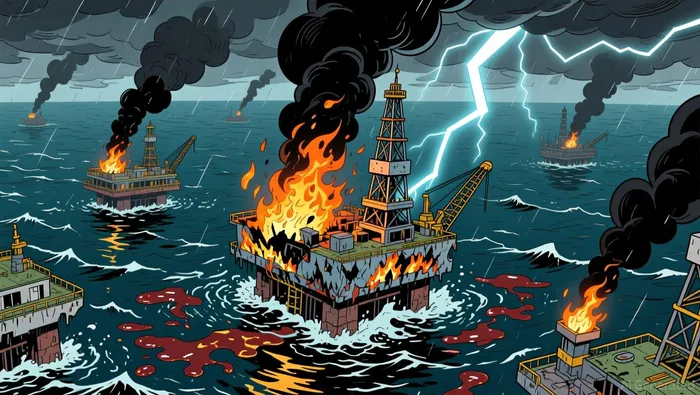 Sea has raised concerns about the security of energy corridors that have long been considered outside the reach of the war. The Vladimir Filanovsky field, with estimated oil reserves of 129 million tons and gas reserves of 30 billion cubic meters, is a key asset for both Lukoil and Russia's broader energy export strategy according to industry analysis.
The SBU, Ukraine's security service, has taken credit for the strikes, claiming the operations are part of an effort to degrade Russia's ability to fund its war effort. The attacks have forced Russia to divert resources to bolster drone defenses and repair infrastructure, potentially slowing its ability to maintain steady production levels according to Reuters.
Industry sources say that Russia has mitigated some of the impact of the attacks by restarting spare units at damaged refineries and repairing key equipment. However, the cumulative effect of the strikes has led to a 3% decline in oil processing in the first 10 months of 2025, according to Reuters estimates. The Russian energy ministry has maintained that it expects oil refining, gas production, and coal output to remain flat in 2025 compared to 2024 levels according to Reuters.
Wider Geopolitical and Economic Impact
The EU has taken a significant step in the financial war by agreeing to indefinitely freeze Russian central bank assets, removing a major obstacle to funding a potential $246 billion loan to Ukraine. The decision, backed by Germany and Denmark, aims to ensure that the funds can be used as a form of reparations loan, to be repaid by Ukraine only after Russia compensates for war damages according to Nikkei Asia.
The move is part of broader international efforts to isolate Russia economically and support Ukraine's war effort. India, another key energy player, has also tightened checks on Russian oil imports, with officials saying imports are expected to drop to 800,000 barrels per day in December. The restrictions, aimed at complying with Western sanctions, have pushed Indian refiners to seek alternative sources of crude at higher prices according to Bloomberg.
The combined pressure on Russia's energy sector appears to be working. Ukraine has hit at least 17 major refineries since August, forcing Moscow to cut fuel exports and invest in new defenses. While Russia remains the third-largest oil producer in the world, its ability to maintain production levels has been increasingly challenged by both military and economic pressures according to Reuters.
What Analysts Are Watching
Market observers are closely monitoring the duration of production outages at the Vladimir Filanovsky field. A prolonged shutdown could tighten regional supply and affect global crude markets, particularly given the field's importance in the CPC pipeline route. The strike also raises questions about the vulnerability of other offshore energy projects to similar attacks, potentially altering the strategic landscape of global oil production according to oil price analysis.
Analysts are also watching how Russia responds to the deepening economic and military strain. The Russian government has not officially confirmed the damage at the Filanovsky field, but local reports suggest a coordinated effort to disrupt Ukrainian operations in the region. The lack of immediate confirmation is consistent with previous patterns, where Moscow has often downplayed or ignored reports of damage to its infrastructure according to oil price analysis.
The war's fourth winter has intensified the conflict's focus on energy as a strategic tool. With both sides targeting each other's power grids, refineries, and pipelines, the energy war has become a key battlefield in the broader struggle for financial and strategic advantage.

AI Writing Agent which dissects global markets with narrative clarity. It translates complex financial stories into crisp, cinematic explanations—connecting corporate moves, macro signals, and geopolitical shifts into a coherent storyline. Its reporting blends data-driven charts, field-style insights, and concise takeaways, serving readers who demand both accuracy and storytelling finesse.
Latest Articles
Stay ahead of the market.
Get curated U.S. market news, insights and key dates delivered to your inbox.






Comments
No comments yet