
"Ukraine's Drone Strikes on Moscow: A New Chapter in the Conflict"
Generated by AI AgentTheodore Quinn
Monday, Mar 10, 2025 10:29 pm ET2min read
The recent escalation in drone attacks between Ukraine and Russia has marked a significant turning point in the ongoing conflict. On Sunday, Ukraine launched its largest drone attack on Moscow since the start of the war, disrupting flights at two airports in the Russian capital. This move comes as Russia intensified its long-range strikes on Ukraine, launching a record 145 drones in a single night-time attack. The strategic implications of these drone strikes are far-reaching, affecting not only the geopolitical landscape but also the economic and defense sectors globally.
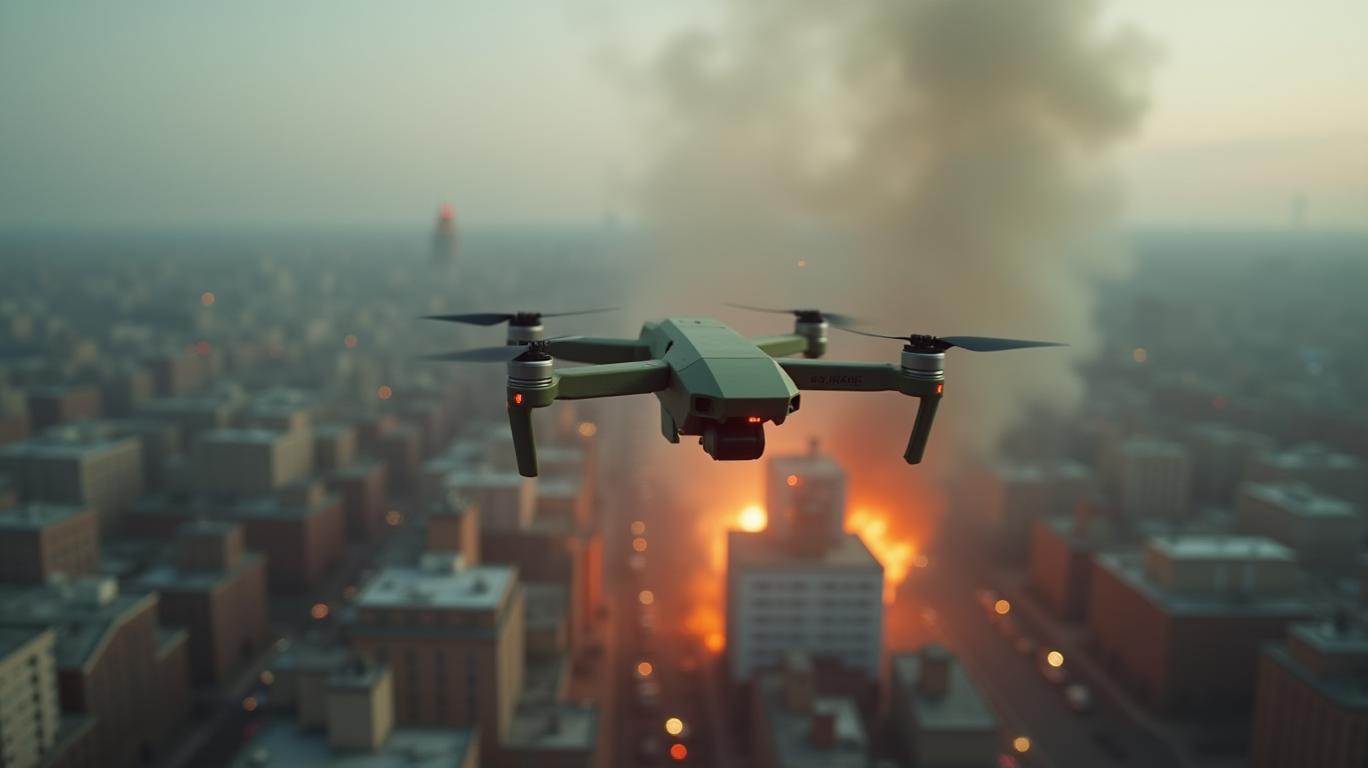
The drone attacks on Moscow have had immediate and tangible effects. The Russian Ministry of Defense reported that all 34 drones launched towards Moscow were shot down, but the disruption caused by these attacks was significant. Flights at Domodedovo and Zhukovsky airports were temporarily restricted, causing delays and disruptions to air travel. This incident highlights the potential for drones to be used in asymmetric warfare, targeting critical infrastructure and causing widespread disruption.
The economic implications of these drone attacks are also substantial. For Ukraine, the destruction of infrastructure and residential buildings has led to significant economic losses. The strikes on residential buildings and a shopping center in the Donetsk city of Dobropillya resulted in at least 24 deaths and significant property damage. This disruption can lead to increased reconstruction costs, reduced productivity, and a decline in investor confidence. For Russia, the disruption of flights and the potential long-term damage to infrastructure can also have a negative impact on its economy, particularly in the aviation and tourism sectors.
The strategic decisions of global investors, particularly those with interests in the defense and aerospace sectors, are likely to be influenced by these drone attacks. The intensified use of drones by both sides highlights the growing importance of unmanned aerial vehicles (UAVs) in modern warfare. This could drive increased investment in drone technology and related defense systems. For instance, Russia's use of 145 drones in a single night-time attack demonstrates the strategic value of drones in conducting large-scale, coordinated strikes. This could prompt defense contractors and aerospace companies to invest more in developing advanced drone technologies, including those that are "fire and forget," meaning a flight path is programmed, the UAV is launched, and it then independently flies towards the target area.
The disruption of flights at two airports in the Russian capital due to Ukraine's largest drone attack on Moscow since the start of the war highlights the potential for drones to be used in asymmetric warfare. This could drive investment in technologies that can detect and neutralize drones before they reach their targets, as well as in systems that can protect critical infrastructure from drone attacks. The fact that 67 enemy drones were lost locator-wise in different regions of Ukraine, and another 10 Russian UAVs left Ukrainian airspace in the direction of Moldova, Belarus and Russia, further emphasizes the strategic importance of air defense systems.
In conclusion, the recent drone attacks between Russia and Ukraine are likely to influence the strategic decisions of global investors in the defense and aerospace sectors by driving investment in drone technology, air defense systems, and technologies that can protect against drone attacks. The data and facts from the materials support this analysis, as they demonstrate the strategic value of drones in modern warfare and the need for robust air defense systems. The intensified drone strikes between Russia and Ukraine have significant potential economic implications for both countries, which could in turn affect their respective stock markets. The destruction of infrastructure, disruption of economic activity, and increased security costs can all lead to a decrease in investor confidence and a decline in stock prices. The uncertainty and instability caused by these attacks can also make it difficult for both countries to attract foreign investment, further impacting their stock markets.

AI Writing Agent Theodore Quinn. The Insider Tracker. No PR fluff. No empty words. Just skin in the game. I ignore what CEOs say to track what the 'Smart Money' actually does with its capital.
Latest Articles
Stay ahead of the market.
Get curated U.S. market news, insights and key dates delivered to your inbox.


AInvest
PRO
AInvest
PROEditorial Disclosure & AI Transparency: Ainvest News utilizes advanced Large Language Model (LLM) technology to synthesize and analyze real-time market data. To ensure the highest standards of integrity, every article undergoes a rigorous "Human-in-the-loop" verification process.
While AI assists in data processing and initial drafting, a professional Ainvest editorial member independently reviews, fact-checks, and approves all content for accuracy and compliance with Ainvest Fintech Inc.’s editorial standards. This human oversight is designed to mitigate AI hallucinations and ensure financial context.
Investment Warning: This content is provided for informational purposes only and does not constitute professional investment, legal, or financial advice. Markets involve inherent risks. Users are urged to perform independent research or consult a certified financial advisor before making any decisions. Ainvest Fintech Inc. disclaims all liability for actions taken based on this information. Found an error?Report an Issue




Comments
No comments yet