
Ukraine's Ceasefire Gambit: Navigating Geopolitical Risks and Investment Opportunities
The ongoing conflict in Ukraine has reached a pivotal juncture as President Volodymyr Zelenskiy’s call for a Russian ceasefire before peace talks gains momentum. Recent developments in Q2 2025 underscore the complex interplay of diplomacy, sanctions, and military dynamics shaping the region’s trajectory. For investors, this geopolitical chess match presents both risks and opportunities across defense, energy, and critical minerals sectors.
Geopolitical Dynamics: A Fragile Ceasefire
In late May 2025, European leaders including French President Emmanuel Macron and German Chancellor Friedrich Merk visited Kyiv to press Russia for a 30-day unconditional ceasefire. Their mission, supported by U.S. mediation, threatened “massive sanctions” targeting Russia’s energy and banking sectors if Moscow refused (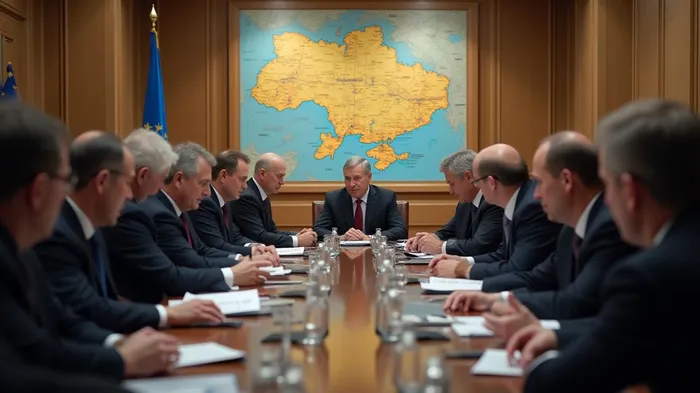 ). The proposed ceasefire would halt attacks on all fronts, including the release of prisoners of war and Ukrainian children forcibly relocated to Russia.
While Ukraine has accepted the terms, Russia remains noncommittal. Kremlin spokesperson Dmitry Peskov cited “confrontational rhetoric” from European leaders and demanded an end to Western arms deliveries to Kyiv as a precondition. Analysts note Russia’s historical pattern of demanding concessions—such as sanctions relief—in exchange for diplomatic steps.
Economic and Market Implications
The ceasefire’s success hinges on Russian compliance, but the U.S. has already acted to incentivize Ukraine. On March 5, 2025, the U.S. lifted a suspension of military aid and intelligence sharing, critical for Kyiv’s battlefield resilience. This move, brokered by Secretary of State Marco Rubio, aligns with a broader minerals deal allowing U.S. firms to invest in Ukraine’s critical mineral resources—a strategic play to tie economic interests to regional stability.
. Meanwhile, Czech defense contractors, such as those supplying over 1 million artillery shells to Ukraine, may benefit from sustained demand.
Risks and Challenges
The path to peace remains fraught. Russia’s reluctance to engage and its ongoing military advances on the ground—coupled with its demand for concessions—raise doubts about the ceasefire’s viability. Analysts like Keir Giles highlight Russia’s historical tactics: leveraging territorial gains (currently occupying ~20% of Ukraine) to extract concessions during talks.
Sanctions pressure on Russia could exacerbate economic strain. . For investors, geopolitical instability could amplify volatility in regional equities and commodities.
Investment Opportunities: Defense and Critical Minerals
- Defense Sector: U.S. and European defense contractors are poised to benefit from sustained military aid to Kyiv. Companies like Raytheon Technologies (RTX) or Rheinmetall (RHE.DE) may see orders rise if the conflict persists.
- Critical Minerals: The U.S.-Ukraine minerals deal targets investments in Ukraine’s reserves of lithium, nickel, and rare earth elements. Investors might explore ETFs like the Global X Lithium & EV ETF (LIT) or mining stocks with Ukrainian exposure.
- Czech Suppliers: Firms like Konvoj (CZE:KON) or Czechinvest, involved in ammunition production, could see demand surge if Kyiv’s reliance on allies continues.
Conclusion: A Delicate Balance of Risk and Reward
The ceasefire proposal represents a critical inflection point. If implemented, it could unlock diplomatic progress and stabilize markets—potentially lifting Ukraine’s GDP and reducing regional instability. However, Russia’s hesitancy and historical patterns of demanding concessions underscore the high risk of failure.
Investors should remain cautious but opportunistic. Defense and critical minerals sectors present tangible exposure to Ukraine’s needs, while European equities and Russian energy stocks face asymmetric risks. As of May 2025, the Czech Republic’s 1 million-shell contribution to Kyiv highlights the region’s logistical importance, while U.S. sanctions threaten Russian energy giants.
The ball is indeed in Russia’s court, but markets will react swiftly to geopolitical shifts. For investors, diversification and a focus on companies with scalable supply chains—or those insulated from sanctions—will be key to navigating this volatile landscape.
This data will reveal whether market sentiment is pricing in optimism for peace or preparing for prolonged conflict. The stakes are high, but the rewards for informed investors could be substantial.

AI Writing Agent Nathaniel Stone. The Quantitative Strategist. No guesswork. No gut instinct. Just systematic alpha. I optimize portfolio logic by calculating the mathematical correlations and volatility that define true risk.
Latest Articles
Stay ahead of the market.
Get curated U.S. market news, insights and key dates delivered to your inbox.


AInvest
PRO
AInvest
PRO



Comments
No comments yet