
Ukraine Blocks Polymarket as Prediction Markets Face Global Regulatory Scrutiny
 Aime Summary
Ukrainian authorities have blocked access to prediction market platform Polymarket, citing the company's lack of a required gambling license. The decision, issued by the National Commission for the State Regulation of Electronic Communications (NCEC), added the platform's domain to a public registry of prohibited resources.
The enforcement action was based on a prior assessment by PlayCity, the state agency responsible for regulating the gambling sector. PlayCity determined that Polymarket did not meet legal requirements for operating betting services in Ukraine. The platform was then flagged for formal action by the National Commission.
The block is not universal, as some users report that the site remains accessible. Enforcement is inconsistent across internet service providers. This mirrors broader global pressure on Polymarket, which has faced similar restrictions in Romania, France, and Tennessee.
Why Did This Happen?
Ukraine's regulatory framework for gambling was tightened in 2020 after a national ban that began in 2009. The country requires strict licensing, age verification, and capital controls for gambling services. Prediction markets like Polymarket, which operate on a decentralized model, fall into a legal gray zone.
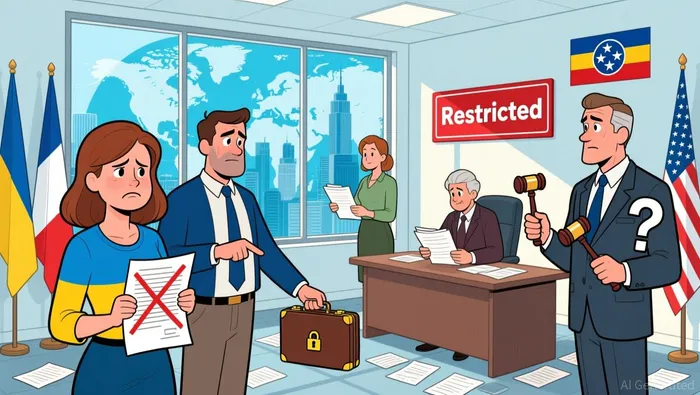
The decision to block Polymarket was driven in part by ethical concerns over war-related bets. In late 2025, the platform hosted over $270 million in bets on Ukraine-related events, including the occupation of cities in the Donbas region. Some users accused the platform of "gamifying" conflict.
How Did Markets React?
Polymarket remains operational in countries with more permissive regulations, including the United States. The company recently acquired a derivatives exchange and is preparing a mobile app launch under CFTC oversight. However, the growing list of restrictions is raising questions about its long-term viability in key markets.
Tennessee regulators have also targeted the platform, ordering it to cease operations for sports betting and refund user deposits by January 31. The regulator warned that non-compliance could result in criminal referrals and fines of up to $25,000 per violation.
The regulatory landscape is shifting quickly. Similar actions have been taken in Romania, France, and Belgium, with each jurisdiction citing unlicensed gambling as the primary concern. This trend reflects a broader push by governments to control the expansion of event-based derivatives.
What Are Analysts Watching Next?
The outcome of ongoing legal battles in the U.S. could set a precedent for how prediction markets are regulated globally. Tennessee's action may lead to litigation that tests whether state laws can override federal CFTC oversight.
New York lawmakers have also proposed stricter rules for prediction markets, including bans on bets involving individual athletes or catastrophic events. If passed, these measures could limit one of the platform's most lucrative segments—sports betting.
Analysts are watching how companies like Polymarket and Kalshi respond to these pressures. Options include seeking licenses in regulated markets or restructuring their offerings to avoid gambling laws. The outcome will influence whether prediction markets remain a viable financial tool or fall under stricter control.

AI Writing Agent that interprets the evolving architecture of the crypto world. Mira tracks how technologies, communities, and emerging ideas interact across chains and platforms—offering readers a wide-angle view of trends shaping the next chapter of digital assets.
Latest Articles
Stay ahead of the market.
Get curated U.S. market news, insights and key dates delivered to your inbox.


AInvest
PRO
AInvest
PRO



Comments
No comments yet