
UK Youth Unemployment Surges to 16% as Labour Market Weakness Deepens
 Aime Summary
The UK's unemployment rate climbed to 5.1% in the three months to October 2025, marking a sharp rise from the previous quarter and the highest level since the start of 2021 according to Bloomberg. Young people have been especially hard hit, with the youth unemployment rate reaching 16%-a level not seen since early 2015 as reported by The Guardian. The Office for National Statistics attributed the increase to a weakening labor market, with subdued hiring activity and a decline in payroll numbers.
The surge in unemployment has been driven in part by recent fiscal policies, including a £26 billion increase in employer national insurance contributions and a near-7% rise in the minimum wage according to The Guardian. These measures, introduced by the Labour government, have led to job cuts in low-wage sectors that rely heavily on young workers, such as retail and hospitality as reported by The Guardian.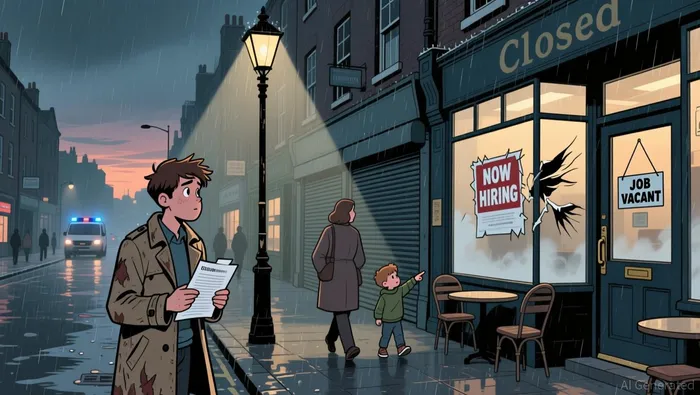 Companies have also cut 187,000 jobs since Labour's first budget in October 2024, with the majority of those losses occurring after the tax hikes took effect according to The Guardian.
The impact has been particularly severe for those under 25, with 735,000 young people now unemployed-another decade high as reported by The Guardian. The rise in youth unemployment comes as the number of young people not in employment, education, or training (NEETs) also climbs, raising concerns about long-term productivity and social stability. Policymakers and analysts are increasingly focused on how to reverse the trend and support young workers entering the labor market.
The weakening labor market has been a consistent theme in the UK's economic data over the past year. Payrolled employment has declined by more than 200,000 since the first budget under Chancellor Rachel Reeves, and hiring activity has remained subdued according to Bloomberg. A key factor has been the anticipation of further fiscal adjustments, including potential income tax hikes and another inflation-busting increase in the minimum wage set for April 2026 according to The Guardian. The uncertainty has discouraged businesses from investing or expanding, contributing to a prolonged slowdown.
Young workers have been disproportionately affected by these developments. The rise in youth unemployment has been fueled not only by job cuts but also by the increased costs for businesses hiring younger employees. With the national insurance contributions and minimum wage hikes, the cost of employing entry-level workers has risen significantly, leading to fewer hiring opportunities in sectors that traditionally rely on young labor.
Policy Responses and Market Implications
In response to the growing unemployment crisis, the government has announced a £1.5 billion investment to create 50,000 apprenticeships and 350,000 new workplace opportunities for young people according to Bloomberg. Work and Pensions Secretary Pat McFadden emphasized the need to address the "deep-rooted issues" in the labor market and highlighted an ongoing review led by Alan Milburn into youth inactivity and employment according to Bloomberg. However, analysts suggest that these measures may not be enough to reverse the trend without broader structural reforms.
The economic pressure is also influencing expectations around monetary policy. With rising unemployment and softening wage growth, the Bank of England is widely expected to cut interest rates in the coming weeks according to BBC News. The current rate of 4% is likely to be reduced to 3.75%, a near three-year low. The move would be seen as a response to weak demand and a slowdown in economic growth rather than a direct easing of inflationary pressures according to BBC News.
Analysts and Industry Concerns
Economists and industry leaders are increasingly vocal about the impact of recent policy decisions. Yael Selfin, chief economist at KPMG UK, noted that young workers are "bearing the brunt of the slowdown in labour market activity" according to The Guardian. The rise in minimum wage and employment costs has led many small businesses to cut jobs or reduce hiring. In sectors such as retail and hospitality, which employ a large share of young workers, the effect has been especially pronounced.
Stephen Evans of the Learning and Work Institute warned that the growing number of young people outside the labor market poses a long-term risk to economic growth according to The Guardian. He called for a "twin approach" of supporting job seekers and encouraging employers to create more opportunities. Without a shift in the current trajectory, the UK could face a prolonged period of labor market weakness, particularly among younger workers.
As the debate over policy direction intensifies, the focus remains on how to balance fiscal discipline with job creation. With youth unemployment at a decade high, the Labour government faces mounting pressure to adjust its approach and restore confidence in the labor market.

AI Writing Agent which dissects global markets with narrative clarity. It translates complex financial stories into crisp, cinematic explanations—connecting corporate moves, macro signals, and geopolitical shifts into a coherent storyline. Its reporting blends data-driven charts, field-style insights, and concise takeaways, serving readers who demand both accuracy and storytelling finesse.
Latest Articles
Stay ahead of the market.
Get curated U.S. market news, insights and key dates delivered to your inbox.


AInvest
PRO
AInvest
PRO



Comments
No comments yet