
UK Wealth Tax Uncertainty: Navigating Volatility and Strategic Opportunities
The UK government's fiscal crossroads has thrust wealth taxation into the spotlight. Chancellor Rachel Reeves faces a £30 billion shortfall exacerbated by welfare U-turns and stagnant growth, accelerating debates over levies on high-net-worth individuals. While the Autumn 2025 Budget remains the pivotal moment, the political and market uncertainty has already begun reshaping investment strategies. This article dissects the feasibility of wealth tax proposals, their sectoral impacts, and opportunities in defensive assets.
Political Feasibility: A Tightrope Walk
The Labour government's internal divisions mirror the public's ambivalence. Deputy PM Angela Rayner has championed wealth tax measures—including capping pension lump sums at £100,000 (down from £268,000)—to raise £2 billion annually. Meanwhile, Chancellor Reeves, wary of triggering a capital exodus or stifling growth, has ruled out a “return to austerity.” The fiscal lock imposed by the Office for Budget Responsibility (OBR) further complicates matters: any tax hike must align with balancing the current budget by 2029-30.
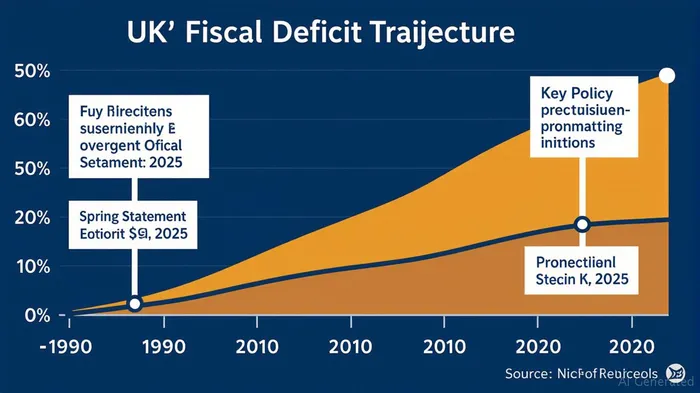
The “Schrodinger's tax” analogy holds: while the OBR projects a £9.9 billion surplus by 2029-30, rising debt interest costs (£105.2bn in 2025) leave little room for error. Historically, wealth taxes face steep hurdles. The 1997 Labour government's inheritance tax reforms sparked backlash, while France's 2018 wealth tax was repealed after failing to meet revenue targets. Today's political calculus hinges on whether Reeves can satisfy backbenchers without alienating the 0.5% of households holding £5.7 trillion in assets.
Asset Class Vulnerabilities: The Sectors at Risk
1. Real Estate: Directly in the crosshairs. AIM-market share reliefs and property inheritance breaks could be scrapped, depressing demand for high-value residential and commercial assets.
2. Equities: Luxury goods and financial services firms face headwinds. A dividend tax hike (eliminating the £500 allowance) would disproportionately impact shareholders of wealth managers and asset-heavy firms.
3. Pension Funds: The proposed £100,000 pension lump sum cap could reduce demand for annuities, pressuring insurers like Legal & General or Aviva.
Defensive Assets: Anchors in a Volatile Sea
The uncertainty creates opportunities in sectors insulated from wealth tax fallout:
- Utilities and Infrastructure: Regulated cash flows and inflation-hedging properties (e.g., National GridNGG--, SSE) offer stability.
- Consumer Staples: Defensive demand for essentials (Unilever, Reckitt) contrasts with discretionary spending risks.
- Government Bonds: Gilt yields may rise if tax reforms fail to reassure markets, but short-duration maturities reduce interest rate sensitivity.
Historical Precedents and Stress-Testing Strategies
Past tax reforms offer lessons. The 2008 inheritance tax hike on non-residential properties triggered a 15% drop in commercial valuations within two years. Similarly, France's wealth tax experiment saw 45% of millionaires emigrating by 2012. For investors:
- Near-Term: Underweight real estate and luxury equities. Consider shorting property REITs like British Land or Hammerson.
- Long-Term: Overweight defensive sectors. Utilities have outperformed the FTSE 100 by 20% during tax uncertainty periods (2010-2012).
- Cash and Liquidity: Maintain 10-15% in cash to capitalize on dips in oversold sectors post-Budget clarity.
The Institute for Fiscal Studies (IFS) warns that an annual wealth tax could deter savings and drive capital flight. Yet, targeted reforms—such as closing pension loopholes—might avoid systemic damage. Investors must balance the risks of Reeves' fiscal arithmetic with the likelihood of incremental, rather than radical, changes.
Conclusion: Prudence Amid Uncertainty
While wealth tax proposals threaten select asset classes, they also illuminate a path to resilient portfolios. By prioritizing defensive sectors and maintaining flexibility, investors can navigate near-term volatility while positioning for long-term stability. The Autumn Budget will be the crucible—until then, caution and diversification remain paramount.

Stay ahead of the market.
Get curated U.S. market news, insights and key dates delivered to your inbox.


AInvest
PRO
AInvest
PRO



Comments
No comments yet