
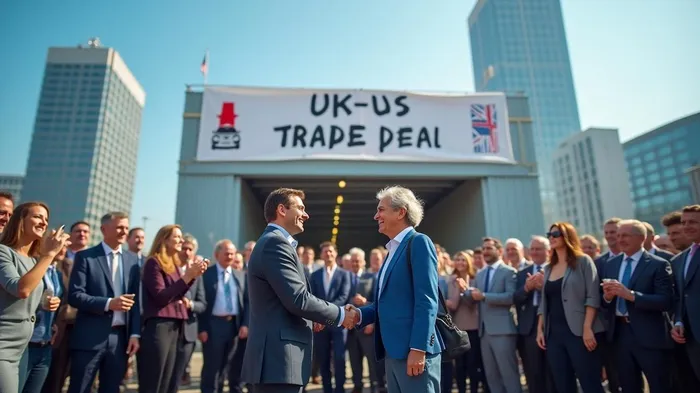
UK-US Trade Deal Cuts Car Tariffs to 10% for 100,000 Vehicles
The recent trade agreement between the United Kingdom and the United States has set a significant precedent for future trade negotiations, particularly in the automotive sector. The agreement reduces the additional 25% tariff on British car imports to the U.S. to a maximum of 10%, with an annual cap of 100,000 vehicles. This model could serve as a template for future tariff negotiations with other countries, including the European Union, Japan, and South Korea.
Despite the agreement, the U.S. maintains a minimum 10% tariff on British exports, significantly higher than the less than 2% rate in 2023. This tariff level is seen as a baseline for future negotiations, indicating that other countries may face similar or higher tariffs. The agreement also includes a reduction in tariffs on steel and aluminum imports from the U.K. to 0%, which were previously subject to a 25% tariff.
The agreement highlights a shift in global trade dynamics, where the focus is no longer on reducing trade barriers but on managing their increase. This approach, while potentially beneficial for the U.S. in the short term, could lead to higher costs and reduced efficiency for all parties involved. The agreement also signals a willingness by the U.S. to negotiate tariff quotas, similar to previous practices during the first term of the Trump administration.
The automotive sector is a key beneficiary of the agreement, particularly for British manufacturers like Jaguar Land Rover, which produce a significant portion of their vehicles in the U.K. and export them to the U.S. The agreement allows for the import of the first 100,000 vehicles at a 10% tariff rate, with any excess subject to a 25% tariff. This quota aligns with the current export volume from the U.K. to the U.S., providing a stable framework for future trade.
The agreement also includes provisions for better market access for U.S. agricultural products, although specific details are yet to be finalized. The U.K. has committed to maintaining its food safety standards, which may limit the types of U.S. agricultural products that can be imported. Additionally, the agreement includes a commitment from the U.K. to cooperate on steel and aluminum trade barriers, which could pave the way for broader global arrangements in these sectors.
Overall, the agreement sets a new standard for trade negotiations, emphasizing managed trade over free trade principles. This approach prioritizes domestic production and protection, which could have significant implications for future trade agreements with other countries. The agreement also highlights the importance of tariff quotas and the potential for further negotiations on critical issues such as pharmaceutical tariffs and digital regulation.

Stay ahead of the market.
Get curated U.S. market news, insights and key dates delivered to your inbox.


AInvest
PRO
AInvest
PRO



Comments
No comments yet