
The UK Supermarket Wars: A Strategic Playbook for Value-Driven Retailers


 Aime Summary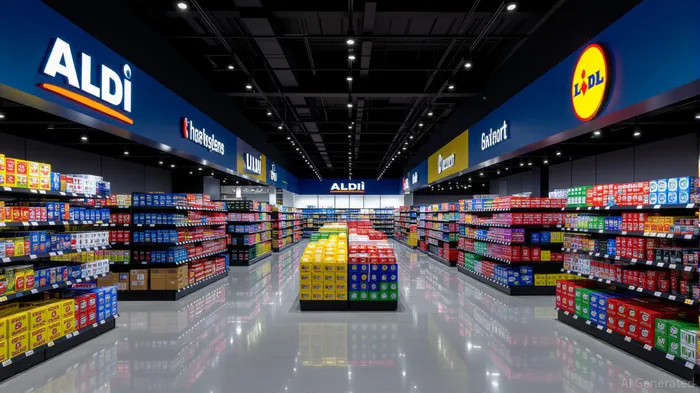
The UK grocery market in 2025 is a battleground of operational discipline, wage investment, and price leadership. As food inflation remains stubbornly elevated and consumer budgets tighten, the dominance of discounters like Aldi and Lidl has reshaped the competitive landscape. These retailers, once seen as niche players, now command nearly 20% of the market, forcing traditional grocers to rethink their strategies. Their success hinges on a formula that balances cost efficiency, employee value, and customer affordability—a playbook that offers critical lessons for investors navigating a post-pandemic retail environment.
Operational Discipline: The Bedrock of Resilience
Operational discipline has become the cornerstone of profitability in the UK grocery sector. Leading grocers like Tesco and Sainsbury's have invested heavily in store optimization, supply chain agility, and pricing innovation to counter the rise of discounters. For instance, Tesco's dual strategy of expanding its premium Finest range while deepening its Aldi Price Match initiative has allowed it to retain both price-sensitive and quality-conscious shoppers. Similarly, Sainsbury's has leveraged its Nectar loyalty programme to anchor customer spending, even as it matches Aldi's prices on 800 items.
Yet, the true champions of operational efficiency are the discounters. Aldi and Lidl have mastered the art of lean retailing, with Aldi's average store size of 18,000 square feet (compared to 48,400 for traditional grocers) enabling lower overheads and faster inventory turnover. Their focus on private-label products—accounting for 80% of Aldi's sales—reduces dependency on national brands and allows for tighter cost control. This operational rigor has translated into consistent market share gains, with Aldi's sales growing 6.5% in Q2 2025 and Lidl's rising 11.2%.
Wage Investment: A Delicate Balance
While operational efficiency is critical, the sustainability of these models depends on wage investment. Traditional grocers like Tesco and Sainsbury's have faced rising labor costs due to the April 2025 National Minimum Wage increase and higher National Insurance contributions. Tesco, for example, has allocated £235 million to offset these costs, while Morrisons has cut 70 counters to reallocate resources.
Lidl, however, has navigated these pressures with a different approach. By maintaining a lean workforce and optimizing labor productivity, the discounter has kept wage costs in check without compromising service. Its store format—focused on self-service and minimal staffing—reduces labor expenses while relying on automation and data-driven scheduling to maintain efficiency. This model allows Lidl to pass savings to customers while avoiding the wage inflation that strains traditional retailers.
Aldi's wage strategy is equally noteworthy. The discounter has invested in employee training and retention programs, recognizing that a motivated workforce is essential to maintaining its low-cost, high-service model. By offering competitive wages relative to its operational scale, Aldi has avoided the labor shortages that plague larger rivals. This balance between cost control and employee value has been a key driver of its 400 new store openings in 2025.
Price Leadership: The New Currency of Competition
Price leadership has emerged as the defining feature of the UK supermarket wars. Aldi and Lidl have weaponized affordability, slashing prices on essential goods and leveraging their supply chains to respond swiftly to inflationary shocks. Aldi's 2025 price cuts on 400 products—nearly 25% of its inventory—saved consumers $100 million collectively, reinforcing its reputation as a low-price leader. Meanwhile, Lidl's aggressive expansion into underserved areas has allowed it to target inflation-impacted communities with tailored pricing strategies.
Traditional grocers have responded with their own innovations. Sainsbury's and Tesco have expanded price-match programs, while Waitrose has introduced “New Lower Prices” to retain premium shoppers. However, these efforts often come at the cost of margin compression, as seen in Asda's £599 million pre-tax loss for 2024/25. The challenge for legacy retailers lies in replicating the discounters' agility without sacrificing their brand equity.
Can These Models Be Replicated or Disrupted?
The scalability of Aldi and Lidl's strategies raises questions about their replicability. Their success is rooted in a combination of operational efficiency, private-label dominance, and data-driven expansion. For traditional grocers, replicating this model would require significant structural changes, including downsizing store footprints and overhauling supply chains. Co-op's price-matching initiatives and Morrisons' cost-cutting measures are steps in this direction, but their results remain mixed.
Disruption, however, is not out of the question. Emerging threats could include new entrants leveraging technology to further compress costs or shifts in consumer preferences toward premiumization. Additionally, regulatory pressures—such as minimum wage hikes or environmental levies—could erode the discounters' cost advantages. For investors, the key is to assess which retailers can adapt their operational models to these evolving dynamics.
Investment Implications
For investors, the UK supermarket wars highlight the importance of operational discipline and strategic agility. Discounters like Aldi and Lidl offer compelling long-term prospects, given their ability to scale efficiently and maintain pricing power. However, their growth is not without risks—supply chain disruptions, regulatory changes, or a shift in consumer demand could challenge their dominance.
Traditional grocers must be evaluated on their ability to innovate. Tesco's dual-value strategy and Sainsbury's loyalty-driven pricing are promising, but their success will depend on sustaining profitability amid rising costs. Meanwhile, Asda's struggles underscore the perils of failing to adapt.
In a post-pandemic world, the winners will be those who balance affordability with profitability, leveraging technology and data to optimize operations. For investors, this means prioritizing retailers that can navigate the delicate interplay between wage investment, pricing innovation, and customer value—a playbook that Aldi and Lidl have mastered but few others can replicate.
The UK supermarket wars are far from over, but one thing is clear: the future belongs to those who can turn operational discipline into a competitive advantage.

Delivering real-time insights and analysis on emerging financial trends and market movements.
Latest Articles
Stay ahead of the market.
Get curated U.S. market news, insights and key dates delivered to your inbox.


AInvest
PRO
AInvest
PRO



Comments
No comments yet