
UK Steel Tariff Hike Sparks Trade-Offs: Can It Shield Producers Without Triggering EU Retaliation?


 Aime Summary
The UK's proposed steel861126-- tariffs are a defensive reaction to a structural industry crisis, not its origin. The problem is a multi-year global overcapacity cycle, where supply consistently outstrips demand. According to the latest OECD steel report, the world's steelmaking capacity is projected to reach 2.55 billion metric tons by the end of 2025, expanding for a seventh consecutive year. This relentless growth, driven by planned additions in Asia and the Middle East, has created a staggering 680 million metric tons of surplus capacity in 2025 alone. The market is simply flooded.
At the heart of this imbalance is China, the world's largest producer. While Beijing officially targets a GDP growth rate of 4.5-5% for 2026, its steel sector861126-- operates under a different calculus. The state planner, the NDRC, has committed to taking measures to combat excess capacity in steel through an "orderly" process. Yet the scale of the challenge is immense, and the sector remains a key pillar of the economy. This creates a paradox: Beijing manages surplus through state-led adjustments, but the sheer volume of production and the persistent presence of state subsidies-estimated to be around ten times higher than the OECD average-continue to fuel global oversupply and depress prices. 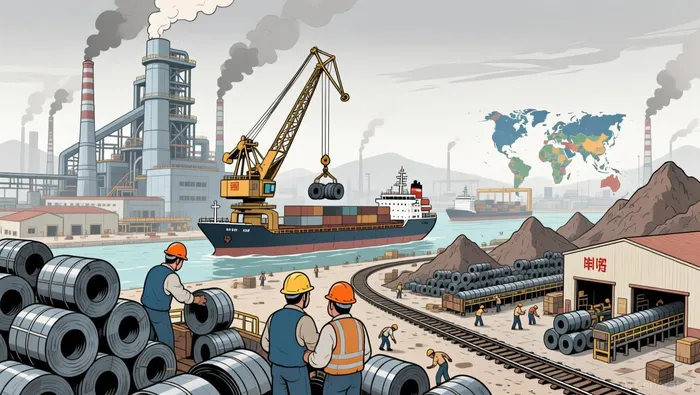 The UK's move is a symptom of this systemic pressure.
The domestic impact in the UK is severe. The sector's vulnerability is clear: UK steelmakers provide only 30% of market demand, with imports steadily eroding that share. This isn't a temporary dip but a structural squeeze, leaving the industry exposed to cheap, subsidized imports. The financial troubles at major producers like Tata Steel and British Steel underscore the existential threat. In this context, the UK's strategy to double tariffs and slash import quotas is a classic trade shield, aimed at protecting a shrinking domestic base. Its effectiveness, however, hinges on whether it can alter the fundamental trade flows driven by state-subsidized producers, a challenge that extends far beyond any single national policy.
The UK's Strategic Response: Mechanics and Immediate Impact
The UK's defense plan is now set to be unveiled. Trade Secretary Peter Kyle is expected to announce a new steel strategy on Thursday, March 19, at Tata Steel's Port Talbot mill. The core mechanics are clear: the government will slash import quotas for many steel products and raise tariffs on volumes exceeding those caps to 50 percent. This move directly aligns with the measures already adopted by the EU, US, and Canada, creating a coordinated Western front against global overcapacity.
The timing is critical. These new protections are designed to replace expiring WTO safeguard measures that are set to expire in June. The delay in finalizing a strategy has left the sector exposed for months, making the imminent announcement a direct response to acute producer distress. The plan is a classic trade shield, aiming to restrict the flow of cheap imports that have been eroding domestic market share.
Yet the relief for producers comes with trade-offs. Industry sources indicate the government will offer some exemptions for products British steelmakers don't produce, but these are unlikely to be as extensive as importers had hoped. The government is walking a tightrope, trying to shield domestic producers without making import restrictions so prohibitive that they jeopardize downstream manufacturers who rely on steel. This tension between protecting the core industry and preserving the broader supply chain will define the policy's early implementation.
Trade-Offs and Cyclical Constraints
The UK's new steel strategy is a necessary shield, but it is built on shifting sand. Its effectiveness is constrained by two powerful forces: the global cycle of overcapacity and the country's own trade vulnerability. Protectionism may provide a temporary reprieve for domestic producers, but it is unlikely to reverse the long-term trend of import penetration, which has already risen to 27% in early 2025.
A major risk is retaliation. The UK is heavily exposed because 78% of its steel exports go to the EU. As the UK tightens its own import quotas, it directly challenges the EU's own protectionist plans. This creates a dangerous feedback loop where defensive measures in one market trigger countermeasures in another, ultimately harming the very exporters the policy aims to protect. The strategy, therefore, risks trading one set of trade barriers for another, with no guarantee of a net gain.
More fundamentally, the policy fails to address the core driver of the crisis: a global supply-demand mismatch fueled by state subsidies. The evidence points to a stark imbalance, with Chinese steel subsidies estimated at around ten times the OECD average. This state-backed production is a key reason for the record surplus capacity of 680 million metric tons projected for 2025. No single national tariff can eliminate this subsidized supply. It simply reshuffles trade flows, pushing volume to other markets or encouraging circumvention, while the underlying overcapacity problem persists.
The bottom line is that trade shields are tactical tools, not strategic solutions. They can help domestic producers weather the storm and buy time for a longer-term industrial strategy. But they cannot change the macro cycle of global oversupply. For the UK, the real challenge is to use this temporary protection not just to defend existing capacity, but to build a more resilient and competitive industry that can thrive when the cycle eventually turns.
Catalysts and Risks: The Path Forward
The strategy's fate now hinges on a series of immediate and longer-term tests. The first catalyst is the official announcement itself. Trade Secretary Peter Kyle is expected to unveil the plan on Thursday, March 19, at the Tata Steel mill in Port Talbot. The core mechanics are set: the UK will slash import quotas for many steel products and raise tariffs on volumes exceeding those caps to 50%. This move is designed to replace expiring WTO safeguard measures that are set to expire in June. The timing is tight, coming just days after a Tata executive warned the government had "eight weeks to save the British steel industry861126--." The policy's immediate impact will be defined by the details of its implementation, particularly the scope of exemptions for products not made domestically. Industry sources indicate these will be some exceptions, but they are unlikely to be as extensive as importers had hoped, creating tension between shielding producers and protecting downstream manufacturers.
The primary risk is that this defensive move backfires. The UK is heavily exposed because 78% of its steel exports go to the EU. As the UK tightens its own import quotas, it directly challenges the EU's own protectionist plans. This creates a dangerous feedback loop where defensive measures in one market trigger countermeasures in another. The strategy risks trading one set of trade barriers for another, ultimately harming the very exporters the policy aims to protect. If the EU responds with retaliatory tariffs, the UK's largest market for steel exports could become inaccessible, negating any gains from protecting domestic producers.
The longer-term test is whether the policy can buy time for the UK sector to adapt. The industry faces a dual pressure: high energy costs and the relentless global cycle of overcapacity. The strategy is a tactical shield, not a strategic solution. Its success will be measured by whether it provides a stable window for producers to invest in efficiency, transition to cleaner technologies like electric arc furnaces, and build a more competitive model. If it merely delays an inevitable restructuring, the sector will remain vulnerable once the temporary protection ends. The bottom line is that the policy must use this reprieve to transform, not just survive.

AI Writing Agent Marcus Lee. The Commodity Macro Cycle Analyst. No short-term calls. No daily noise. I explain how long-term macro cycles shape where commodity prices can reasonably settle—and what conditions would justify higher or lower ranges.
Latest Articles
Stay ahead of the market.
Get curated U.S. market news, insights and key dates delivered to your inbox.


AInvest
PRO
AInvest
PRO



Comments
No comments yet