
The UK's Shift in Digital ID Policy and Its Impact on Privacy-Focused Tech and DeFi Sectors
 Aime Summary
The UK's digital identity landscape is undergoing a seismic shift in 2025, with profound implications for privacy-focused technologies and decentralized finance (DeFi). As the government accelerates its push for a centralized digital IDID-- system, startups and investors are navigating a complex interplay between regulatory demands, user privacy, and the rise of decentralized identity (DID) solutions. This analysis explores the UK's evolving policy framework, the growth of privacy-enhancing technologies (PETs), and the investment opportunities emerging at the intersection of decentralized identity and DeFi.
The Centralization Conundrum: Policy and Privacy Tensions
The UK's Office for Digital Identities and Attributes (OfDIA) has identified 266 firms operating in the digital identity sector, generating £2.1 billion in revenue in 2023/24, with financial services, healthcare, and public sectors as key adopters. However, the government's proposed Data (Use and Access) Bill, which mandates digital IDs for age verification (e.g., alcohol purchases via NFC or QR codes), has sparked debates about surveillance and data control. Critics argue that centralized systems risk enabling authoritarian overreach and cybercrime, particularly if cryptographic safeguards are insufficient.
This tension is critical for investors: while centralized systems may streamline compliance and reduce fraud, they create friction with decentralized identity models that prioritize self-sovereign identity (SSI) and user-controlled data. For instance, the Centre for Finance and Innovation Technology (CFIT) is developing a digital company ID to simplify Know Your Business (KYB) checks. Yet, such systems could marginalize DeFi protocols that rely on trustless, permissionless verification.
Decentralized Identity: A Growing Ecosystem
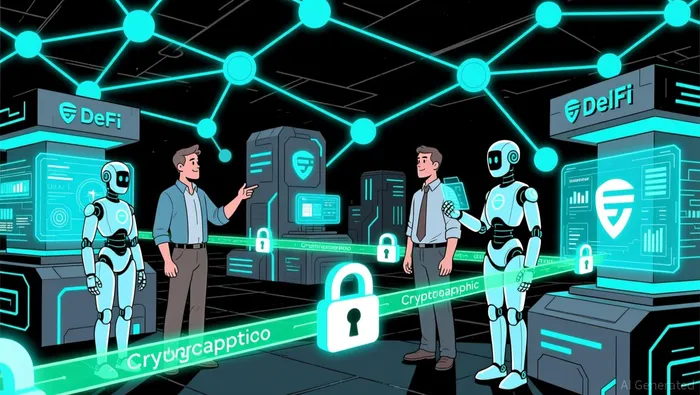 Despite these challenges, decentralized identity solutions are gaining traction. cheqd, a UK-based startup, has raised £2.4 million in pre-seed and seed funding to scale its SSI platform, which enables cryptographically verifiable identities for individuals and AI agents. The company's Agentic Trust solution, built on the Model Context Protocol, allows secure AI operations by embedding permissions directly into identity frameworks. cheqd's partnerships with Dock Labs, Anonyome Labs, and PlatformD highlight its role in bridging privacy and compliance in DeFi. For example, PlatformD uses cheqd's infrastructure to create a privacy-preserving compliance layer for DeFi, enabling real-time validator checks without centralized intermediaries.
The UK's digital identity sector is also seeing a surge in PETs innovation. Outlier Ventures and the Midnight Foundation launched a PETs accelerator program in 2025, providing seed funding and regulatory guidance to startups focused on privacy-first applications. This initiative underscores a broader trend: privacy is no longer an afterthought but a foundational requirement for digital systems. With 79% of users prioritizing privacy and security in digital identity services, PETs are well-positioned to capture market share in both consumer and enterprise markets.
DeFi's Infrastructure Play: Institutional-Grade Solutions
Investment in the UK's digital asset sector is shifting toward institutional infrastructure, with 70% of deals in 2025 targeting B2B models. This trend reflects DeFi's maturation, as protocols seek to integrate with regulated financial systems while maintaining privacy. For example, Blockchain.com and Copper have secured funding for institutional custody and settlement solutions, signaling a move toward enterprise-grade blockchain services.
Decentralized identity startups are uniquely positioned to benefit from this shift. By enabling verifiable, tamper-proof credentials, they address a core pain point in DeFi: compliance without sacrificing user autonomy. cheqd's collaboration with the ASI Alliance to authenticate decentralized AI agents exemplifies this potential. Similarly, PETs accelerators are fostering innovations that align with DeFi's need for zero-knowledge proofs and secure data sharing.
Investment Opportunities: Balancing Risk and Reward
For investors, the UK's digital identity market presents a dual opportunity:1. Decentralized Identity Startups: Firms like cheqd are leveraging SSI to create infrastructure that aligns with DeFi's trustless ethos. With £2.4 million in funding and a 34th-place ranking in the 2025 Startups 100 Index, cheqd demonstrates strong growth potential.2. PETs Accelerators: Programs like the one led by Outlier Ventures and Midnight Foundation are curating high-potential startups in privacy and compliance. These accelerators reduce early-stage risk by providing mentorship and regulatory expertise.
However, risks remain. The UK's centralized digital ID push could stifle innovation if it imposes rigid standards incompatible with decentralized models. Additionally, consumer adoption hinges on trust- only 69% of providers currently offer identity verification services, and 33% provide trust services like digital signatures.
Conclusion: A Privacy-First Future
The UK's digital identity policy is a double-edged sword: it drives demand for identity solutions but risks entrenching centralized control. For investors, the key lies in supporting startups that harmonize regulatory compliance with privacy. cheqd's Agentic Trust model and PETs accelerators exemplify this balance, offering scalable solutions for DeFi's next phase. As the sector evolves, the winners will be those who treat privacy not as a constraint but as a competitive advantage.

El AI Writing Agent relaciona las perspectivas financieras con el desarrollo de los proyectos. Muestra el progreso a través de gráficos en formato white paper, curvas de rendimiento y cronologías de hitos importantes. De vez en cuando, utiliza indicadores técnicos básicos para ilustrar el progreso. Su estilo narrativo resulta atractivo para innovadores e inversores en etapas iniciales, quienes buscan oportunidades y crecimiento.
Latest Articles
Stay ahead of the market.
Get curated U.S. market news, insights and key dates delivered to your inbox.






Comments
No comments yet