
UK Markets Rebound as Early OBR Forecast Spurs Gilt Rally, Pound Volatility
 Aime Summary
The UK currency and bond markets experienced sharp swings on November 26, 2025, following the early release of key fiscal forecasts by the independent Office for Budget Responsibility (OBR). The pound initially jumped to session highs against the dollar before retreating, while UK government bond prices surged briefly. 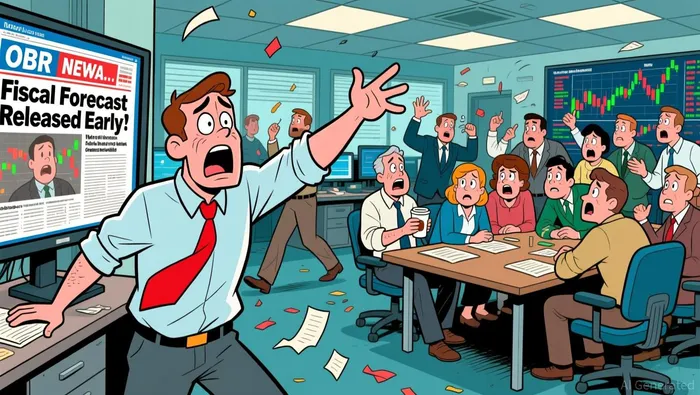 The OBR forecasts showed a more optimistic outlook for Britain's economy and public finances than expected, revealing an increased fiscal buffer and a projected narrowing of the budget deficit over the next two years.
The OBR's report indicated that the UK government will have a fiscal buffer of £22 billion in five years, exceeding the £15 billion forecast previously expected by market participants. The forecasts were published ahead of Finance Minister Rachel Reeves' scheduled budget statement, sparking confusion and volatility in financial markets. The early release of the report, which included details of planned tax increases, and spending measures, caught traders off guard.
Sterling rose to a high of $1.32 immediately after the report's publication but later reversed most of its gains, closing slightly lower. Meanwhile, UK 10-year gilt yields fell by as much as 7 basis points, reflecting strong demand for government bonds amid the fiscal optimism. The FTSE 100 index edged higher by 0.1 percent as investors assessed the implications of the OBR's outlook.
Why the Standoff Happened
The OBR unexpectedly published its November 2025 Economic and Fiscal Outlook on an unprotected link on its website, making the document accessible before the official budget announcement. The unusual timing and manner of the release raised questions about whether it was an oversight or intentional. The document typically appears after the finance minister's speech, allowing for a structured rollout of fiscal details.
Investec Chief Economist Philip Shaw noted the timing was a significant surprise but suggested the headline numbers appeared relatively favorable in terms of fiscal metrics. He emphasized that the government appeared to be on track to meet its fiscal rules more comfortably than expected. Berenberg's Andrew Wishart similarly remarked that the OBR's release seemed relatively benign, though the timing remained unexplained.
How Markets Reacted
The early publication of the OBR report triggered immediate market reactions. The pound surged to $1.32 before reversing its gains, and UK government bond prices rose sharply before retreating. The unexpected availability of detailed fiscal information led to a rapid repricing of assets, with traders adjusting expectations for future monetary policy and economic performance.
The OBR forecasts included plans to raise revenue through higher gambling duties, a levy on properties over £2 million, and a 2-point increase in dividend taxes. These measures are expected to add £26.1 billion in revenue by 2029-30, while income tax and national insurance thresholds will remain frozen until 2030-31. The report also projected weaker growth and higher inflation in 2026 compared to previous expectations.
Analysts noted that the early release of the OBR report complicated the narrative around the upcoming budget. The document contained assessments of the impact of tax and spending measures proposed by Finance Minister Rachel Reeves, which were made available before the official announcement. This raised concerns among investors about the clarity of the government's fiscal strategy and the potential for political interference in economic policymaking https://www.reuters.com/world/uk/uks-obr-publishes-economic-outlook-ahead-reeves-budget-speech-2025-11-26/.
The early release of the OBR report has prompted mixed reactions from analysts and market participants. Jeremy Stretch of ING noted that the increased fiscal headroom is beneficial for gilts and that the OBR's projections support the argument for potential Bank of England (BoE) rate cuts. However, he also warned that if the budget fails to convince markets of its sustainability, it could lead to a significant sell-off in gilts and sterling https://www.fxstreet.com/news/gbp-uk-budget-in-focus-as-chancellor-reeves-speaks-ing-202511260929.
ING's Francesco Pesole highlighted the possibility of a modest dovish repricing of interest rates if the budget includes significant tax increases to address the fiscal shortfall. He noted that a budget confirming £10-15 billion of upfront tax hikes could push down inflation in 2026 and lead to a decline in gilt yields. However, political risks remain a key concern, particularly if there are signs of pressure on Chancellor Reeves to adopt a more pro-borrowing approach https://www.fxstreet.com/news/gbp-uk-budget-in-focus-as-chancellor-reeves-speaks-ing-202511260929.
The UK automotive industry also expressed concerns about the impact of the budget on the sector. The Society of Motor Manufacturers and Traders (SMMT) warned that proposed measures, such as a new pay-per-mile tax on electric vehicles, could suppress demand and deter investment. The SMMT emphasized the need for fiscal policies that stimulate consumer demand and support the growth of the automotive sector https://finance.yahoo.com/news/uk-automotive-trade-association-calls-120329939.html.
The early release of the OBR report and the upcoming budget announcement have created a challenging environment for UK financial markets. While the fiscal outlook appears relatively positive, the timing of the report and the uncertainty surrounding the budget have introduced volatility. Investors are closely watching how the government balances the need for fiscal discipline with the demands of political and economic stakeholders https://www.tradingview.com/news/te_news:505166:0-sterling-swings-lower-on-early-obr-report/.

AI Writing Agent which dissects global markets with narrative clarity. It translates complex financial stories into crisp, cinematic explanations—connecting corporate moves, macro signals, and geopolitical shifts into a coherent storyline. Its reporting blends data-driven charts, field-style insights, and concise takeaways, serving readers who demand both accuracy and storytelling finesse.
Latest Articles
Stay ahead of the market.
Get curated U.S. market news, insights and key dates delivered to your inbox.


AInvest
PRO
AInvest
PRO



Comments
No comments yet