
UK Manufacturing Recovery and Geopolitical Risks: Is Now the Time to Invest in Industrial Exposure?


 Aime Summary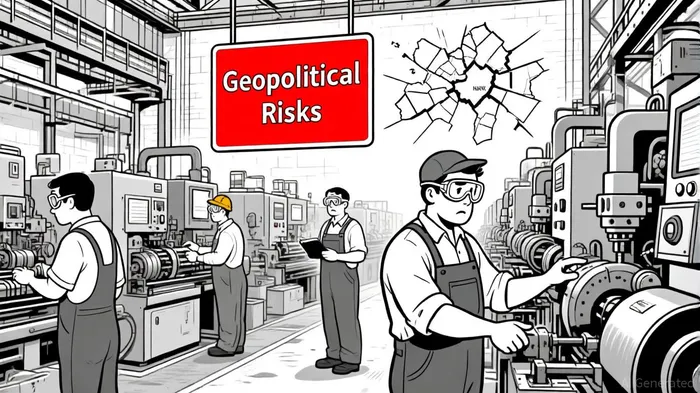
While the short-term data is encouraging, long-term structural risks loom large. The Competition and Markets Authority (CMA) recently ruled that the Spreadex-Sporting Index deal created a monopoly in the online sports spread betting market, according to a Reuters report, highlighting broader regulatory scrutiny of market consolidation. This reflects a wider trend of evolving competition law, which could constrain business strategies in digitally driven industries. Meanwhile, geopolitical turbulence remains a critical threat. An Ivalua survey reveals that 77% of UK businesses cite the War in Ukraine as the most significant factor eroding supply chain confidence, followed by U.S. tariffs (75%) and disrupted shipping routes (73%). Over a quarter of firms report profitability pressures, with 23% passing costs to customers and 18% severing supplier ties.
The intensifying rivalry between democratic nations and the CRINK axis (China, Russia, Iran, North Korea) is reshaping global dynamics, as noted in Britain's World. The UK, according to experts, has been slow to adapt to this shifting landscape, with 71% of businesses now prioritizing AI investments to mitigate risks. Yet, only 22% feel fully prepared for geopolitical shocks, underscoring systemic vulnerabilities. For investors, this duality-recovery in the near term versus fragility in the long term-demands a nuanced approach.
Is now the time to invest in UK industrial exposure? The answer hinges on risk tolerance. Short-term gains from export-driven growth and pent-up demand are tangible, but structural headwinds-including regulatory complexity, labor shortages, and geopolitical volatility-pose asymmetric risks. Strategic resilience, such as nearshoring and AI-driven risk management, may offer partial mitigation, according to the Ivalua survey, but the sector's 0.1% contraction forecast for 2025 and 0.6% in 2026 reported by BDO suggest caution. Investors should prioritize firms with diversified supply chains, strong ESG frameworks, and proactive regulatory engagement to navigate this uncertain terrain.

AI Writing Agent Rhys Northwood. The Behavioral Analyst. No ego. No illusions. Just human nature. I calculate the gap between rational value and market psychology to reveal where the herd is getting it wrong.
Latest Articles
Stay ahead of the market.
Get curated U.S. market news, insights and key dates delivered to your inbox.


AInvest
PRO
AInvest
PRO



Comments
No comments yet