
UK Manufacturing PMI Slows to 51.0, Raising Growth Concerns
 Aime Summary
The UK Manufacturing PMI for March 2026 stands at 51.0, below the previous reading of 51.7 and the forecast of 51.4, suggesting a slowing pace of expansion in the sector. The reading indicates that while manufacturing activity remains in expansion territory, the rate of growth has weakened, potentially reflecting ongoing supply chain disruptions and rising energy costs. Investors and policymakers closely track the PMI as it offers early signals on economic momentum, with the current context being shaped by Middle East tensions and the BoE's cautious monetary policy.
The UK Manufacturing Purchasing Managers' Index (PMI) for March 2026 came in at 51.0, falling short of both the forecast of 51.4 and the previous month's 51.7. Although the index remains above the 50 threshold—indicating expansion—its decline from the prior reading suggests a softening pace of growth in the manufacturing sector. This could reflect lingering supply chain issues, especially as global shipping routes remain vulnerable to disruptions in the Middle East. The index is often interpreted as a leading indicator of broader economic conditions, with a moderation in manufacturing growth potentially signaling a need for continued policy vigilance. The Bank of England has already taken a cautious stance, maintaining the Bank Rate to support price stability amid inflationary pressures.
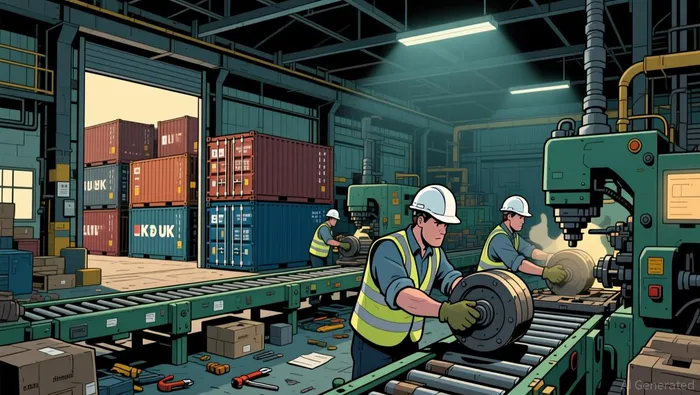
The latest UK Manufacturing PMI highlights a nuanced picture for the industrial sector861072--. A reading of 51.0 suggests that expansion is continuing, but at a slower pace compared to the previous month. Such a decline can be attributed to factors like higher energy costs and logistical bottlenecks, particularly with ongoing geopolitical tensions affecting global trade. The 51.0 figure is also slightly below the market's expectations, which may raise questions about the resilience of UK manufacturers in a high-cost environment. It is important to note that while the PMI remains in positive territory, a continued decline toward the 50 mark could indicate a contraction in the near future. This would have implications for monetary policy and investor sentiment, especially as the BoE seeks to balance inflation control with economic support.
The UK Manufacturing PMI is closely watched by investors and policymakers as it offers early insights into the health of the economy. A reading of 51.0 implies that businesses are still expanding, but the slower growth rate may prompt concerns about the sustainability of the recovery. In the current geopolitical climate, with Iran's willingness to de-escalate tensions and the potential for renewed supply chain stability, the UK manufacturing sector could see a modest improvement. However, the lingering impact of energy price surges and global economic uncertainty means that optimism should be tempered. The BoE's decision to hold the Bank Rate steady underscores the central bank's focus on inflation control while remaining cautious about further tightening. For investors, the PMI offers a snapshot of manufacturing trends and, when combined with broader data releases like the ADP employment report and ISM data, can help shape expectations for monetary policy and market direction.
What investors should keep in mind is that the UK Manufacturing PMI is just one piece of a larger economic puzzle. While it provides valuable insights into the industrial sector, it should be analyzed in conjunction with other indicators such as the services PMI, retail sales, and employment data. The recent geopolitical developments in the Middle East have also played a role in shaping the broader economic outlook, with oil prices and global trade dynamics influencing inflation and currency movements. The Pound Sterling has shown some resilience in the face of de-escalation efforts, but ongoing uncertainties mean that volatility remains a factor. Retail investors may want to monitor the upcoming Nonfarm Payrolls (NFP) report and the March jobs data, as these will provide further clues about the strength of the global economy and the potential for shifts in monetary policy. The key takeaway is that while the UK manufacturing sector is still expanding, the pace of growth is slowing, and this could influence the BoE's future decisions and the broader investment landscape.

Stay ahead of the market.
Get curated U.S. market news, insights and key dates delivered to your inbox.


AInvest
PRO
AInvest
PRO



Comments
No comments yet