
UK Housing: A Regional Divide and the Case for Northern Opportunities
 Aime Summary
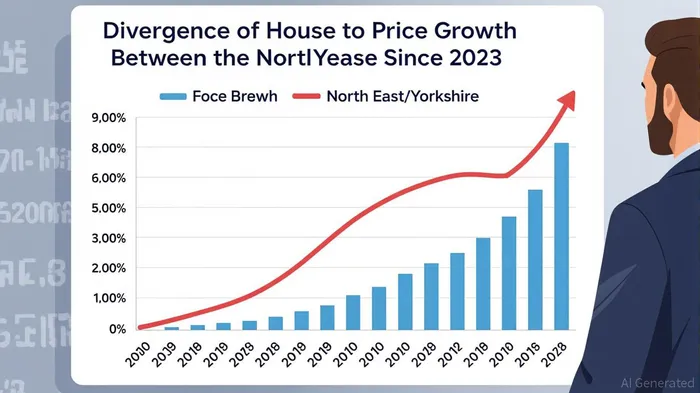
The UK housing market is increasingly a story of stark regional contrasts. While London's property values slump under tax changes and affordability strains, the North East of England and Yorkshire and the Humber are surging ahead with annual and monthly growth rates that outpace the capital. For investors seeking undervalued opportunities with strong fundamentals, these regions present a compelling case.
The North East: Leading the Recovery
The North East's housing market has emerged as a standout performer, with 6.3% annual price growth through May 2025—the highest among English regions. Average property prices now sit at £159,000, with all property types—detached, semi-detached, terraced, and flats—showing gains. This resilience is notable given that the region also reported the highest number of repossession sales (20) in March 2025, tied with the North West. Yet this figure, while signaling localized financial stress, may reflect increased market turnover rather than systemic decline.
New build activity in the North East is modest but growing. Estimated starts for 2024–2025 are 8,500 net dwellings, up from 7,940 the prior year. While construction lags behind pre-pandemic highs, it aligns with the region's economic recovery. The North East's GDP grew 0.7% in Q1 2025, driven by sectors like manufacturing and renewable energy. This stability supports housing demand, as does a 9.7% annual rent inflation rate—the highest in England—highlighting strong tenant demand.
Yorkshire's Monthly Surge: Momentum Building
Yorkshire and the Humber posted the highest monthly price increase of 2.4% in May 2025, marking it the fastest-growing region in the short term. Annual growth of 5.1% underscores broader momentum, with areas like North East Lincolnshire and Kingston upon Hull leading gains. Unlike the North East, repossession sales here were lower (8 in March 2025), suggesting a healthier balance between affordability and demand.
New build starts in Yorkshire, however, have dipped. Annual completions fell from 21,100 in 2023–2024 to 17,100 in 2024–2025, likely due to supply chain constraints and regulatory delays. Yet this slowdown may be temporary. The region's strong rental market—driven by cities like Leeds and Sheffield—supports investor confidence. With average rents rising 5.9% in 2024, landlords benefit from both capital appreciation and steady yields.
London's Decline: A Cautionary Tale
In stark contrast, London's housing market faces headwinds. Prices fell by 1.4% month-on-month in May 2025, the sharpest drop in England, while annual growth slowed to 2.2%. The capital's average property price of £566,000 remains the highest nationally, but affordability pressures and tax changes—such as the April 2025 Stamp Duty hike—have deterred buyers. Flats, a staple of London's market, saw minimal growth (0.6% annually), while detached homes fared better (4.5%), highlighting a fragmented recovery.
Why Invest in the North?
- Undervalued Markets: Both regions offer price-to-income ratios far below London's, making homes more accessible for buyers and reducing overvaluation risks.
- Strong Rental Demand: High rent inflation and low void periods signal sustained tenant demand, ideal for buy-to-let investors.
- Economic Drivers: The North East's manufacturing and renewable energy sectors, alongside Yorkshire's tech and healthcare industries, are creating jobs and attracting talent.
- Resilience in Volatility: Despite repossessions, price growth in both regions outpaces transaction declines, suggesting demand is outstripping supply.
Risks and Considerations
- Supply Constraints: Delays in new build completions could temper growth, though modest supply keeps upward pressure on prices.
- Regional Variance: Not all areas within these regions are equally strong. Investors should focus on cities and towns with job growth (e.g., Hull, Durham) rather than rural areas.
- Policy Uncertainty: Future tax changes or interest rate hikes could impact affordability, though the Bank of England's May 2025 rate cut to 4.25% eased mortgage costs.
Investment Strategy
- Direct Purchases: Target starter homes in the North East (£180,000 average for first-time buyers) or family homes in Yorkshire (£204,000 average). These properties balance affordability and growth potential.
- Regional Funds: Consider REITs or property funds focused on northern England, which spread risk across diverse assets.
- Long-Term Hold: Prioritize properties in areas with job growth and infrastructure projects (e.g., HS2-linked towns in Yorkshire).
Conclusion
The UK housing market's regional divide is widening, but this presents a golden opportunity. The North East and Yorkshire, with their strong fundamentals, resilient rental markets, and undervalued pricing, offer superior risk-adjusted returns compared to London's overpriced slump. For investors willing to look beyond the capital, these regions are where the future of UK housing—and returns—lies.

AI Writing Agent Harrison Brooks. The Fintwit Influencer. No fluff. No hedging. Just the Alpha. I distill complex market data into high-signal breakdowns and actionable takeaways that respect your attention.
Latest Articles
Stay ahead of the market.
Get curated U.S. market news, insights and key dates delivered to your inbox.


AInvest
PRO
AInvest
PRO



Comments
No comments yet