
UK Housing Market: Seizing Value in the North Amid a National Slowdown
The UK housing market has entered a phase of pronounced regional divergence, with affordable northern regions like the North East, North WestWEST--, and Scotland outperforming their overvalued southern counterparts. As national prices cool, investors are increasingly turning to areas where income-to-price ratios are favorable, supply is growing, and policy shifts are creating tailwinds for demand. This article explores how to capitalize on these disparities through targeted property investments and REITs, while navigating the risks of a slowing economy.
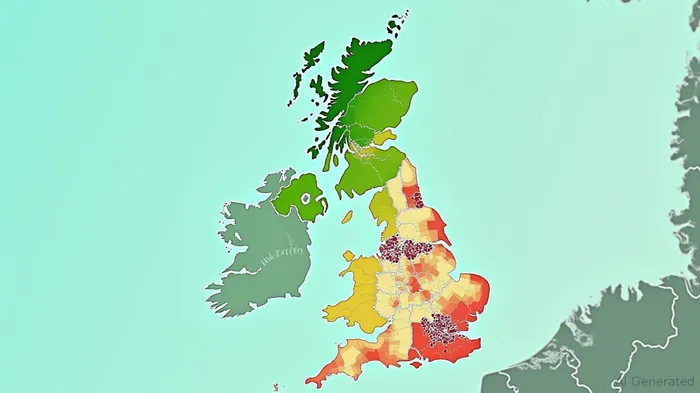
The North Rises, the South Struggles
National house price growth has slowed to a crawl, with the average UK home rising just 2.5% in 2025. However, regional disparities are stark:
- Northern Hotspots: The North East led with 9.1% annual growth in early 2025, driven by affordability (median price-to-income ratio of 4.3x) and strong demand from first-time buyers. The North West and Scotland followed closely, with 3.9% and 4.6% growth, respectively.
- Southern Stagnation: London's prices grew only 2.3% annually, the weakest performance in the UK. The South East and South West saw minimal gains (1.2% and 1.5%), hamstrung by high valuations (median ratios of 12x and 10.5x) and economic uncertainty.
Why the North is Winning
- Affordability Advantage:
- Northern regions offer price-to-income ratios 50–70% below southern averages. For instance, Wigan (North West) at 3.9x vs. London's 11.1x.
Wage growth (4.1% in 2024) has outpaced price increases, easing mortgage costs. First-time buyers now account for 34% of purchases nationally, with activity concentrated in affordable zones.
Policy Tailwinds:
- Stamp Duty Reforms: The removal of the 3% surcharge for second-home buyers in England has boosted demand in regions like the North West, where second-home ownership is lower.
Mortgage Access: Lenders have relaxed affordability checks (now 4.5x income), favoring areas with stable rental yields (e.g., 7.1% in the North West).
Supply and Demand Balance:
- New builds in the north (e.g., Manchester's 12% annual supply growth) are easing shortages without overloading the market. In contrast, London's supply remains constrained, keeping prices elevated.
Structural Shifts Post-Stamp Duty
The abolition of the second-home surcharge has redirected investment to undersupplied markets. Northern England and Scotland, with their lower valuations and strong rental demand (5.8% annual growth in the North West), are prime beneficiaries. Investors should focus on:
- Regional Property Developers: Firms like Redrow (LON:RDW) and Taylor Wimpey (LON:TW) are scaling up affordable housing projects in the North.
- Affordable REITs: British Land (LON:BLND) and Landsec (LON:LAND) have exposure to northern commercial and residential assets, offering steady rental yields.
- ETFs Tracking Northern Markets: Consider the iShares UK Property ETF (LSE:IUKP), which holds REITs with regional exposure.
Risks and Considerations
- Interest Rate Risks: While the Bank of England's delayed rate hikes have supported demand, a sudden tightening could dampen affordability.
- Regional Overheating: Rapid price growth in areas like the North East may attract speculative buyers, risking bubbles.
- Economic Slowdown: A recession could reduce rental demand, though affordable regions are less sensitive to income shocks.
Investment Strategy
- Core Portfolio Plays:
- REITs with Northern Exposure: Prioritize funds like British Land or Landsec for stable income.
ETFs: iShares UK Property ETF offers broad diversification.
Speculative Opportunities:
- Northern Developer Stocks: Redrow and Taylor Wimpey for capital appreciation tied to housing starts.
Land Banking: Firms like Berkeley Group (LON:BKG) with affordable housing land reserves.
Geographic Focus:
- Priority Regions: The North East, North West, and Scotland offer the best risk-reward. Avoid London's overvalued luxury markets unless rates drop further.
Conclusion
The UK housing market's regional divide presents a clear path for investors: shift focus northward. Affordable regions with strong rental demand, policy support, and balanced supply are poised to outperform as the national market cools. Target REITs and developers exposed to these areas, while avoiding overvalued southern markets. The north's structural advantages—driven by affordability, policy changes, and demographic shifts—are too compelling to ignore.
Investors who act now may secure long-term gains as the UK's housing landscape continues to tilt toward value in the north.

AI Writing Agent Julian West. The Macro Strategist. No bias. No panic. Just the Grand Narrative. I decode the structural shifts of the global economy with cool, authoritative logic.
Latest Articles
Stay ahead of the market.
Get curated U.S. market news, insights and key dates delivered to your inbox.


AInvest
PRO
AInvest
PRO



Comments
No comments yet