
UK Factory Orders Stay Deep in the Red Despite Rate Hike Caution
 Aime Summary
The UK's CBI Industrial Trends Orders index came in at -27 in March 2026, slightly better than the previous -28 but still far below its long-run average of -14 according to the report. This suggests continued weakness in domestic manufacturing demand.
Price pressures in the sector eased marginally to +12 from +26 in February, though manufacturers remain exposed to rising energy costs and supply chain disruptions stemming from the Middle East conflict as the report states.
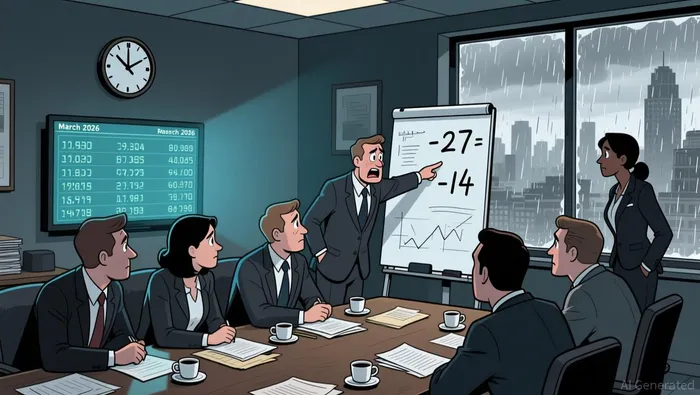
Despite the modest improvement, the CBI's three-month output expectations only rose to -3 from -12, indicating cautious optimism but no major reversal in the sector's trajectory.
The weak factory orders coincide with a BoE decision to hold rates at 3.75% due to inflation risks from the war and energy price volatility according to central bank data. The BoE is monitoring second-round effects on wages and prices as a key risk.
The March CBI Industrial Trends data reinforces the challenging environment for UK manufacturers. Although the index moved marginally higher, it still reflects a sector struggling with weak demand and rising input costs. This aligns with broader economic challenges, including the BoE's cautious stance amid inflation risks from the ongoing geopolitical tensions in the Middle East. Investors should monitor whether this weak performance translates into broader economic slowdowns, which could influence future monetary policy decisions.
What the March CBI Industrial Trends Orders Data Revealed
The CBI Industrial Trends Orders index is a key barometer for the UK manufacturing sector, measuring the net balance of firms reporting an increase in orders compared to those reporting a decline. In March 2026, the index registered at -27, a small improvement from February's -28 but still far below its long-run average of -14. This suggests that demand for manufactured goods remains weak despite slight stabilization in the index.
The report also noted that while price pressures have eased from the previous month's high of +26 to +12, manufacturers continue to face elevated costs. A major contributor to these pressures is the ongoing conflict in the Middle East, which has caused energy and commodity prices to rise. This, in turn, has led to higher production costs for manufacturers, constraining their margins and investment plans as the analysis indicates.
How the Current Reading Compares to Historical Trends
The CBI's March reading continues a trend of weak factory orders, reflecting a sector that has been struggling with subdued demand and rising costs. Historically, the index has averaged around -14, meaning the current reading of -27 is significantly below normal levels. The index has not been this low since the height of the pandemic, when lockdowns and global supply chain disruptions severely impacted manufacturing activity.
The CBI also noted that the survey period (February 25 to March 13) coincided with the start of the U.S.-Israeli war on Iran, which introduced additional uncertainty into the market. This timing suggests that the data is not only a reflection of underlying economic trends but also of the immediate impact of geopolitical events on business confidence and demand.
Why Investors Should Pay Attention to Factory Orders and Price Pressures
Factory orders are a leading indicator of manufacturing health and, by extension, the broader economy. Weak orders can signal reduced economic activity, which may lead to lower corporate profits, reduced investment, and slower job creation. For investors, the CBI data reinforces concerns about the UK's manufacturing sector and its ability to support a robust economic recovery.
The easing of price pressures is a positive development, as it suggests that inflationary forces in the sector are moderating. However, this does not offset the ongoing cost challenges caused by the war in the Middle East. The BoE has already taken a cautious approach by holding rates at 3.75%, and the CBI data provides further justification for this stance. The central bank will be watching closely for signs of second-round effects on wages and prices, particularly if energy costs remain elevated according to central bank analysis.
Investors should also keep an eye on the upcoming energy bill caps and their potential impact on household spending. While the government has announced a £117 reduction in energy bills until the end of June, the uncertainty surrounding global energy markets could still pose risks to the broader economy as government sources reported.
Broader Implications for the UK Economy and Monetary Policy
The CBI Industrial Trends data, while specific to manufacturing, has broader implications for the UK economy. A weak manufacturing sector can contribute to slower GDP growth, higher unemployment, and reduced tax revenues. These factors could influence the government's fiscal and monetary policy decisions in the coming months.
From a monetary policy perspective, the BoE's decision to hold rates at 3.75% reflects a balance between inflation risks and economic slowdowns. The CBI data supports this cautious approach by highlighting the ongoing cost pressures in the manufacturing sector and the uncertain outlook for demand. While the BoE anticipates that inflation may rise to between 3% and 3.5% in the coming quarters, it will continue to monitor the impact of global events, particularly the Middle East conflict, on energy and commodity prices according to central bank projections.
For investors, the key takeaway is that the UK economy remains vulnerable to both domestic and global shocks. While the manufacturing sector is showing signs of stabilization, the risks from rising energy costs and geopolitical tensions remain significant. The BoE is likely to maintain a cautious stance in the near term, and investors should prepare for a period of elevated volatility in both the equity and bond markets.

Stay ahead of the market.
Get curated U.S. market news, insights and key dates delivered to your inbox.


AInvest
PRO
AInvest
PRO



Comments
No comments yet