
The UK's Economic Fragility and the Looming Need for IMF Intervention: Navigating Risks and Opportunities for Global Investors


 Aime Summary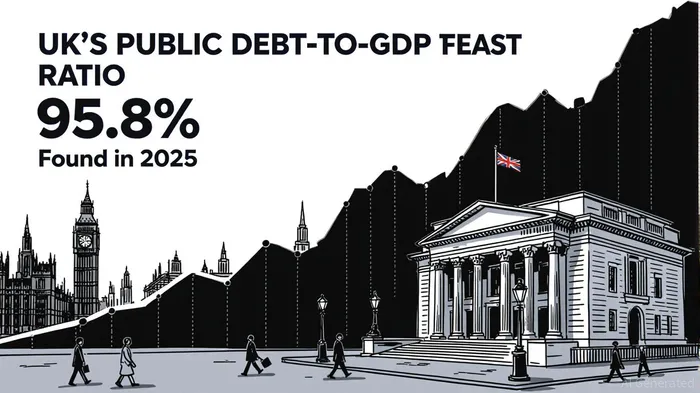
The United Kingdom stands at a precarious crossroads in 2025, with its economy teetering between fragility and resilience. Slowing GDP growth, stubborn inflation, and a ballooning public debt burden have reignited fears of a fiscal crisis reminiscent of the 1976 IMF bailout. For global investors, this environment presents a dual challenge: mitigating risks from potential market instability while identifying pockets of value in a landscape of structural change.
Economic Context: A Ticking Time Bomb?
The UK's second-quarter GDP growth of 0.3% in 2025 underscores a decelerating economy, with industrial production contracting by 0.3% and business investment plummeting 4.0%. While the service sector and construction provided modest support, the broader trend reflects a loss of momentum driven by global trade volatility and rising labor costs. Inflation, now at 3.8%, remains a persistent headwind, fueled by surging airfares and food prices. The Bank of England's July rate cut to 4.00%—the first in over two years—signals a shift toward easing, but the Monetary Policy Committee's divided vote highlights deepening policy uncertainty.
Public debt, at 95.8% of GDP, is the highest since the 1960s, with the Office for Budget Responsibility (OBR) projecting a slow decline to 74.0% by 2029-30. This trajectory hinges on fragile assumptions: tax receipts rebounding, productivity improving, and global trade tensions abating. The OBR's March 2025 report warns that a failure to address these risks could trigger a self-reinforcing cycle of higher borrowing costs and fiscal strain.
Credit Risks and Historical Parallels
The UK's AA credit rating from S&P, with a stable outlook, masks underlying vulnerabilities. While the rating agency has not downgraded the country, the OBR's data reveals the UK has the third-highest borrowing costs among advanced economies, with 10-year bond yields at 4.5%. This is a stark contrast to the 2.5% seen in 2020, reflecting eroded market confidence.
Historical parallels to the 1976 IMF crisis are striking. Then, as now, the UK faced a loss of investor trust, surging bond yields, and a depreciating pound. The 1976 bailout came with austerity measures that reshaped the economy. Today, similar pressures—exacerbated by Brexit-related fragmentation and a lack of fiscal clarity—raise the specter of renewed intervention. The 2022 mini-Budget fiasco, which triggered a bond market rout, serves as a cautionary tale of how quickly fiscal credibility can erode.
Investment Opportunities in a Shifting Landscape
Despite the risks, the UK's economic challenges have created fertile ground for selective investments.
Undervalued Healthcare REITs
UK healthcare real estate investment trusts (REITs) trade at a 10–15% discount to net asset value (NAV), compared to a 20.6% premium for U.S. peers. Aging demographics and a 50% private-pay segment provide pricing flexibility, insulating operators from inflation. The government's June 2025 Infrastructure Strategy and NHS's 10-Year Plan are driving demand for private-sector partnerships in healthcare infrastructure.Green Infrastructure and Energy Storage
Climate-related fiscal reforms are unlocking capital for renewable energy and energy storage projects. The UK's push for net-zero by 2050, coupled with advanced power purchase agreements, is attracting investors to battery storage and pumped hydro solutions.Undervalued Equities
Fintech firm Wise (WIS) and aerospace company Melrose Industries (MEL) are standout opportunities. Wise's global infrastructure stack and cross-border transaction growth position it to benefit from the UK's digital economy. Melrose's high-margin aerospace maintenance business is insulated from cyclical downturns.
Strategic Considerations for Investors
- Hedge Currency Exposure: The pound's volatility against the dollar and euro necessitates hedging strategies, particularly for investors in UK equities or REITs.
- Sectoral Diversification: Focus on sectors with pricing power (healthcare, fintech) and inflation-linked cash flows to offset broader economic risks.
- Monitor Fiscal Updates: The September 2025 inflation data and September MPC meeting will provide critical signals on the Bank of England's stance and the government's fiscal path.
Conclusion
The UK's economic fragility is a double-edged sword for global investors. While the risk of IMF intervention looms, the current environment also offers access to undervalued assets and policy-driven growth opportunities. Investors who balance caution with strategic exposure to resilient sectors—healthcare, green infrastructure, and high-quality equities—can navigate the uncertainty and position themselves for long-term gains. As the OBR warns, the UK's fiscal path remains precarious, but for those willing to look beyond the headlines, the market's dislocations may prove to be a golden opportunity.

Stay ahead of the market.
Get curated U.S. market news, insights and key dates delivered to your inbox.


AInvest
PRO
AInvest
PRO



Comments
No comments yet