
UK Doubles Steel Tariffs to Boost Domestic Production and Cut Imports
 Aime Summary
The UK government has announced new trade measures, including a 50% tariff on steel imports outside of quotas and a 60% reduction in import quotas, effective from July 2026.
These measures aim to increase domestic steel production to cover 50% of the UK's steel needs and reduce reliance on foreign imports according to government plans.
The strategy also includes support for cleaner production methods, with funding of up to £2.5 billion allocated through the National Wealth Fund to promote low-carbon steelmaking.
The UK has implemented a major shift in its steel trade strategy, introducing a 50% tariff on imports exceeding sharply reduced quotas. This move is part of a broader effort to increase domestic steel production to 50% of total usage, up from the current 30%. The government has also reduced import quotas by 60% to protect local producers from international competition, particularly from China.
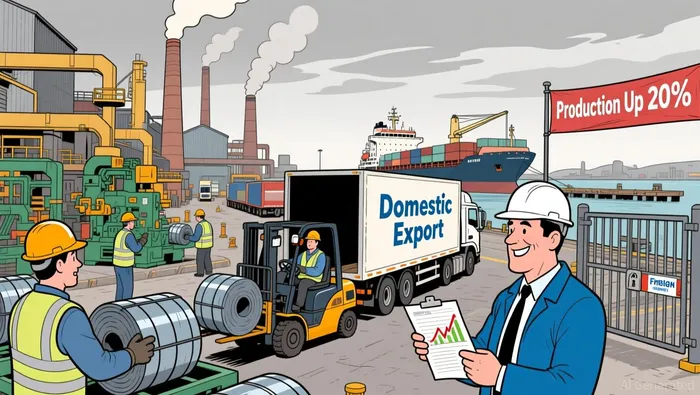
These measures are being supported by up to £2.5 billion in funding from the National Wealth Fund, aimed at modernizing production and securing the industry's long-term viability. The government is also promoting cleaner production methods, with a shift to electric arc furnaces forming the backbone of future steelmaking to support net zero targets.
Steel production in the UK accounts for 0.1% of economic output but supports 37,000 jobs. The strategy has been welcomed by unions and industry leaders, although concerns remain over unresolved issues like the future of the Scunthorpe plant.
What is the UK's new steel strategy aimed at achieving?
The UK government's new steel strategy aims to increase domestic production to cover 40-50% of the steel used in the UK. This is intended to strengthen supply chains and support the future of the steel sector by limiting the influx of cheap imports and promoting local production according to industry analysis. The strategy includes measures to address global overcapacity, such as lowering the tariff-free quota level for steel imports by 60% and doubling import taxes on certain steel products.
The goal is to reverse a decline in domestic production seen in recent years and increase the proportion of domestically produced steel from 30% to 50%. This represents a significant shift in UK trade policy, with Britain moving toward a more protectionist stance, although the measures are presented as more refined compared to those in the US under Trump.
What are the key components of the UK's steel trade measures?
The UK has implemented a 50% tariff on certain steel imports, with a 60% reduction in import quotas. This move aims to address the imbalance caused by overseas steel producers who benefit from subsidies and tax breaks unavailable to UK firms. The strategy also includes funding for steel production, with £2.5 billion allocated for both nationalised and private steel producers to support lower carbon manufacturing.
The new measures are part of a broader strategy to build a resilient and competitive steel sector that can contribute to national infrastructure, energy transition, and national security. The strategy emphasizes the need to remove regulatory and financial barriers to investment and to provide targeted support to key sites like Scunthorpe and Rotherham.
What are the potential risks or limitations of the UK's new steel strategy?
The UK's new steel strategy has been criticized by opposition parties, who warn of potential negative impacts on construction and manufacturing industries reliant on imported steel. The transition to cleaner production methods has already led to job losses at plants like Port Talbot. The government took control of the Scunthorpe steelworks in 2025 using emergency powers, highlighting ongoing concerns over job security and industry competitiveness.
While the measures have been welcomed by industry leaders, concerns remain over unresolved issues like the future of Scunthorpe and technology mix. The strategy also faces the challenge of balancing the need to protect domestic production with the potential for higher costs for industries that rely on steel imports.

Combina la sabiduría tradicional en el comercio con las perspectivas más avanzadas en el campo de las criptomonedas.
Latest Articles
Stay ahead of the market.
Get curated U.S. market news, insights and key dates delivered to your inbox.


AInvest
PRO
AInvest
PRO



Comments
No comments yet