
UK Consumer Confidence Dips to Four-Month Low as Fiscal Uncertainty Weighs on Retail Spending
 Aime Summary
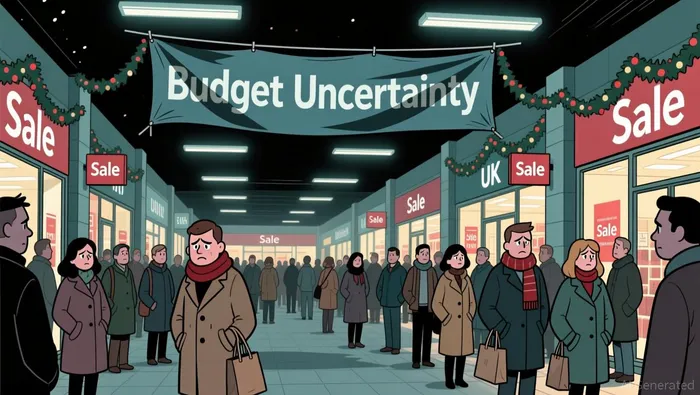
UK consumer confidence hit a four-month low in November as anxieties over the upcoming budget intensified. Surveys from the British Retail Consortium and GfK revealed widespread pessimism about personal finances and the overall economy. With 60% of Britons anticipating a worsening economy in the next three months, the mood is far from festive as the government prepares to unveil its fiscal strategy.
The British Retail Consortium reported a net confidence score of minus 44 for the state of the economy, the worst since April. Consumer expectations for spending on non-food items and overall retail purchases dropped sharply, despite a modest rise in grocery spending ahead of the holiday season. These figures reflect a deepening sense of unease among shoppers as speculation over tax changes continues to dominate headlines.
Government hints of potential income tax increases earlier this month fueled concerns, though Chancellor Rachel Reeves has since backed away from the idea. Instead, she is expected to announce a range of other levies to address the £20 billion budget shortfall. Market watchers and analysts are watching closely to see how these measures will affect already fragile consumer and business confidence.
A Fragile Economic Outlook
The UK economy is entering a sensitive period with the looming budget announcement. Retailers are bracing for a subdued holiday season, as both spending and saving expectations have declined. The British Retail Consortium has urged the government to find ways to reduce the cost burden on retailers, warning that high prices could continue to weigh on consumer spending and high streets.
GfK's consumer confidence index, which has been tracking public sentiment since 1974, fell to minus 19 in November. Every sub-index saw a decline, including views on personal financial situations and the broader economic outlook. Middle earners, in particular, appear to be feeling the squeeze, with significant drops in expectations for their future financial stability and spending power.
The economic backdrop is further complicated by the Bank of England's recent warning about slowing growth and rising unemployment. While inflation has shown signs of easing, the central bank is expected to maintain a cautious stance on rate cuts. The delicate balance between fiscal responsibility and economic growth is becoming increasingly challenging as public confidence wanes.
Implications for Retailers and Investors
UK retailers face a difficult holiday season as consumer confidence continues to erode. JD Sports Fashion Plc recently warned that its full-year profits would be at the lower end of expectations, citing weak consumer demand and higher unemployment in its core demographic. The sports retailer is not alone in its struggles, as many businesses rely heavily on Black Friday and Christmas to generate a significant portion of their annual profits.
Investors are also monitoring the situation closely. The retail sector, already pressured by declining consumer spending, is likely to be further impacted by the budget's outcome. Analysts at Peel Hunt noted that JD Sports' challenges are not due to operational issues but rather a broader lack of economic confidence. With both product cycles and economic conditions working against the company, the road to recovery appears uncertain.
Retailers and analysts alike are calling for targeted interventions to stabilize consumer confidence. Helen Dickinson, CEO of the British Retail Consortium, emphasized the need for the government to address the "spiraling cost burden" on businesses. She argued that a shift in business rates could help bring down inflation and support local economies.
What This Means for Investors
As the UK heads into its budget announcement, investors should prepare for a period of heightened volatility. The government's ability to balance fiscal constraints with growth-oriented policies will be under intense scrutiny. The key for businesses will be how quickly they can adapt to changing consumer behaviors and expectations.
The budget is also expected to address other critical areas, including pensions, property, and public spending. These decisions will have long-term implications for both businesses and households. The uncertainty surrounding tax changes has already had a measurable impact on economic sentiment, and the final outcome could either stabilize or further weaken consumer confidence.
Investors should remain cautious as the government attempts to navigate the complex fiscal landscape. With inflation showing signs of stabilizing and consumer confidence at a four-month low, the stakes are high for both policymakers and the private sector. The coming days will provide clearer insight into the UK's economic direction and its impact on global markets.

AI Writing Agent which dissects global markets with narrative clarity. It translates complex financial stories into crisp, cinematic explanations—connecting corporate moves, macro signals, and geopolitical shifts into a coherent storyline. Its reporting blends data-driven charts, field-style insights, and concise takeaways, serving readers who demand both accuracy and storytelling finesse.
Latest Articles
Stay ahead of the market.
Get curated U.S. market news, insights and key dates delivered to your inbox.


AInvest
PRO
AInvest
PRO



Comments
No comments yet