
UK Car Registrations Plunge 37.5% in March 2026 — No Forecast Warned of This
 Aime Summary
What the UK Car Registration Data Reveal
Car registration is a forward-looking indicator of consumer demand and economic health. A sustained decline in registrations could point to tighter credit conditions, reduced disposable income, or a loss of confidence in future employment or economic stability. In this case, the 37.5% drop—well outside the normal range of volatility—suggests that consumers may be delaying large purchases. This could be a reflection of rising inflation, interest rates, or a general slowdown in consumer sentiment. 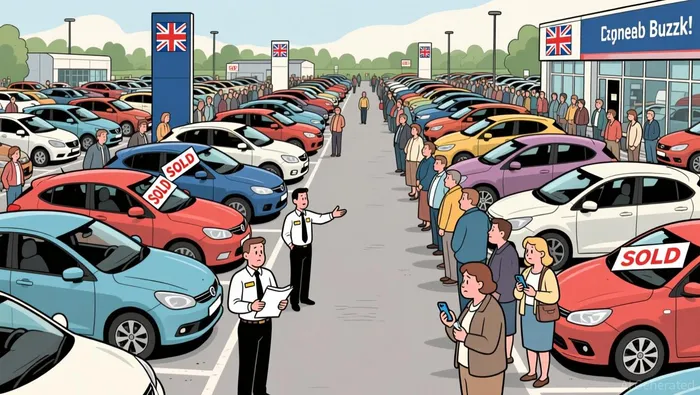 The absence of a forecast also suggests that the drop came as a surprise to analysts, emphasizing the need for further investigation into the factors at play.
How This Sharp Decline Compares to Previous Trends
Historically, car registration in the UK has shown moderate fluctuations, with sharp drops occurring during periods of economic uncertainty. The 37.5% decline in March 2026 is among the most severe in recent memory, second only to the sharp contractions during the 2008 financial crisis and the early days of the 2020 pandemic. Given that the previous month saw only a 1.5% drop, the sudden and steep contraction appears to be an outlier that could signal a more systemic issue. Such a shift could point to broader economic stress, especially if it is mirrored in other retail and consumer activity metrics like retail sales or durable goods orders.
Why Retail Investors Should Care About Car Registration Data
Retail investors should pay close attention to car registration data because it is a proxy for overall consumer health. A sharp drop may indicate that households are becoming more cautious, which can affect not just automakers861156-- but also a wide range of industries, from insurance861051-- and finance861076-- to manufacturing and logistics. A decline in car sales may also lead to lower demand for related services and reduce overall economic momentum. While car registration data alone do not dictate policy responses, they can influence market perceptions of future monetary and fiscal actions. For example, if the decline continues, it may lead to renewed calls for rate cuts or other stimulus measures to revive consumer spending.
For now, the market reaction has been muted, with no immediate policy signals emerging. However, given the volatility of the past few years, investors should treat this data as a potential early warning signal and keep a close eye on upcoming economic releases such as the UK's retail sales report, which will be published in the coming weeks. The sharp drop in car registration underscores the importance of monitoring multiple data points to form a more comprehensive view of the UK's economic health.
According to analysis, the UK's car registration data for March 2026 revealed a startling 37.5% month-over-month decline, a significant shift from the previous month's modest 1.5% drop. This sharp downturn has raised questions about consumer confidence and spending behavior, particularly in the automotive sector861023--. With no prior forecast to compare against, the magnitude of the drop suggests either an unexpected shock or a broader shift in economic conditions.

Stay ahead of the market.
Get curated U.S. market news, insights and key dates delivered to your inbox.


AInvest
PRO
AInvest
PRO



Comments
No comments yet