
UK Announces Purchase of 12 Nuclear-Capable F-35A Jets for Enhanced NATO Deterrence
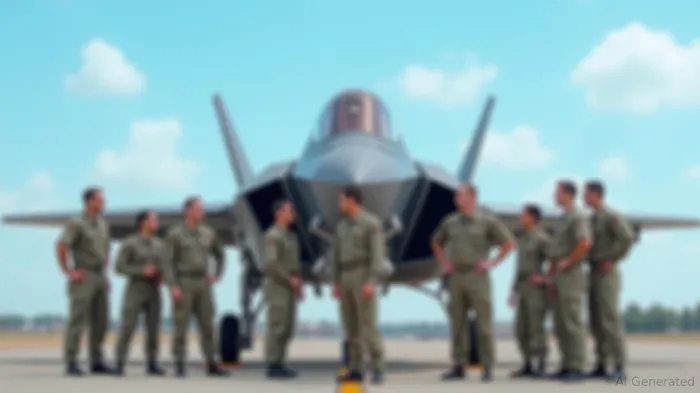
The United Kingdom has announced a significant shift in its defense strategy with the decision to purchase 12 nuclear-capable F-35A fighter jets. This move marks the UK's re-entry into the airborne nuclear deterrent game, aligning with NATO's nuclear-sharing strategy. The announcement was made by Prime Minister Keir Starmer, who described the acquisition as "the biggest strengthening of the U.K.’s nuclear posture in a generation."
The F-35A jets will be capable of carrying nuclear bombs, reviving the UK's airborne nuclear deterrent capabilities that were phased out in the 1990s following the end of the Cold War. Currently, the UK's nuclear arsenal consists solely of submarine-based missiles. With this new acquisition, the UK joins a select group of NATO members that contribute to the alliance’s nuclear mission. Only three NATO members—the U.S., Britain, and France—are nuclear powers, while seven other nations participate in the mission by providing jets that can carry either conventional weapons or American B61 bombs stockpiled in Europe.
The 12 F-35As will be based at RAF Marham in Norfolk, already home to Britain’s fleet of F-35B short takeoff and vertical landing (STOVL) aircraft. Unlike the B variant, however, the F-35A is a conventional takeoff and landing model with enhanced range, speed, and payload capabilities—making it ideal for nuclear deterrence missions under NATO protocols. While Britain’s primary strategic deterrent remains its fleet of Vanguard-class submarines armed with Trident missiles, this latest development adds a flexible, tactical dimension to its nuclear posture. It provides the RAF with an operational nuclear delivery platform for the first time in nearly three decades.
During a press conference at Downing Street, Prime Minister Starmer stated that the purchase was necessary due to the “radical uncertainty” now shaping the global security landscape. He made particular reference to Russia’s continued aggression in Eastern Europe and increasing Chinese assertiveness in the Indo-Pacific region. “This is not about escalation. It’s about preparation,” Starmer said. “We are signalling to both allies and adversaries that the United Kingdom is ready to defend itself and its partners with a full-spectrum deterrence capability.”
Military analysts suggest the decision is also meant to reinforce Britain’s influence within NATO at a time when the alliance is rethinking its nuclear doctrine in response to emerging threats. The use of nuclear weapons by the UK as part of this mission would require authorization from NATO’s nuclear planning group, as well as the U.S. president and the British prime minister. The government had avoided specifying whether U.S. nuclear weapons would be based on British soil, a move that could be controversial. The UK does not possess nuclear weapons that could be deployed via these aircraft, and that other NATO states participating in the mission also host U.S. nuclear weapons on their territory, which remain entirely under U.S. control.
Reactions to the announcement have been mixed. NATO Secretary General welcomed the UK’s decision, calling it “a timely and necessary step to bolster collective deterrence.” Meanwhile, domestic opposition leaders and anti-nuclear campaigners have questioned the wisdom of investing in more nuclear platforms, particularly during an ongoing cost-of-living crisis. The Campaign for Nuclear Disarmament issued a statement condemning the move, warning it could “ignite a new arms race and divert critical resources away from public services.” However, military experts argue that the strategic environment has changed drastically since the end of the Cold War, necessitating updated responses.
While the UK has long relied on its submarine-based deterrent for nuclear strategy, the inclusion of F-35As redefines its military doctrine. This dual-track approach, strategic and tactical, mirrors Cold War-era policies, but with modern technology and geopolitical context. In Starmer’s words, “This is a generational shift. It’s about deterrence, not aggression. But deterrence only works when it’s credible.”
As the jets are integrated into active service over the coming years, the UK’s re-entry into the airborne nuclear sphere is likely to have far-reaching consequences, not just for its national security, but for the broader dynamics of deterrence in a shifting global order. In addition to the F-35A acquisition, the UK also announced plans to provide 350 air defense missiles to Ukraine. This support is funded by 70 million pounds raised from interest on seized Russian assets. The announcements come as the UK and other NATO members pledge to increase spending on security to 5% of gross domestic product by 2035. This total includes 3.5% on defense and another 1.5% on broader security and resilience efforts. Currently, the UK spends 2.3% of its national income on defense, with plans to increase this to 2.6% by 2027.

Stay ahead of the market.
Get curated U.S. market news, insights and key dates delivered to your inbox.






Comments
No comments yet