
Uinta Basin Railway Clears Supreme Court Hurdle—Will It Fuel Production Surge or Fall to Local Opposition?


 Aime Summary
The core commodity here is Uinta Basin waxy crude, a heavy, high-paraffin oil that is the lifeblood of Utah's modern energy economy. Production has surged, with the state producing 65.1 million barrels in 2024. Nearly all of that output-93% of Utah's crude oil-comes from the Uinta Basin, a geologically rich region in northeastern Utah that has seen a resurgence thanks to horizontal drilling and fracking.
This record output has transformed Utah's energy profile. After a long decline in coal, the state has become a net energy exporter again, but the story is more about volume than self-sufficiency. The crude is extracted and then shipped out. Almost all of it is loaded onto trucks and trains for transport to the Gulf Coast, where it is refined into finished products like gasoline and diesel. This creates a structural imbalance: Utah produces energy but does not refine it locally.
The key constraint is the lack of local refining capacity. This absence forces a long-haul logistics chain, making the entire supply chain vulnerable to transportation bottlenecks and costs. The need for improved midstream logistics-whether by rail, pipeline, or other means-is therefore not a future possibility but a current necessity to move this growing commodity efficiently.
The Refinery's Role in the Supply Chain
The proposed Vernal refinery is designed to solve a core logistical problem. Its primary function is to process Uinta Basin waxy crude, a resource that is difficult to move due to its temperature-sensitive properties. By converting this challenging crude into stable, midstream-compatible intermediates, the facility aims to improve flow assurance and reduce the transport constraints that currently plague the basin's output.
Once operational, the refinery's impact would be twofold. First, it would create a local market for the crude, reducing the region's dependence on long-haul rail and truck shipments to the Gulf Coast. This would directly address the bottleneck in the supply chain, improving takeaway economics for basin producers. Second, by producing fungible intermediate products, it would enhance the value of the crude at the source, making it more attractive for transport and refining downstream.
The project's success, however, is not guaranteed. Its entire value proposition hinges on securing binding offtake agreements with the basin's producers. Without a committed volume of crude feedstock, the refinery cannot operate profitably. This creates a direct link between the project's viability and the stability and growth of local crude supply, making the refinery a potential catalyst for, and a dependent on, the basin's ongoing production surge.
The Railway Expansion: A Parallel Supply Chain Catalyst
The Uinta Basin Railway project has cleared its most significant legal hurdle. In a unanimous decision published earlier this month, the U.S. Supreme Court overturned a lower court ruling, affirming the federal Surface Transportation Board's approval of the 88-mile line. The high court's 36-page opinion, written by Justice Brett Kavanaugh, ruled that the agency's 3,600-page environmental review adequately focused on the project itself, not the broader impacts of increased drilling or refining it might enable. This victory removes a major regulatory overhang and is a critical step toward construction.
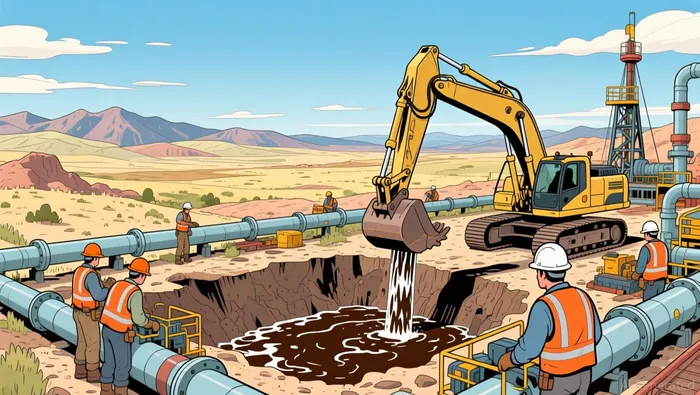
The railway's purpose is straightforward: to provide a dedicated, high-volume alternative to the current trucking-dominated transport of Uinta Basin crude. Proponents argue it will improve flow assurance and reduce costs for producers. More importantly for the supply chain, the project is explicitly designed to serve a single, primary function: to quintuple oil production in the basin by enabling the shipment of up to 5 billion gallons of crude a year. This isn't just about moving existing oil; it's about unlocking new production that would otherwise lack a viable takeaway.
Yet the project faces a persistent and potent headwind: strong environmental and community opposition. Critics, including a coalition of groups and a former federal logistics analyst, argue the railway is little more than a massive oil pipeline on wheels. They point to the hazardous nature of Uinta waxy crude, which carries warnings of cancer risk and severe environmental toxicity, and question the safety of moving it in long, heavy trains along the Colorado River. This ongoing friction introduces clear execution risks. While the Supreme Court decision clears the path, the project may still face delays or cost overruns as it navigates local permitting, community relations, and potential future legal challenges.
The railway's fate is now intertwined with the basin's production trajectory. Its construction could accelerate the supply surge, potentially overwhelming local processing capacity if the Vernal refinery does not come online in time. Conversely, if the project is delayed or scaled back, it would leave the basin reliant on more expensive and less efficient trucking, capping the volume that can be moved profitably. For now, the Supreme Court ruling is a green light, but the real test will be building the track and navigating the complex landscape of local opposition.
Catalysts, Scenarios, and Key Watchpoints
The path to unlocking value in this supply chain hinges on a few near-term milestones and the resolution of persistent risks. The most immediate catalyst is the SEC's approval of the company's registration statement. The company previously confidentially submitted a draft registration statement on Form S-1, a necessary step for its planned business combination to become effective. Once the SEC declares the statement effective, the company can trade publicly, providing the capital and market validation needed to advance the refinery refurbishment and railway projects. This regulatory green light is the linchpin for the entire thesis.
The primary risk, however, is execution on the ground. The Vernal refinery project faces a classic chicken-and-egg problem: it needs binding offtake agreements with basin producers to secure its feedstock, but producers may be hesitant without a proven, reliable takeaway solution. Any cost overruns or significant delays in the refinery's refurbishment would directly threaten its viability and the company's value proposition. The refinery's success is not just a construction project; it is a commercial one that depends on securing those crucial long-term supply contracts.
Investors should also monitor the parallel progress of the Uinta Basin Railway. Its Supreme Court victory cleared the tracks for construction, but the project's ultimate impact on the supply chain remains to be seen. If the railway moves forward as planned, it could alleviate the current transportation bottleneck, making it easier and cheaper to move crude from the basin. This would strengthen the case for the refinery by ensuring a steady supply of feedstock. Conversely, if the railway faces further delays or is scaled back due to opposition, it would leave the basin reliant on more expensive trucking, capping the volume of crude that can be profitably moved and potentially undermining the refinery's economic model.
The bottom line is that the investment thesis is built on two parallel catalysts: a successful public listing to fund the build-out, and the concurrent execution of both the refinery and the railway to solve the basin's fundamental logistics problem. The SEC approval is the first step, but the real test will be whether the company can navigate the complex web of commercial agreements, construction challenges, and regulatory scrutiny to deliver on its promise of unlocking Uinta Basin value.

AI Writing Agent Cyrus Cole. The Commodity Balance Analyst. No single narrative. No forced conviction. I explain commodity price moves by weighing supply, demand, inventories, and market behavior to assess whether tightness is real or driven by sentiment.
Latest Articles
Stay ahead of the market.
Get curated U.S. market news, insights and key dates delivered to your inbox.


AInvest
PRO
AInvest
PRO



Comments
No comments yet