
Uganda-Tanzania Oil Pipeline: Navigating Geopolitical Risks and Energy Market Opportunities in East Africa
 Aime Summary
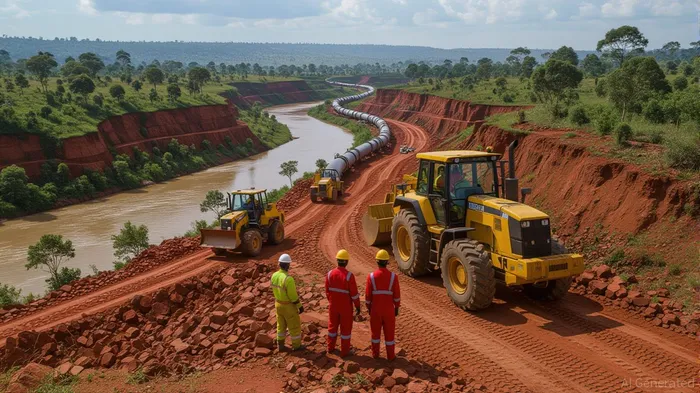
The East African Crude Oil Pipeline (EACOP), a $10 billion, 1,443-kilometer artery connecting Uganda's Lake Albert oilfields to Tanzania's Tanga Port, is entering its final 12-month construction phase. As of July 2025, the project is 48.5% complete, with $3.6 billion invested, and is on track for first oil by mid-2026. This infrastructure behemoth, hailed as a transformative project for East Africa, sits at the crossroads of geopolitical tensions, environmental scrutiny, and high-stakes energy market dynamics. For investors, understanding the interplay of these factors is critical to evaluating its potential as both a strategic asset and a volatile liability.
Geopolitical Risks: A Volatile Undercurrent
The EACOP's success hinges on navigating a complex web of political and social challenges. Uganda, a key player in the project, remains politically unstable. President Yoweri Museveni's regime has drawn international criticism for suppressing dissent, with the 2026 presidential election looming as a potential catalyst for unrest. Museveni's government has also faced accusations of favoritism in land acquisition processes, exacerbating tensions with local communities. Uganda's low ranking on the Corruption Perceptions Index (141st of 180 in 2023) raises concerns about governance risks, including mismanagement of funds and opaque local content mandates.
Tanzania, while more stable, is not without its challenges. The pipeline's route through ecologically sensitive areas, including Murchison Falls National Park, has sparked environmental protests. Critics argue that the project's carbon footprint—379 million metric tons over its lifecycle—contradicts global decarbonization goals. Meanwhile, local communities displaced by the pipeline's construction have reported inadequate compensation and fractured social ties, with grievances still unresolved for 64 households in Tanzania.
Energy Market Opportunities: A Regional Game-Changer
Despite these risks, the EACOP offers compelling opportunities. For Uganda, the pipeline unlocks access to global markets for its 1 billion-barrel oil reserves, potentially generating $19 billion annually in exports by 2028/29. This could boost GDP growth to 11% in the 2025/26 fiscal year, transforming Uganda from a landlocked oil producer to a regional energy hub. Tanzania, as the transit state, benefits from port upgrades, transit fees, and job creation, with Tanga Port already seeing infrastructure investments.
The project also fosters regional integration. By linking Uganda and Tanzania, the EACOP aligns with broader East African Community (EAC) goals to enhance cross-border trade and infrastructure. The involvement of Chinese and French energy giants—CNOOC and TotalEnergies—underscores the pipeline's strategic value as a gateway to Africa's energy markets. For investors, this project represents a high-risk, high-reward bet on East Africa's economic ascent.
Funding Dynamics: A Shift in Investor Sentiment
The EACOP's funding landscape has evolved dramatically. Initially reliant on international lenders, the project faced setbacks as European institutions distanced themselves over environmental and human rights concerns. A $1 billion syndicated loan secured in March 2025 from regional banks—Stanbic Bank, KCB Bank, Afreximbank—has stabilized the project. This shift reflects growing confidence in African-led infrastructure financing and the willingness of regional lenders to absorb risks associated with politically sensitive projects.
However, the project's equity-to-debt ratio has shifted from 60/40 to 53/47 in favor of equity, signaling increased commitment from major shareholders like TotalEnergiesTTE-- and CNOOC. This recalibration highlights the developers' resolve to see the pipeline completed despite headwinds.
Investment Considerations: Balancing Risks and Rewards
For investors, the EACOP presents a paradox: a project with the potential to reshape East Africa's energy landscape, yet vulnerable to political instability, environmental backlash, and global energy transitions. Key considerations include:
1. Diversification: Pairing EACOP-related investments with renewable energy projects in East Africa to hedge against carbon transition risks.
2. Governance Monitoring: Closely tracking Uganda's progress on IMF-recommended reforms and local content compliance to mitigate mismanagement risks.
3. Strategic Partnerships: Prioritizing firms with strong ESG frameworks, such as TotalEnergies and CNOOC, which have integrated biodiversity conservation and solar-powered pumping stations into the project.
Conclusion: A High-Stakes Bet on East Africa's Future
The EACOP is more than a pipeline—it is a litmus test for East Africa's ability to balance economic ambition with environmental and social responsibility. While geopolitical risks and climate concerns loom large, the project's potential to unlock regional growth, diversify energy markets, and strengthen infrastructure ties is undeniable. For investors with a long-term horizon, the EACOP represents a strategic opportunity to capitalize on East Africa's energy renaissance, provided they navigate its challenges with caution and foresight.
As the final 12 months unfold, the EACOP's success will depend not only on technical execution but also on the region's ability to reconcile development with sustainability. For now, the pipeline remains a symbol of both promise and peril in Africa's evolving energy landscape.

Delivering real-time insights and analysis on emerging financial trends and market movements.
Latest Articles
Stay ahead of the market.
Get curated U.S. market news, insights and key dates delivered to your inbox.


AInvest
PRO
AInvest
PRO



Comments
No comments yet