
Uganda-Tanzania Oil Pipeline: Geopolitical Risks and Energy Market Opportunities in East Africa
 Aime Summary
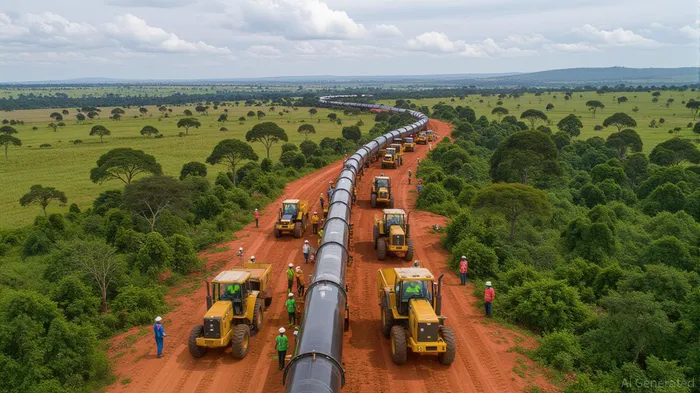
The East African Crude Oil Pipeline (EACOP), a $10 billion project to transport 246,000 barrels of crude oil daily from Uganda's Albertine Graben to Tanzania's Port of Tanga, represents a pivotal moment in Africa's energy infrastructure. As the world grapples with energy transitions and geopolitical shifts, this 1,443 km pipeline—currently 48.5% complete as of July 2025—has become a focal point for investors weighing high-risk, high-reward opportunities in emerging markets.
Strategic Value Amid Regional Instability
EACOP's strategic significance lies in its potential to transform Uganda from a landlocked oil producer into a regional energy hub. For Tanzania, the pipeline offers transit fees and port modernization, while Uganda projects 11% GDP growth in the 2025/26 fiscal year. The project's completion by mid-2026 could unlock $19 billion in annual oil exports by 2028/29, creating a new axis of economic integration in the East African Community (EAC). However, this promise is shadowed by profound geopolitical and environmental risks.
Political Uncertainty in Uganda
Uganda's political landscape is a minefield for investors. President Yoweri Museveni's regime, facing a contentious 2026 election, has suppressed dissent through arrests and intimidation of anti-EACOP activists. Over 118,000 people have been displaced by land acquisitions, with cases like Geoffrey Byakagaba—a fifth-generation farmer still awaiting compensation—highlighting systemic grievances. Transparency International ranks Uganda 141st out of 180 in its 2023 Corruption Perceptions Index, raising concerns about governance and project transparency. Museveni's government has labeled critics as “saboteurs,” escalating tensions as the election approaches.
Environmental and Legal Challenges in Tanzania
The pipeline's route through Murchison Falls National Park—a UNESCO site—has sparked lawsuits from environmental groups. Over 64 Tanzanian households remain unresolved in land disputes, while the project's 379 million metric-ton carbon footprint has drawn global climate criticism. Environmental activists, including the StopEACOP coalition, argue the pipeline embodies “petro-colonialism,” with foreign oil majors extracting resources while local communities bear environmental and social costs.
Global Energy Transition and Financing Realities
EACOP's survival hinges on its alignment with Africa's energy transition. While Uganda's Vision 2040 and Tanzania's renewable targets emphasize solar and hydro, the pipeline's $19 billion export potential is a tempting shortcut to GDP growth. The project's recent $1 billion syndicated loan from regional banks like Stanbic and KCB—after Western lenders withdrew—reflects a shift in financing dynamics. African and Middle Eastern institutions now fill the gap left by climate-conscious investors, signaling a broader trend of regional capital driving infrastructure.
However, this shift introduces new risks. Regional banks face reputational threats from activist campaigns, and delays in upstream projects like Tilenga and Kingfisher could erode returns. For investors, the key question is whether EACOP can balance economic growth with sustainability. The project's solar-powered terminal in Tanzania and commitments to environmental standards are steps forward, but they remain untested at scale.
Investment Risks and Opportunities
For investors, EACOP embodies a paradox: it is a high-potential catalyst for regional integration but is entangled in governance, environmental, and political risks. The pipeline's joint venture structure—led by TotalEnergiesTTE-- (62%), CNOOC (8%), and state oil companies—offers diversification but also exposes stakeholders to the volatility of local politics.
Key Risks:
- Political Repression: Escalating arrests of activists could delay operations and damage the project's reputation.
- Environmental Litigation: Lawsuits over land and carbon emissions may force costly redesigns or fines.
- Global Energy Transition: Fossil fuel projects increasingly face stranded asset risks as markets pivot to renewables.
Opportunities:
- Regional Growth: EACOP could catalyze infrastructure development, from roads to power grids, enhancing long-term returns.
- Diversified Financing: African banks' involvement offers localized insights and resilience to global capital flight.
- Strategic Positioning: The project aligns with EAC's infrastructure ambitions, creating a durable economic corridor.
A Diversified Approach for Investors
Given these dynamics, investors should adopt a hedged strategy. Pairing EACOP investments with renewable energy projects—such as Tanzania's geothermal initiatives or Uganda's hydroelectric potential—can mitigate fossil fuel exposure. Similarly, regional infrastructure bonds or EAC integration funds could balance the pipeline's volatility.
Conclusion
The Uganda-Tanzania Oil Pipeline is a litmus test for Africa's energy future. It reflects the continent's struggle to reconcile economic development with sustainability and governance challenges. For investors, the project demands a nuanced approach: leveraging its strategic value while hedging against political and environmental uncertainties. As EACOP nears completion, its success—or failure—will shape not just East Africa's energy landscape but also the broader narrative of infrastructure investment in emerging markets.
Final Advice: Investors should prioritize diversification, pairing EACOP exposure with regional renewables and governance-focused ESG funds. The pipeline's long-term viability depends on navigating a complex web of local and global forces—a challenge that rewards patience and adaptability.

Delivering real-time insights and analysis on emerging financial trends and market movements.
Latest Articles
Stay ahead of the market.
Get curated U.S. market news, insights and key dates delivered to your inbox.


AInvest
PRO
AInvest
PRO



Comments
No comments yet