
Uganda's 2026 Oil Pipeline Project: Navigating Geopolitical Risks and Energy Market Opportunities in East Africa
 Aime Summary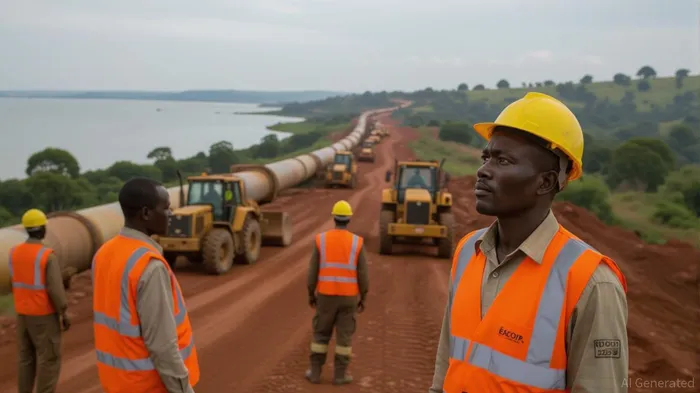
As of July 2025, the East African Crude Oil Pipeline (EACOP) stands at the intersection of Africa's energy ambitions and its climate challenges. This $10 billion, 1,443-kilometer pipeline—designed to transport 246,000 barrels of crude daily from Uganda's Lake Albert oilfields to Tanzania's Tanga Port—is 48.5% complete, with $3.6 billion already invested. Scheduled to begin operations by mid-2026, the project is a linchpin of Uganda's plan to transform from a landlocked oil producer to a regional energy hub. But its success hinges on a delicate balance of geopolitical stability, environmental stewardship, and regional cooperation.
Geopolitical Risks: A Volatile Backdrop
Uganda's political landscape remains a critical wildcard. President Yoweri Museveni's regime, which has faced international scrutiny for suppressing dissent and detaining opposition figures, could see heightened tensions as the 2026 presidential election approaches. Museveni, who has ruled since 1986, is expected to contest for a sixth term, potentially triggering protests or unrest among a youth-heavy population (77% under 30). Corruption further complicates the equation: Uganda ranks 141st out of 180 in Transparency International's 2023 Corruption Perceptions Index. Local content mandates in the oil sector have drawn accusations of favoritism, raising concerns about mismanagement of funds or land disputes.
Tanzania, as the pipeline's transit hub, also faces challenges. Environmental lawsuits over the pipeline's route through Murchison Falls National Park—a UNESCO site—have stalled progress, while unresolved compensation disputes for 64 affected households in Tanzania add legal and reputational risks. The project's 379 million metric ton carbon footprint has drawn ire from global climate advocates, complicating its alignment with Africa's energy transition goals.
Environmental and Social Challenges: A Double-Edged Sword
EACOP's developers—TotalEnergies (62%), CNOOC (8%), and local national oil companies—have pledged to adhere to International Finance Corporation (IFC) and Equator Principles. Solar-powered pumping stations, biodiversity conservation programs, and a black rhino reintroduction initiative in Uganda are part of the project's sustainability strategy. However, critics argue these measures are insufficient to offset the long-term environmental risks. Oil spills, water contamination, and disruption of ecosystems like Murchison Falls remain pressing concerns.
Socially, the project has generated over 8,000 jobs and trained 400,000 man-hours of workers, with 400,000+ households expected to benefit from rural electrification. Yet reports of inadequate compensation and displacement of local communities have fueled protests, underscoring the need for transparent community engagement.
Regional Energy Dynamics: Complementary and Competing Forces
EACOP is not operating in isolation. It is part of a broader regional energy strategy, including the Tilenga and Kingfisher oilfield developments. These projects are expected to generate $19 billion annually in oil exports for Uganda by 2028/29, boosting GDP growth to 11% in the 2025/26 fiscal year. Tanzania, meanwhile, stands to gain from transit fees, port upgrades, and economic development in the Tanga region.
However, the project faces competition from renewable energy initiatives. The Eastern Africa Power Pool (EAPP) is advancing a centralized Day Ahead Market (DAM) to facilitate cross-border electricity trading, aiming to integrate low-cost renewable energy into the grid. This initiative, supported by the World Bank and ESMAP, aligns with Sustainable Development Goal 7 (SDG 7) and could reduce reliance on fossil fuels in the long term.
Investment Implications: High-Risk, High-Reward
For investors, EACOP represents a high-stakes opportunity. The pipeline's completion could unlock significant economic benefits for Uganda and Tanzania, including infrastructure development, job creation, and energy security. However, the project's success depends on mitigating geopolitical and environmental risks.
- Infrastructure and Energy Sectors: The pipeline's construction has already spurred local employment and capacity-building, with over 2,000 Ugandan nationals currently employed. Investors in regional infrastructure firms or energy service providers may benefit from the project's momentum.
- Diversification into Renewables: While EACOP is a fossil fuel project, its developers' incorporation of solar-powered pumping stations and partnerships with renewable energy initiatives suggest a hybrid approach. Investors should consider diversifying into renewables to hedge against carbon transition risks.
- Regional Integration: EACOP's role in connecting Uganda and Tanzania's energy markets positions it as a catalyst for regional integration. Investors in cross-border logistics or energy trading platforms could capitalize on this trend.
Conclusion: A Strategic Crossroads
The EACOP project is a litmus test for East Africa's ability to balance economic development with environmental and social responsibility. While the pipeline's potential to generate $19 billion annually in oil exports is enticing, its long-term viability will depend on Uganda's governance reforms, Tanzania's environmental compliance, and the resilience of global oil markets.
For investors, the key is to approach EACOP with a diversified portfolio and a long-term lens. Pairing investments in the pipeline with renewable energy projects and regional infrastructure could mitigate risks while capitalizing on the region's growth potential. As the final 12 months of construction unfold, EACOP's completion will not only determine the fate of a $10 billion pipeline but also shape the trajectory of East Africa's energy renaissance.

Delivering real-time insights and analysis on emerging financial trends and market movements.
Latest Articles
Stay ahead of the market.
Get curated U.S. market news, insights and key dates delivered to your inbox.


AInvest
PRO
AInvest
PRO



Comments
No comments yet