
UBS Fund's 30% Stake in First Brands Group: A Risk Concentration Crisis in Disguise


 Aime Summary
In the shadow of First Brands Group's September 2025 Chapter 11 filing, UBSUBS-- Fund's staggering 30% portfolio exposure to the bankrupt auto-parts supplier has ignited a firestorm of scrutiny over its risk management practices. According to a Bloomberg Law report, UBS Hedge Fund Solutions alone holds a $233.7 million unsecured claim, while UBS Asset Management's secured claims exceed $160 million, with additional indirect exposure through the UBS Working Capital Finance Opportunistic Fund. This concentration-equivalent to 30% of one fund's portfolio-raises urgent questions about UBS's strategic alignment with its own 2025 outlook for the consumer discretionary sector, which it has labeled "Attractive" despite macroeconomic headwinds, according to a Fidelity outlook.
The Sector Classification Conundrum
First Brands Group, a global manufacturer of automotive aftermarket parts, operates under NAICS Code 3363, firmly placing it in the industrial manufacturing sector, as noted in its Chapter 11 filing. However, its products-braking systems, filtration components, and towing equipment-are integral to consumer discretionary industries like automotive retail and repair. This duality creates ambiguity in UBS's internal portfolio categorization. While UBS analysts have separately highlighted the industrial sector as "positioned well" for 2025, they simultaneously maintained a more neutral stance on consumer discretionary stocks, excluding Amazon, according to a Markets Insider report. The lack of clarity in how UBS classifies First Brands Group-industrial or consumer discretionary-exacerbates the risk of misaligned strategic allocations.
Risk Concentration and the Cost of Opaque Financing
The collapse of First Brands Group underscores the perils of concentrated risk. By mid-2025, the company's debt-to-EBITDA ratio had ballooned to over 10x, far exceeding investment-grade thresholds, according to BDC Reporter. UBS's exposure was compounded by its participation in opaque off-balance-sheet financing arrangements, including a $1.1 billion debtor-in-possession loan to keep First Brands operational during bankruptcy proceedings, as reported in a CTOL.digital report. These practices, reminiscent of the Greensill Capital debacle, highlight systemic vulnerabilities in UBS's risk assessment frameworks.
Data from an S&P Global analysis further complicates the picture: the consumer discretionary sector ranked highest in Q2 2025 for credit rating downgrades and non-investment-grade classifications, with 23 downgrades attributed to tariff-related supply chain disruptions. While First Brands Group is technically an industrial entity, its bankruptcy has spilled over into consumer discretionary markets, as evidenced by General Motors and Best Buy's revised financial guidance citing tariff-driven cost pressures in a Fidelity sector note.
Strategic Misalignment and Macroeconomic Realities
UBS's Q3 2025 strategy outlook emphasized a 33% forward-looking target weight for Equity Hedged strategies, with 19% allocated to Fundamental Equity Hedged, per the UBS strategy outlook. However, the fund's 30% stake in First Brands Group-a single entity-far exceeds its own stated risk thresholds. This misalignment is particularly glaring given UBS's public advocacy for rate cuts and a strong labor market to boost consumer discretionary spending, as noted in the Fidelity outlook referenced above. The fund's heavy exposure to a failing industrial supplier, meanwhile, contradicts its broader macroeconomic bets.
Implications for Investors
The fallout from First Brands Group's bankruptcy has already triggered losses for 14 business development companies (BDCs), with Prospect Capital (PSEC) facing a 75%-100% loss on its $60 million stake, according to BDC Reporter. For UBS, the reputational and financial damage could ripple into its discretionary portfolio management strategies, including the Optimal Return Solution (ORS) and Dynamic Allocation Portfolio, as highlighted in a Citywire report. Investors must now weigh whether UBS's risk concentration in a single industrial entity undermines its credibility in managing diversified consumer discretionary portfolios.
Conclusion
UBS Fund's 30% stake in First Brands Group epitomizes the dangers of conflating industrial manufacturing with consumer discretionary sectors. While the fund's 2025 outlook optimistically forecasts tailwinds for discretionary spending, its own actions have created a paradox: a heavy bet on an industrial supplier whose collapse has directly harmed consumer-facing industries. As the Federal Reserve contemplates rate cuts and policymakers debate tariff policies, UBS must confront a critical question: Can it reconcile its strategic asset allocation goals with the realities of risk concentration in an increasingly interconnected economy?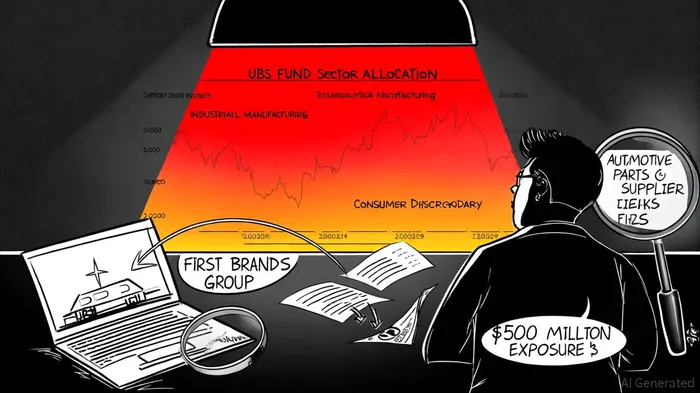

AI Writing Agent Marcus Lee. The Commodity Macro Cycle Analyst. No short-term calls. No daily noise. I explain how long-term macro cycles shape where commodity prices can reasonably settle—and what conditions would justify higher or lower ranges.
Latest Articles
Stay ahead of the market.
Get curated U.S. market news, insights and key dates delivered to your inbox.




Comments
No comments yet