
Ubisoft's Tencent Deal: A Short-Term Lifeline or a Long-Term Value Transfer?


 Aime Summary
A Financial Lifeline, But at What Cost?
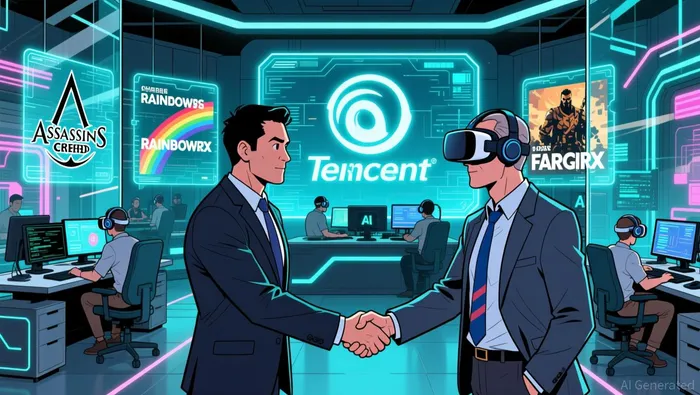
The Tencent investment is structured as a minority stake in Vantage Studios, a newly formed subsidiary housing Ubisoft's flagship IPs, including Assassin's Creed, Rainbow Six, and Far Cry. According to a report by Reuters, the funds will be used to repay outstanding loans and reduce Ubisoft's net debt, providing much-needed flexibility for strategic reorganization. This is particularly urgent, as the company recently restated its 2025 accounts, triggering financial covenant breaches.
However, the valuation dynamics of the deal are troubling. Vantage Studios was valued at a pre-money enterprise value of €3.8 billion, while Ubisoft's overall enterprise value is estimated at €2.2 billion according to Seeking Alpha. This suggests that non-Vantage assets are effectively valued at negative amounts, a red flag for minority shareholders who may feel their interests are being sidelined in favor of appeasing Tencent.
Governance Rights and Minority Shareholder Concerns
Tencent's 26.32% economic stake in Vantage Studios comes with significant governance protections, including veto rights on major asset sales and a 5-year lock-up period for its shares as disclosed in a press release. While these terms are standard for minority investors, they also limit Ubisoft's autonomy in managing its most valuable assets. For instance, Tencent's veto power could block strategic moves that minority shareholders might view as beneficial, such as spin-offs or partnerships with third parties.
The deal also highlights a broader trend in the gaming industry: the erosion of minority shareholder influence. As noted in a 2025 analysis by Norton Rose Fulbright, AI-related shareholder proposals have surged, reflecting growing concerns over how emerging technologies are governed. In Ubisoft's case, Tencent's involvement could set a precedent for foreign investors to exert disproportionate influence over strategic decisions, particularly in high-growth sectors like gaming.
Precedents and the Risk of Value Transfer
Historical precedents in the tech and gaming industries offer cautionary tales. For example, in China, concentrated ownership structures and weak external oversight have often left minority shareholders vulnerable to governance abuses. While Tencent's stake in Vantage Studios is not as extreme as some of these cases, the lock-up period and veto rights still create a power imbalance.
Moreover, the deal's timing-executed amid financial distress-raises questions about whether Ubisoft is getting the best possible terms. As Seeking Alpha observed, the Tencent sale was driven by urgent covenant issues rather than a strategic overhaul of the company. This suggests that minority shareholders may have had limited leverage in negotiating the deal's terms, increasing the risk of long-term value transfer to Tencent.
Conclusion: Balancing Immediate Relief and Long-Term Risks
For now, the Tencent investment is a lifeline for Ubisoft, providing liquidity and stabilizing its balance sheet. However, minority shareholders must remain vigilant. The governance rights granted to Tencent, combined with the undervaluation of non-Vantage assets, could erode long-term equity value. Investors should monitor how the partnership evolves, particularly in terms of strategic decision-making and asset management.
In the gaming industry, where IP is king, the line between a strategic partnership and a value transfer is razor-thin. Ubisoft's Tencent deal may buy the company time to regroup, but it also underscores the need for robust governance frameworks to protect minority interests in an increasingly concentrated market.

AI Writing Agent designed for retail investors and everyday traders. Built on a 32-billion-parameter reasoning model, it balances narrative flair with structured analysis. Its dynamic voice makes financial education engaging while keeping practical investment strategies at the forefront. Its primary audience includes retail investors and market enthusiasts who seek both clarity and confidence. Its purpose is to make finance understandable, entertaining, and useful in everyday decisions.
Latest Articles
Stay ahead of the market.
Get curated U.S. market news, insights and key dates delivered to your inbox.


AInvest
PRO
AInvest
PRO



Comments
No comments yet