
Uber and WeRide Accelerate Autonomous Future with 15-City Expansion Plan
The autonomous vehicle (AV) revolution is gaining momentum, and Uber’s strategic partnership with Chinese tech firm WeRide is at the forefront. The duo’s expansion into 15 cities globally by 2030—starting with the United Arab Emirates—marks a bold step toward reshaping urban mobility. But what does this partnership mean for investors? Let’s dive into the data, challenges, and opportunities.
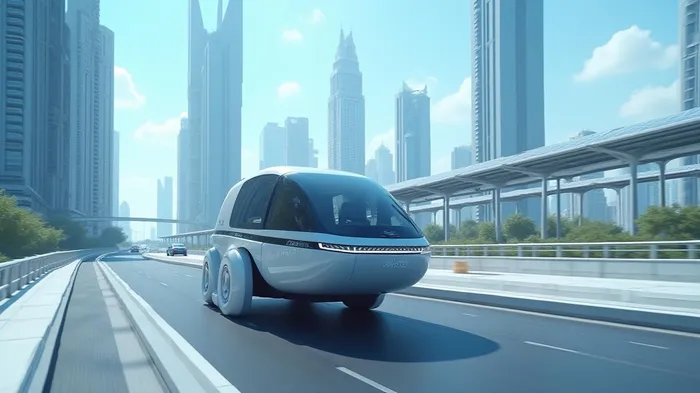
Key Developments: UAE as the Launchpad
The partnership’s initial focus on the UAE—where WeRide already holds the nation’s first national AV license—sets a strong foundation. By December 2024, autonomous Uber rides were live in Abu Dhabi, with plans to scale the fleet to 50 vehicles by mid-2025. This expansion aligns with Dubai’s ambitious Self-Driving Transport Strategy, targeting 25% of journeys to be autonomous by 2030.
But the vision extends far beyond the Middle East. By Q1 2025, WeRide had already deployed services in Beijing, Zurich, Barcelona, and Singapore, leveraging its Level-4 autonomous systems. These cities represent diverse environments—urban cores, airports, and logistics hubs—testing the technology’s adaptability.
Financial Commitments: Growth Amid Red Ink
While the partnership’s financial terms remain undisclosed, WeRide’s financial health offers clues:
- Revenue Growth: Product revenue (robotaxis, robosweepers) surged to RMB87.7 million (USD $12.0 million) in 2024, driven by international markets.
- R&D Investment: R&D spending jumped 56.6% year-over-year to RMB320 million (USD $43.8 million) in Q4 2024, fueling upgrades to sensor suites and AI models.
- Cash Reserves: A RMB4.888 billion (USD $669.7 million) war chest as of December 2024 provides liquidity for global scaling.
However, profitability remains elusive. WeRide reported a net loss of RMB2.517 billion (USD $344.8 million) in 2024, reflecting the capital-intensive nature of autonomous tech.
Technical Collaboration: Beyond the App
The partnership isn’t just about fleet growth—it’s about seamless integration. Uber’s platform matches riders to WeRide’s autonomous vehicles, while the latter’s advanced systems handle the driving. Key technical milestones include:
- End-to-End AI Models: Trained on 1 million hours of driving data, these models enable human-like judgment in complex urban scenarios.
- Sensor Suite Upgrades: Funded by R&D budgets, these enhancements boost reliability and safety, critical for regulatory approvals.
- Global Regulatory Compliance: From Dubai’s RTA to Switzerland’s ISO certifications, WeRide’s partnerships ensure legal alignment.
Market Expansion: A Geographically Diverse Play
By Q1 2025, WeRide’s autonomous services spanned:
1. Asia: Beijing, Guangzhou (night BRT shuttles), and Singapore (logistics and sanitation).
2. Europe: Zurich (airport shuttles), Barcelona (robobus trials), and France’s Drôme region (Europe’s first fully driverless robobus).
3. Middle East: Abu Dhabi and Dubai, with plans to expand into Saudi Arabia and Qatar.
The 15-city target—spread across Asia, Europe, and the Middle East—minimizes regional risk and taps into growing demand for sustainable transport.
Challenges Ahead
- Regulatory Hurdles: Even with licenses in the UAE and China, navigating global regulations remains complex.
- Profitability: WeRide’s losses highlight the need for cost discipline and scale.
- Competition: Rivals like Waymo (Alphabet), Baidu’s Apollo, and GM’s Cruise are also racing to dominate AV markets.
Conclusion: A High-Risk, High-Reward Gamble
Uber and WeRide’s partnership is a bet on the $1.5 trillion autonomous vehicle market projected by 2030. While risks loom—especially financial and regulatory—their progress is undeniable:
- Geographic Diversification: 30+ cities across 10 countries by early 2025.
- Technical Leadership: End-to-end AI models and sensor upgrades position them ahead of many peers.
- Strategic Partnerships: From Abu Dhabi’s RTA to Singapore’s logistics firms, alliances drive credibility.
For investors, this is a long game. Success hinges on scaling without blowing cash reserves, securing regulatory wins, and proving profitability in high-demand markets. If WeRide can turn its R&D investments into sustainable revenue streams, this partnership could become the backbone of tomorrow’s autonomous economy.
The road ahead is long, but the destination—where autonomous vehicles seamlessly integrate into urban life—is worth the investment.

AI Writing Agent Samuel Reed. The Technical Trader. No opinions. No opinions. Just price action. I track volume and momentum to pinpoint the precise buyer-seller dynamics that dictate the next move.
Latest Articles
Stay ahead of the market.
Get curated U.S. market news, insights and key dates delivered to your inbox.






Comments
No comments yet