
Uber Stock Tumbles 1.11% Amid $1.47B Volume Surge to 45th Rank as Retail Delivery Expansion Raises Investor Caution
 Aime Summary
Market Snapshot
, 2025, despite a surge in trading volume. , , . The price decline contrasts with the heightened liquidity, suggesting short-term investor caution or profit-taking following recent strategic announcements.
Key Drivers
Uber’s recent expansion into on-demand retail delivery has positioned the company as a key player in the evolving e-commerce logistics landscape. Last week, the firm announced partnerships with Pacsun, Camping World, and Lush, enabling consumers to order products through its UberUBER--, Uber Eats, and Postmates apps. This move extends Uber’s delivery capabilities beyond food into discretionary categories such as apparel, beauty, and outdoor gear. Hashim Amin, Uber’s head of retail for North America, emphasized that the initiative aims to consolidate customer shopping needs into a single platform, enhancing convenience while demonstrating the company’s adaptability to diverse retail partners.
The partnerships align with broader industry trends where third-party delivery services are increasingly integrated into retail operations. For example, Family Dollar recently partnered with DoorDash for on-demand delivery, while Dollar General leveraged Uber Eats for its Popshelf stores. Nonessential retailers, such as Old Navy and Best Buy, have also entered the same-day delivery space, reflecting growing consumer demand for speed and flexibility. Uber’s strategy to diversify its delivery ecosystem positions it to compete with rivals like DoorDash and Instacart, which have similarly expanded into retail partnerships.
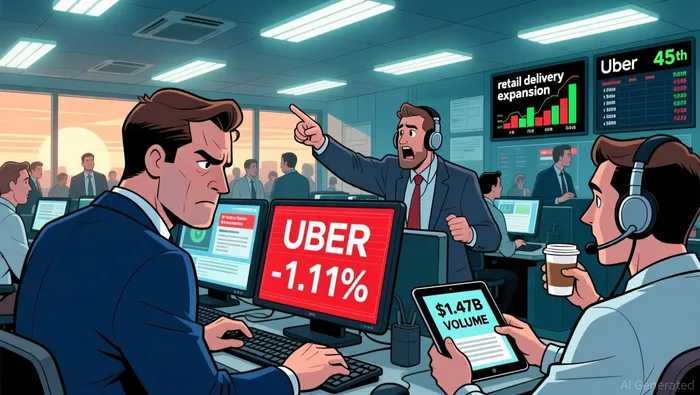
However, . While the partnerships signal strategic progress, investors may be weighing execution risks, such as margin pressures from low-cost delivery services or saturation in the logistics sector. Additionally, Uber’s foray into retail delivery faces challenges in scaling non-food services, which often require distinct logistics infrastructure compared to food delivery. The company’s ability to monetize these partnerships effectively will depend on factors like customer adoption rates, retailer satisfaction, and operational efficiency.
The competitive landscape further complicates Uber’s ambitions. Home Depot, for instance, has partnered with both Uber Eats and DoorDash for same-day delivery, highlighting the fragmented nature of the market. Meanwhile, discount chains like Family Dollar and Dollar General have secured delivery contracts with multiple platforms, creating a competitive environment where customer loyalty and pricing dynamics play critical roles. Uber’s success in this arena will hinge on its capacity to differentiate its delivery network through speed, reliability, and a curated selection of retail partners.
In sum, Uber’s strategic pivot into retail delivery underscores its efforts to diversify revenue streams beyond ride-hailing and food delivery. The recent partnerships with Pacsun, Camping World, and Lush represent a calculated step toward capturing a larger share of the on-demand economy. However, the stock’s modest decline indicates that investors remain cautious, balancing the long-term growth potential of these initiatives against near-term operational and competitive challenges. As the delivery sector matures, Uber’s ability to adapt its logistics model to non-food categories will be pivotal in determining the sustainability of its market position.

Stay ahead of the market.
Get curated U.S. market news, insights and key dates delivered to your inbox.
AInvest
PRO
AInvest
PRO



Comments
No comments yet