
Uber Shuts Down Nigeria Operations Amid Global Restructuring
 Aime Summary
- Uber has officially ceased operations in Nigeria and Uganda, effective September 2, 2026, following a strategic review of its African investment priorities .
- The company is redirecting resources to markets such as Ghana, Kenya, South Africa, and Egypt where it can achieve greater scale in driver earnings and rider accessibility .
- This withdrawal aligns with a broader global restructuring effort that includes eliminating approximately 10% of its workforce to reduce management layers and refocus capital .
- The exit underscores severe structural economic headwinds in Nigeria, including high fuel costs, currency volatility, and intense competition from rivals like Bolt and inDrive .
- Industry analysts warn that reduced competition may lead to higher fares and lower driver discipline, as the Nigerian market operates under significant cost pressures .
Uber announced the wind-down of its operations in Nigeria and Uganda, citing a thorough review of business priorities and investment strategy across the continent . The company emphasized that this withdrawal is limited to these two markets and does not impact its operations in other regions where it remains active . UberUBER-- clarified that the decision to leave Nigeria was not related to recent regulatory directives from the Federal Airports Authority of Nigeria (FAAN) concerning e-hailing operations at airports .
The decision follows previous exits from Tanzania in February 2026 and Ivory Coast in 2025 . Uber stated it would redirect its investments to African markets where it believes it can provide earning opportunities for drivers at scale and enable riders to access transportation services more easily . The company is prioritizing the support of affected drivers, riders, and local team members during the transition period .
Why Is Uber Restructuring Globally?
Uber is eliminating approximately 3,300 jobs, representing 10% of its global headcount, as part of a major organizational restructuring . CEO Dara Khosrowshahi cited increasing organizational complexity from rapid growth as the primary driver, noting that accumulated management layers and fragmented teams had slowed decision-making . The restructuring aims to shrink management roles by 20% and eliminate teams with one or two members .
The company plans to consolidate its engineering, science, and delivery divisions, while merging delivery operations across restaurants, retail, and direct channels . Additionally, Uber is significantly scaling back its remote work policy, restricting fully remote roles to less than 1% of the workforce . This shift towards a leaner operating model is intended to free up capital for reinvestment in autonomous vehicle partnerships and core business expansion .
Analysts estimate the cost-cutting measures could generate up to $2 billion in annual savings . Following the announcement, Uber's stock rose nearly 2%, indicating investor approval of the strategic pivot to simplify operations and improve efficiency . Unlike many tech peers that have reduced staff due to excessive AI spending, Uber's cuts are driven by a need to streamline its core ride-hailing, delivery, and emerging robotaxi businesses .
How Will the Nigerian Market Be Affected?
Uber's departure from Nigeria is expected to reshape the competitive e-hailing landscape, with competitors like Bolt, inDrive, and LagRide positioning themselves to capture drivers and passengers . The Nigerian market is described as large and active but operates under significant cost pressures, including fuel, vehicle maintenance, insurance, and regulatory requirements . Ayoade Ibrahim of the Amalgamated Union of App-Based Transporters of Nigeria (AUATON) noted that fewer serious options may reduce discipline on surge and base fares .
Capital market expert Opeyemi Ajetunmobi warned that reduced competition could give surviving platforms greater pricing power, potentially increasing fares . Drivers, who compare platforms based on net earnings, commissions, and incentives, may shift to platforms offering better economics . The competitive battle is shifting from passenger acquisition to building sustainable driver-partner ecosystems .
Bolt and inDrive are best positioned to capture the market share left by Uber due to their established scale . LagRide is ramping up capacity by deploying 400 new vehicles and mobilizing over 1,000 drivers ahead of the 2026 end-of-year rush . inDrive continues to grow with its price-negotiation model . Smaller apps like Rida may also capture niche segments .
Operating costs in Nigeria have surged due to rising fuel prices, inflation, and currency volatility, which increase expenses for both drivers and platforms . The Nigerian economy presents unique challenges for ride-hailing models, with drivers facing high costs for petrol, tires, and repairs, while spare parts are affected by exchange rates . Simultaneously, passenger purchasing power has declined due to rising costs of living, creating a difficult margin environment for platforms trying to balance affordable fares with driver earnings .
Uber's departure removes a significant safety and accountability layer, as a 2023 study found that 78% of surveyed women considered Uber the safest option for late-night travel . Economically, Uber contributed approximately ₦34 billion to Nigeria's economy in 2023 . The abrupt nature of the exit, with no prior wind-down period, has drawn criticism regarding the treatment of drivers and riders left mid-trip .
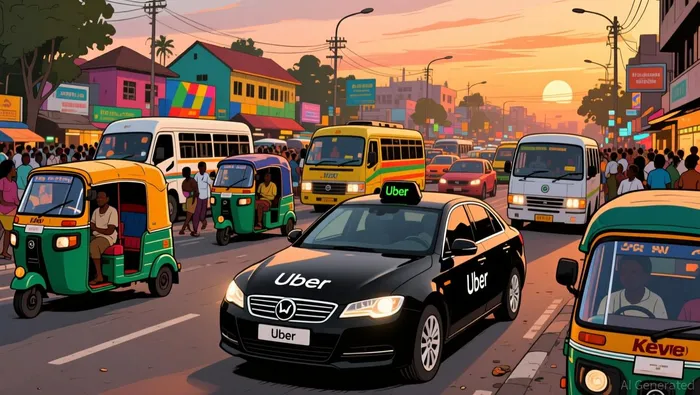
Uber clarified that the exit is limited to Nigeria and Uganda and does not signal a retreat from sub-Saharan Africa as a whole . The company remains active in Egypt, Ghana, Kenya, and South Africa, citing robust growth and long-term opportunities in these markets . To mitigate fallout, Uber’s help centers in Nigeria and Uganda will remain open until September 23 to resolve outstanding payments and issues for affected drivers and employees .
Rider support services will remain available for 21 days post-shutdown to handle outstanding enquiries . Additionally, Uber confirmed that user data will be managed in compliance with applicable data protection laws and privacy requirements . This strategic shift follows a pattern of other multinationals restructuring or leaving Nigeria, including GSK, Procter & Gamble, and Kimberly-Clark, which closed a $100 million Lagos factory in 2024 . The Nigeria Employers' Consultative Association (NECA) estimated that such divestments have impacted over 20,000 livelihoods in value-chain roles .

Blending traditional trading wisdom with cutting-edge cryptocurrency insights.
Latest Articles
Stay ahead of the market.
Get curated U.S. market news, insights and key dates delivered to your inbox.


AInvest
PRO
AInvest
PRO




Comments
No comments yet