
Uber Partners with Lucid for 20,000 Autonomous Ride-Hailing Vehicles by 2032
 Aime Summary
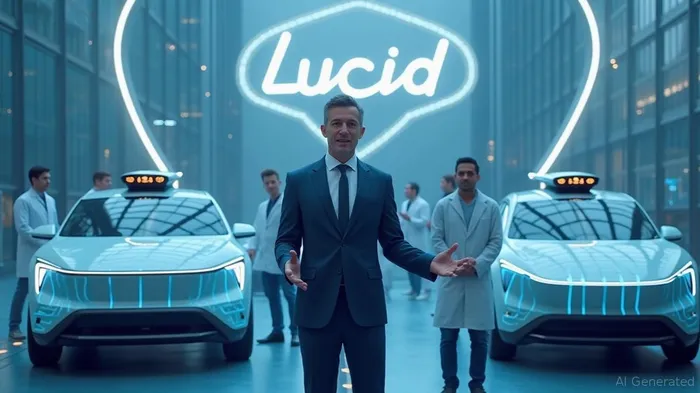
Uber Technologies Inc. has announced a strategic partnership with Lucid GroupLCID-- Inc. to launch a fleet of autonomous ride-hailing vehicles. The collaboration aims to deploy at least 20,000 vehicles by 2032, with the initial rollout planned for the second half of 2026 in a major U.S. city. Uber will purchase LucidLCID-- Gravity SUVs equipped with Nuro's autonomous driving technology, marking a significant step towards integrating advanced self-driving capabilities into its ride-hailing services.
This partnership underscores Uber's commitment to innovation and its vision for a future where autonomous vehicles play a central role in urban transportation. By leveraging Lucid's cutting-edge electric vehicle technology and Nuro's expertise in autonomous driving, Uber aims to enhance the efficiency, safety, and sustainability of its services. The Lucid Gravity SUV, known for its long-range electric capabilities and spacious interior, is well-suited for the demands of ride-hailing operations. The integration of Nuro's autonomous driving system will enable these vehicles to navigate urban environments with precision and reliability.
The deployment of 20,000 autonomous vehicles over the next six years represents a substantial investment in technology and infrastructure. This initiative is expected to not only improve the overall user experience but also reduce operational costs and environmental impact. The move aligns with Uber's broader strategy to transition towards a more sustainable and technologically advanced transportation ecosystem. By 2032, the company aims to have a significant portion of its fleet operating autonomously, which could revolutionize the way people commute and travel.
Uber's collaboration with Lucid is part of a broader strategy to shift its focus from in-house development to ecosystem investment. The company has been divesting from its own autonomous driving ventures, such as Aurora InnovationAUR--, to fund this new direction. This strategic pivot allows Uber to leverage the expertise of specialized partners, accelerating the development and deployment of autonomous technologies.
This partnership is not Uber's first foray into the autonomous driving sector. The company has previously collaborated with multiple manufacturers, including Waymo and Volkswagen, to develop and deploy autonomous ride-hailing services. These collaborations have helped Uber establish itself as a leader in the autonomous transportation space, with services already available in cities like Phoenix, Austin, and Atlanta.
For Lucid, this partnership represents a significant milestone in its commercialization efforts. The Gravity SUV, Lucid's second mass-produced vehicle, is expected to see a doubling in production to 20,000 units by 2025. The collaboration with Nuro has already resulted in prototype vehicles undergoing testing in a closed environment in Las Vegas. This partnership opens up new commercial opportunities for Lucid, positioning the company as a key player in the autonomous vehicle market.
Lucid is also advancing its own autonomous driving technology, recently announcing new features such as hands-free driving and automatic lane changing. The company is collaborating with the King Abdullah University of Science and Technology to further develop these capabilities, demonstrating its commitment to staying at the forefront of automotive innovation.
The competitive landscape in the autonomous vehicle sector is intensifying, with companies like TeslaTSLA-- also making significant strides. Tesla recently launched its autonomous ride-hailing service in Austin, with plans to expand to more cities. Nuro, which initially partnered with Uber for autonomous delivery services, has since shifted its focus to developing autonomous driving software, highlighting the rapid evolution of the industry.
This partnership between Uber and Lucid is a clear indication of the growing convergence between ride-hailing services and electric vehicle manufacturers. As the demand for sustainable and efficient transportation solutions continues to rise, such collaborations are becoming increasingly crucial. The integration of autonomous driving technology with electric vehicles not only reduces carbon emissions but also enhances operational efficiency, setting a new standard for the industry.

Stay ahead of the market.
Get curated U.S. market news, insights and key dates delivered to your inbox.
AInvest
PRO
AInvest
PRO



Comments
No comments yet