
Uber and Lyft Face Disruption from Tesla's Robotaxi Expansion: Wedbush
ByAinvest
Friday, Jul 11, 2025 8:28 am ET1min read
LYFT--
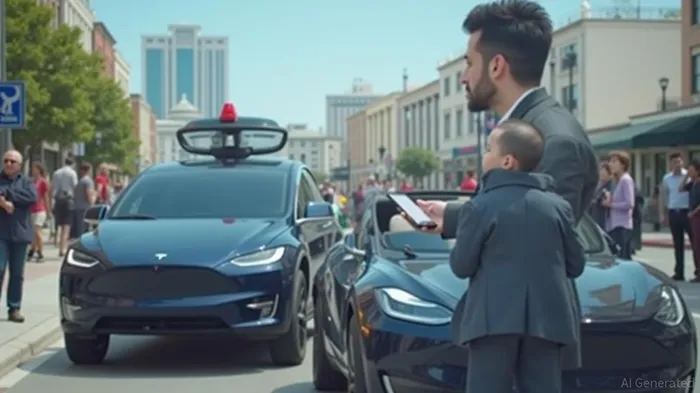
The robotaxi service, currently in a limited rollout in Austin, Texas, is part of Tesla's broader strategy to become a leader in the autonomous vehicle sector. The company aims to handle the entire end-to-end process, from car construction to delivering the service to end customers, using its existing manufacturing infrastructure and software capabilities [2].
Uber, on the other hand, has taken a more collaborative approach to autonomous vehicles. The company has partnered with Waymo and other market leaders to test self-driving services in various cities. This strategy allows Uber to avoid the high costs of constructing its own driverless fleet and provides flexibility to collaborate with multiple players in the space [2].
Lyft, another major player in the ride-hailing market, has also expressed interest in the autonomous vehicle sector. However, the company has not yet rolled out a dedicated robotaxi service. Oppenheimer analysts have noted that the limited robotaxi rollout by Tesla has removed a key overhang for Lyft, helping clear the path for potential multiple expansion in the stock [1].
The increased competition from Tesla's robotaxi service could lead to a more competitive ride-hailing market, potentially impacting the market share of both Uber and Lyft. However, it is important to note that the autonomous vehicle market is still in its early stages, and the winners in this sector will not be known for several years [2].
In conclusion, Tesla's expansion into the robotaxi market has the potential to significantly impact the ride-hailing industry. While the increased competition could lead to a more competitive market, the long-term effects of this expansion remain to be seen.
References:
[1] https://finance.yahoo.com/news/why-tesla-robotaxi-stumble-win-142250366.html
[2] https://www.aol.com/best-stock-buy-now-uber-010000956.html
OPY--
TSLA--
UBER--
Tesla is seeking to expand its robotaxi services, potentially disrupting the ride-hailing market for Uber and Lyft. Wedbush analysts predict that Tesla's expansion will lead to increased competition for the two companies, with Wedbush forecasting a 35% decline in Uber's and Lyft's market share by 2025.
Tesla's recent foray into the robotaxi market has the potential to significantly disrupt the ride-hailing industry, with Wedbush analysts predicting a 35% decline in market share for both Uber and Lyft by 2025. This expansion comes as Tesla seeks to capitalize on the growing demand for autonomous vehicles and electric transportation.The robotaxi service, currently in a limited rollout in Austin, Texas, is part of Tesla's broader strategy to become a leader in the autonomous vehicle sector. The company aims to handle the entire end-to-end process, from car construction to delivering the service to end customers, using its existing manufacturing infrastructure and software capabilities [2].
Uber, on the other hand, has taken a more collaborative approach to autonomous vehicles. The company has partnered with Waymo and other market leaders to test self-driving services in various cities. This strategy allows Uber to avoid the high costs of constructing its own driverless fleet and provides flexibility to collaborate with multiple players in the space [2].
Lyft, another major player in the ride-hailing market, has also expressed interest in the autonomous vehicle sector. However, the company has not yet rolled out a dedicated robotaxi service. Oppenheimer analysts have noted that the limited robotaxi rollout by Tesla has removed a key overhang for Lyft, helping clear the path for potential multiple expansion in the stock [1].
The increased competition from Tesla's robotaxi service could lead to a more competitive ride-hailing market, potentially impacting the market share of both Uber and Lyft. However, it is important to note that the autonomous vehicle market is still in its early stages, and the winners in this sector will not be known for several years [2].
In conclusion, Tesla's expansion into the robotaxi market has the potential to significantly impact the ride-hailing industry. While the increased competition could lead to a more competitive market, the long-term effects of this expansion remain to be seen.
References:
[1] https://finance.yahoo.com/news/why-tesla-robotaxi-stumble-win-142250366.html
[2] https://www.aol.com/best-stock-buy-now-uber-010000956.html
Stay ahead of the market.
Get curated U.S. market news, insights and key dates delivered to your inbox.


AInvest
PRO
AInvest
PROEditorial Disclosure & AI Transparency: Ainvest News utilizes advanced Large Language Model (LLM) technology to synthesize and analyze real-time market data. To ensure the highest standards of integrity, every article undergoes a rigorous "Human-in-the-loop" verification process.
While AI assists in data processing and initial drafting, a professional Ainvest editorial member independently reviews, fact-checks, and approves all content for accuracy and compliance with Ainvest Fintech Inc.’s editorial standards. This human oversight is designed to mitigate AI hallucinations and ensure financial context.
Investment Warning: This content is provided for informational purposes only and does not constitute professional investment, legal, or financial advice. Markets involve inherent risks. Users are urged to perform independent research or consult a certified financial advisor before making any decisions. Ainvest Fintech Inc. disclaims all liability for actions taken based on this information. Found an error?Report an Issue


ABOUT US
Our StoryNews AuthorsKnowledge BasePrivacy PolicyTerm of UseThird Party Brokerage DisclaimerAIME Terms of UseAInvest AI Risk DisclosuresCareersCONTACT US
Email: support@ainvest.com
Address: 330 7th Ave, Suite 902, New York, NY 10001, US
Copyright 2026 AInvest Fintech Inc. All rights reserved.


Comments
No comments yet