
Uber's Leadership Pivot: Can Strategic Reboot Drive a Bull Run?
Investors, buckleBKE-- up! Uber TechnologiesUBER-- (UBER) is undergoing a seismic shift in leadership and strategy that could redefine its role in the $200 billion ride-sharing and logistics markets. Let's dissect the moves, the numbers, and why this stock might be primed for a comeback—despite the skeptics.
Leadership Overhaul: Centralizing Power, Expanding Vision
After years of turbulence, Uber is tightening its grip on growth. While CEO Dara Khosrowshahi remains at the helm, the promotion of Andrew Macdonald to President & COO marks a bold reorganization. Macdonald, a 10-year Uber veteran, now oversees Mobility, Delivery, and Autonomous divisions—a move to unify strategy across these pillars.
This isn't just a reshuffle. The departure of Delivery head Pierre-Dimitri Gore-Coty and the addition of tech veteran Nikesh Arora (CEO of Palo Alto Networks) to the board signal a focus on operational discipline and global expansion. Arora's cybersecurity expertise could also shield Uber from regulatory pitfalls—a critical edge in an industry where driver classification and data privacy loom large.
The Earnings Reality: Profitability Is Finally Taking Off
Let's cut through the noise. Uber's Q1 2025 results show a company transforming from a growth-at-all-costs startup to a profit-driven machine:
- Revenue hit $11.5B, up 14% YoY, with Delivery (up 18%) and Mobility (up 15%) leading the charge.
- Adjusted EBITDA soared 35% to $1.9B, with margins expanding to 4.4%—a stark improvement from 3.7% last year.
- Cash flow is king: Operating cash flow jumped 64% to $2.3B, while free cash flow hit $2.3B, a 66% rise.
But here's the kicker: Uber is now profitable. Net income hit $1.8B, compared to a $654M loss in 2024. This isn't a flash in the pan—it's a trend.
The Big Bet: Autonomous Vehicles as the Next Growth Engine
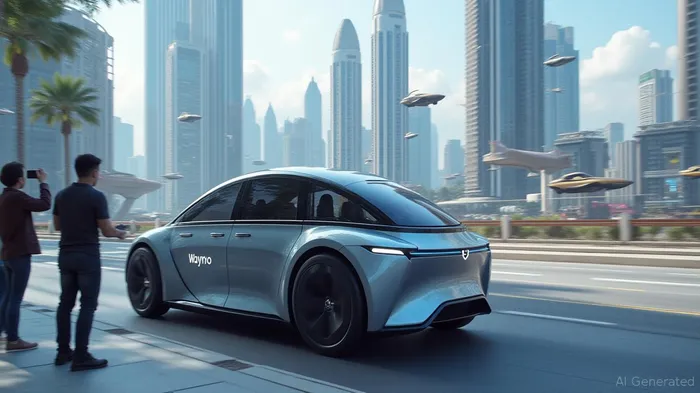
The real game-changer? Uber's AV (autonomous vehicle) push, which CEO Khosrowshahi calls “the single greatest opportunity ahead.” By Q1 2025, Uber's AV partnerships—like its Waymo collaboration in Austin—already delivered an annualized 1.5 million autonomous trips.
Why does this matter? AVs could slash Uber's largest cost: driver pay. With Waymo vehicles in Austin outperforming 99% of human drivers, the economics are undeniable. By 2026, AVs could cut ride costs by 30-40%, making Uber's platform unstoppable in urban markets.
Risks? Of Course—But Are They Priced In?
Don't be fooled by the recent 5% post-earnings drop. Bulls must acknowledge hurdles:
1. Currency headwinds: A 1.5% drag on growth from a strong dollar.
2. Competitor carnage: Lyft's (LYFT) struggles and DoorDash's (DASH) shift to food delivery leave gaps, but no one's perfect.
3. Regulatory landmines: Driver classification battles and AV regulations could slow momentum.
Yet the stock trades at just 12x forward EV/EBITDA, a discount to its $15B cash pile and growth prospects. Even with a potential recession, Uber's flexible model (no fleets, no warehouses) gives it resilience.
The Cramer Verdict: Buy With a 12-Month Horizon
Here's why to act:
- Margin expansion is real. The path to 10% EBITDA margins by 2026 is clear.
- AVs are a moonshot with legs. Partnerships with Waymo and WeRideWRD-- could dominate global markets.
- The stock is cheap. At $35/share (post-earnings dip), it's 20% below its 2024 high—despite stronger fundamentals.
Action Alert: Buy UBER at $35, set a $45 price target for 2026. Hold for 12+ months. The risks? Sure, but in a market starved for growth, Uber's pivot to profit and tech dominance makes it a must-own name.
This isn't just about rides—it's about owning the future of mobility. Buckle up, investors. The best is yet to come.

Stay ahead of the market.
Get curated U.S. market news, insights and key dates delivered to your inbox.




Comments
No comments yet