
Uber's Dallas Robotaxi Launch Boosts Hopes Sparks Skepticism Despite 72nd Ranked 1.18 Billion Volume
 Aime Summary
Market Snapshot
, , which ranked it 72nd in market activity. The stock’s performance contrasted with its pre-market rally, . The mixed trading data reflects investor uncertainty, balancing optimism over the autonomous vehicle initiative against broader market volatility and skepticism about the long-term viability of the technology.
Key Drivers
Uber’s recent partnership with Avride to launch robotaxi services in Dallas represents a pivotal expansion of its autonomous mobility strategy. The service, , . This marks Dallas as the fourth U.S. city where UberUBER-- has integrated autonomous vehicles into its platform, following collaborations with Waymo in Phoenix, Austin, and Atlanta. The initiative aligns with Uber’s broader vision to establish a hybrid network where autonomous vehicles and human drivers coexist, aiming to enhance efficiency, reduce costs, and position the company as a leader in the autonomous transportation sector.
The launch underscores Uber’s commitment to scaling autonomous technology, . , accelerating the deployment of driverless services. The partnership builds on prior collaborations, including sidewalk robot deliveries in Austin, and reflects Uber’s strategy to diversify its technological ecosystem. By leveraging Avride’s expertise in autonomous systems, Uber aims to refine its safety protocols and operational scalability, critical factors for investor confidence in a nascent industry.
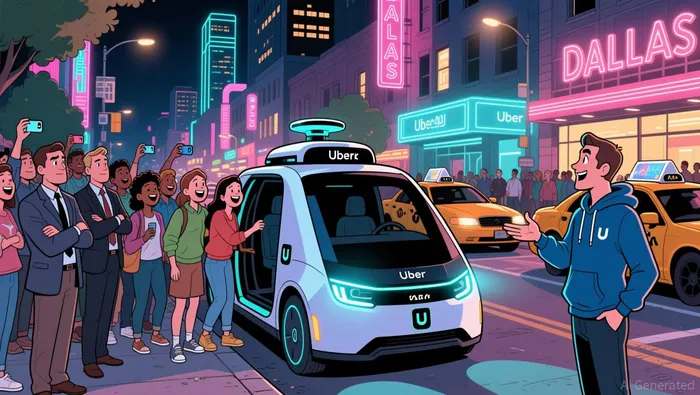
Technical advancements in the Dallas rollout further highlight Uber’s progress. Initially, robotaxis will operate with on-board specialists monitoring trips, with a planned transition to fully driverless operations. The vehicles, equipped with 13 cameras, five lidars, and four radars, emphasize safety—a core concern for both regulators and users. This phased approach allows Uber to gather data and address challenges incrementally, mitigating risks associated with full autonomy. The company’s emphasis on safety guidelines and rider choice—allowing users to opt for non-autonomous rides—also addresses public skepticism, a known barrier to adoption.
The Dallas expansion is part of Uber’s broader roadmap to deploy autonomous vehicles in at least 10 cities by late 2026, with pilot programs in Los Angeles (Volkswagen), Dubai (WeRide), and London (Wayve) already announced. This multi-partner strategy diversifies Uber’s technological risk while accelerating its market penetration. The company’s investment in hybrid networks, combining autonomous and human-driven services, is designed to optimize cost structures and improve user experience. For investors, this approach signals a balanced strategy that prioritizes gradual innovation over disruptive leaps, aligning with Uber’s recent shift from a cash-burning model to a cash-generating business.
Despite the positive developments, challenges remain. The robotaxi market is highly competitive, with rivals like Waymo and Baidu’s Apollo project also advancing their autonomous fleets. Additionally, regulatory hurdles and public acceptance could delay widespread adoption. However, Uber’s ability to secure partnerships with multiple technology providers and its track record in scaling global operations position it as a formidable player. The Dallas launch, , suggests that investors are beginning to reward the company’s strategic pivot toward autonomous mobility, even as broader market dynamics and execution risks remain critical factors to monitor.

Stay ahead of the market.
Get curated U.S. market news, insights and key dates delivered to your inbox.
AInvest
PRO
AInvest
PRO



Comments
No comments yet