
UAL Falls 1.24% as FAA Mandate Disruptions Push It to 210th in U.S. Trading Volume
 Aime Summary
Market Snapshot
On November 11, 2025, , , ranking 210th in daily trading activity among U.S. stocks. The decline followed operational challenges linked to an FAA mandate that disrupted flight schedules, prompting the company to cancel hundreds of flights over the weekend. Despite these disruptions, United maintained high customer satisfaction scores, according to a recent report highlighting its swift response to the situation. The stock’s performance contrasts with broader institutional optimism, as several funds recently increased stakes in the company, .
Key Drivers Behind the Decline
United Airlines’ recent operational turbulence, driven by an FAA mandate to reduce flights amid a government shutdown, directly impacted its stock price. CEO acknowledged the challenges but emphasized the company’s prioritization of safety and customer communication during the disruptions. The rapid flight cancellations and schedule adjustments, while necessary, likely contributed to short-term volatility as investors reacted to the operational strain. However, the company’s ability to maintain high customer satisfaction scores under these circumstances suggests resilience in its service model, a factor that could mitigate long-term concerns.
Financially, United AirlinesUAL-- remains in a robust position. , exceeding estimates, . With a Piotroski F-Score of 8, indicating strong financial health, . However, , which could weigh on investor sentiment during periods of operational stress. 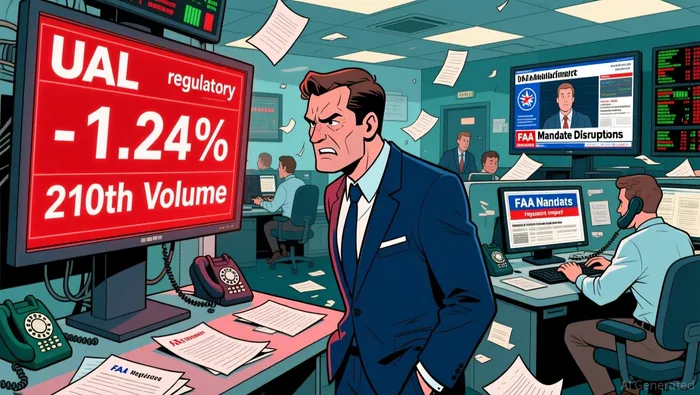
Institutional activity further complicates the stock’s trajectory. While funds like Aspen Wealth Strategies and Paradigm Asset Management added to their positions in Q2 2025, others, including Los Angeles Capital Management and Harvest Portfolios, , respectively. This mixed institutional response reflects cautious optimism about United’s long-term prospects despite short-term challenges. Conversely, notable insider selling—particularly from executives like EVP and Director —introduces uncertainty. .
Analyst sentiment remains largely positive, . . However, . United’s Q4 guidance, , provides a buffer against short-term volatility, .
The interplay of these factors—operational resilience, strong financials, mixed institutional activity, and analyst optimism—paints a nuanced picture for UALUAL--. While the company’s ability to navigate the FAA mandate without long-term reputational damage bodes well, . As United moves into Q4, .

Stay ahead of the market.
Get curated U.S. market news, insights and key dates delivered to your inbox.
AInvest
PRO
AInvest
PRO



Comments
No comments yet