
UAE's Strategic Bitcoin Holdings: A $700 Million Move to Institutionalize Crypto Reserves


 Aime Summary
The United Arab Emirates has emerged as a trailblazer in the institutionalization of BitcoinBTC-- as a sovereign reserve asset. By leveraging state-backed mining operations, the UAE has not only diversified its economic portfolio but also redefined how governments and institutional investors can engage with digital assets. This strategy, rooted in transparency, regulatory compliance, and long-term vision, offers a blueprint for de-risking exposure to crypto while capitalizing on its growth potential.
A New Paradigm: Sovereign Mining as a Strategic Reserve Tool
Unlike traditional methods of acquiring Bitcoin—such as market purchases or law enforcement seizures—the UAE has opted for a proactive, institutionalized approach. Through Citadel Mining, a public mining company majority-owned by the International Holding Company (IHC), the UAE has directly mined approximately 9,300 BTC since 2022. Of this, it retains at least 6,300 BTC, valued at $719.6 million as of August 2025. This represents a 31% increase in value since January 2025, outpacing traditional reserve assets in growth.
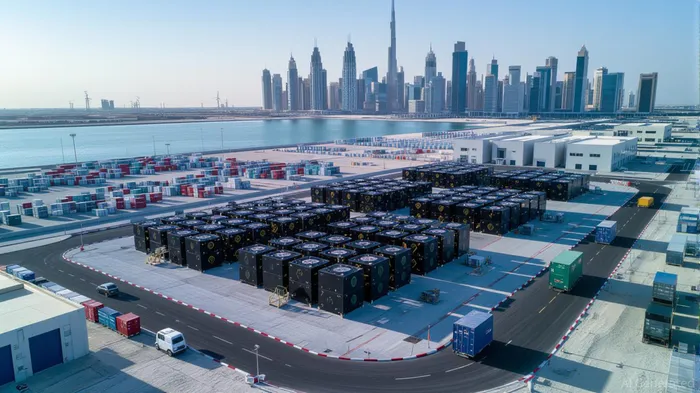
The UAE's mining operations are executed in collaboration with Phoenix Group, an UAE-listed company that co-built an 80,000-square-meter mining facility on Abu Dhabi's Al Reem Island. This facility, operationalized in six months in 2022, is a testament to the UAE's commitment to rapid infrastructure development and technological sovereignty. Blockchain analytics firm Arkham Intelligence has confirmed that the UAE's on-chain mining activity aligns with satellite imagery of the facility, providing real-time visibility into its holdings.
Why Sovereign Mining Matters for Institutional Investors
The UAE's approach addresses key risks that have historically deterred institutional adoption of Bitcoin: volatility, regulatory ambiguity, and lack of transparency. By mining Bitcoin directly, the UAE avoids market exposure during acquisition, locking in costs at the point of production. This contrasts with countries like the U.S. and U.K., which have acquired Bitcoin through purchases or seizures, often at higher prices and with less control over supply.
Moreover, the UAE's mining operations are underpinned by institutional legitimacy. Citadel Mining and Phoenix Group operate within a regulatory framework that removed the UAE from the FATF gray list in 2024, enhancing its credibility as a crypto-friendly jurisdiction. This regulatory clarity is critical for institutional investors, who require assurance that their exposure to digital assets is both legal and sustainable.
For investors, the UAE's strategy highlights the importance of aligning with entities that combine technological infrastructure, regulatory compliance, and long-term vision. The growth of the UAE's Bitcoin reserves—from $549.5 million to $719.6 million in eight months—demonstrates the compounding potential of sovereign mining. This model reduces counterparty risk and provides a hedge against fiat currency devaluation, particularly in a post-dollarization world.
The Broader Implications for Global Reserves
The UAE's success has elevated it to the fourth-largest government holder of Bitcoin, trailing only the U.S., China, and the U.K. This shift signals a broader trend: governments are increasingly viewing Bitcoin as a strategic reserve asset, akin to gold but with superior portability and divisibility. For institutional investors, this trend opens new avenues for diversification.
Consider the performance of Bitcoin relative to traditional assets. Over the past three years, Bitcoin has outperformed major equities and bonds in volatility-adjusted returns, particularly during periods of monetary policy uncertainty. The UAE's mining-based strategy allows it to capture these returns while mitigating the risks of speculative trading.
Investment Advice: Embrace Sovereign-Backed Crypto Infrastructure
For investors seeking exposure to the crypto asset class, the UAE's model offers a compelling framework. Rather than speculating on individual coins, consider allocating to infrastructure and entities that institutionalize crypto reserves. This includes:
1. Mining Infrastructure Providers: Companies like Phoenix Group, which enable sovereign mining operations.
2. Regulatory-Compliant Platforms: Firms that facilitate transparent, on-chain tracking of reserves, such as Arkham Intelligence.
3. Emerging Markets with Crypto-Friendly Policies: Jurisdictions that, like the UAE, are removing barriers to institutional adoption.
The UAE's $700 million move is not just a bet on Bitcoin—it's a redefinition of how sovereign wealth can be managed in the digital age. For institutional investors, the lesson is clear: the future of reserves lies in combining technological innovation with regulatory rigor. By aligning with this paradigm, investors can de-risk their crypto exposure while capturing the upside of a rapidly evolving asset class.
As the UAE's Bitcoin reserves continue to grow, one thing is certain: the era of institutional crypto adoption is here, and it is being led by those who mine, not merely those who trade.

Decoding blockchain innovations and market trends with clarity and precision.
Latest Articles
Stay ahead of the market.
Get curated U.S. market news, insights and key dates delivered to your inbox.


AInvest
PRO
AInvest
PRO



Comments
No comments yet