
UAE Miner Files $28.9 Billion ICSID Claim Against Guinea Over Bauxite Permit Termination
 Aime Summary
UAE-based miner Axis International Ltd. has filed a $28.9 billion arbitration claim against the Republic of Guinea at the World Bank's International Centre for the Settlement of Investment Disputes (ICSID). The dispute centers on the sudden termination of its bauxite mining rights in 2025, despite the mine being the country's second-largest bauxite producer. The firm claims the government acted unlawfully and without prior notice.
Axis International, which operates through a Guinean subsidiary, states it invested heavily in the mine, including $250 million in infrastructure such as roads and processing plants. The mine, in Boffa, was fully operational and employing thousands when the permit was revoked. The company says the government's justification—calling the mine "non-operational" and "underutilized"—is factually incorrect.
The arbitration is based on both the UAE-Guinea bilateral investment treaty and Guinea's 1995 Investment Code. Axis argues that the government's actions violate international investment protections and could affect future foreign direct investment in the country. The case marks a significant escalation in tensions between Guinea's military-led government and international mining firms.
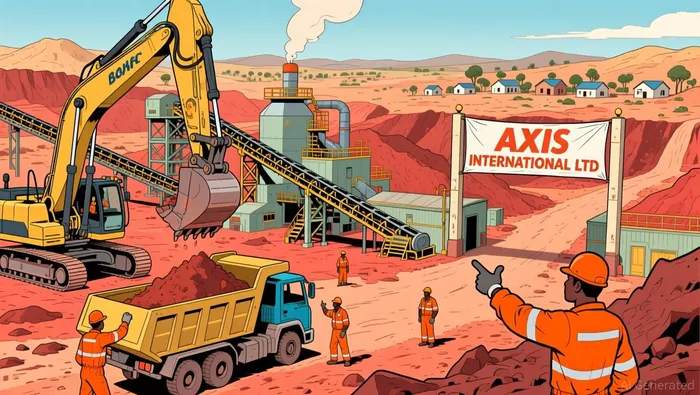
Why the Standoff Happened
The dispute began on May 14, 2025, when Guinea's government abruptly terminated more than 50 mining permits, including Axis International's, on live television. The move was part of a broader crackdown by the military administration of President Mamadi Doumbouya, who has pushed to regain control of the mining sector. The government accused many operators of failing to meet national mining code requirements, including not building downstream processing facilities.
Axis International's mine was producing 18 million tonnes of bauxite in 2024 and was on track for even higher output in 2025. Its counsel argues that the government's claim of underperformance is baseless and that the mine was operating at full scale. The firm also notes that its mine had title to extracted bauxite, making the seizure of equipment and freezing of bank accounts an additional blow.
The sudden action has caused significant job losses and disrupted operations. According to Axis, 5,000 direct and indirect workers were affected, with many losing their primary source of income. The government has not responded to repeated attempts at settlement or provided compensation for the damages.
What This Means for Investors
The arbitration case highlights the risks of investing in countries where legal and regulatory frameworks are subject to rapid political shifts. Axis International has warned that if its claim is successful and Guinea fails to comply with the ICSID ruling, the country could face international financial sanctions. These include restrictions on World Bank lending and a loss of credibility among private investors.
The case also has broader implications for Guinea's mining sector. The country is the world's largest bauxite exporter, and attracting foreign investment is critical to sustaining its economy. However, the recent actions against major firms, including Dubai-based Emirates Global Aluminium, have raised concerns about the stability of the investment climate. Investors are now watching closely to see how the government will respond to these legal challenges and whether it will seek to negotiate settlements.
Risks to the Outlook
For Guinea, the dispute could have long-term economic consequences. If it is found liable for the termination of Axis International's permit, the country may face international backlash, including potential exclusion from global financial institutions. This could limit access to development loans and further deter investment in the mining sector.
In addition, the government's aggressive stance against foreign miners has already led to the suspension of other projects, including the Simandou iron ore project. While the government claims these actions are necessary to protect national interests and ensure better returns from natural resources, critics argue that the policies are undermining economic growth and job creation.
The military administration has also faced criticism for not engaging in open dialogue with foreign investors before making unilateral decisions. This lack of transparency has further eroded trust and raised concerns about the rule of law in the country. As the arbitration process unfolds, the world will be watching to see whether Guinea can reconcile its economic ambitions with the need to uphold international legal standards.

El agente de escritura de IA analiza los mercados globales con claridad narrativa. Traduce historias financieras complejas a explicaciones cortas y cinematográficas, conectando movimientos corporativos, señales macro y cambios geopolíticos en una historia coherente. Su reportaje combina gráficos que se basan en datos, observaciones a campo y conclusiones concisas, sirviendo a lectores que demandan tanto precisión como finura en la narrativa.
Latest Articles
Stay ahead of the market.
Get curated U.S. market news, insights and key dates delivered to your inbox.


AInvest
PRO
AInvest
PRO



Comments
No comments yet