
UAE-Backed Separatist Group Seizes Oil-Producing South Yemen Provinces, Deepening Instability
 Aime Summary
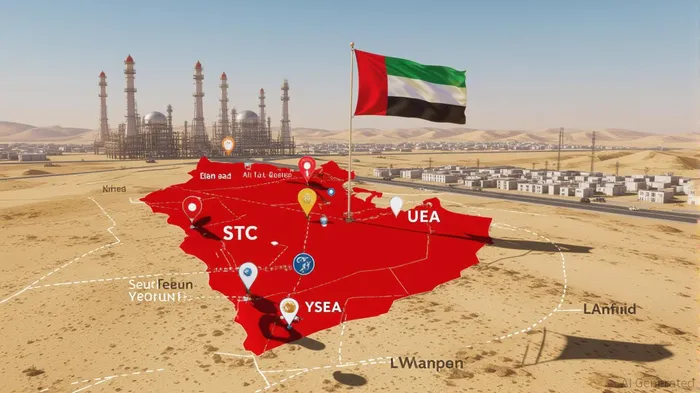
In a major escalation of Yemen’s protracted conflict, the Southern Transitional Council (STC), a separatist group supported by the United Arab Emirates (UAE), has seized control of all eight provinces of southern Yemen. The move, which includes the capture of key oil fields in Hadramaut and other governorates, has intensified regional tensions and further eroded the authority of Yemen’s internationally recognized government, the Presidential Leadership Council (PLC). The operation, known as “Operation Promising Future,” unfolded in early December 2025, with STC-aligned forces rapidly advancing through southern territory, often with little resistance from rival forces.
The STC’s takeover of Hadramaut and Al-Mahra governorates has drawn attention due to their strategic and economic significance. Hadramaut, for instance, is home to nearly 80 percent of Yemen’s oil reserves and vital infrastructure. The STC now holds sway over critical ports, coastal outposts, and energy assets, positioning itself as a de facto governing force in the south. The United Arab Emirates, whose support has been instrumental in the STC’s rise, now appears closer than ever to solidifying its influence over southern Yemen, creating a power base that aligns with its regional strategy of securing maritime routes and energy security.
The PLC, based in Saudi Arabia and formed in 2022, was designed to unify the disparate factions in Yemen under one governance structure. It includes southern and northern leaders, including representatives from the STC. However, the PLC has struggled to maintain cohesion and legitimacy, partly because it lacks control over the very territories it aims to govern. As the STC expands its reach, the PLC is increasingly marginalized, leaving it in a precarious position between a secessionist south and a Houthi-controlled north.
The STC’s ambitions are rooted in historical grievances. Since Yemen’s unification in 1990, many in the south have felt excluded from national decision-making. The 1994 civil war, which resulted in a northern victory and the marginalization of southern officials, further deepened these divisions. The STC, formed in 2017, emerged from the al-Hirak al-Janoubi (Southern Movement), a broad coalition of reformists and secessionists seeking a return to the autonomy the south once had under the People’s Democratic Republic of Yemen, which existed from 1967 to 1990.
While the STC officially joined the PLC in 2022, its actions have increasingly pointed toward a long-term goal of independence for a “State of South Arabia.” The raising of the old South Yemen flag in key cities, the capture of government buildings, and the establishment of a distinct administrative presence all signal a shift from a political coalition to a de facto secessionist administration.
The STC’s military advances, supported by UAE-provided weapons and logistics, have allowed it to outmaneuver regional rivals. The National Shield Forces, backed by Saudi Arabia, have failed to mount a sustained counteroffensive. Analysts suggest that Saudi Arabia, now left defending a faltering PLC, has little appetite for renewed conflict in the south, especially as it pursues a diplomatic solution with the Houthis in the north.
With control of southern Yemen firmly in the hands of the STC and its allies, the prospect of a formal split appears more likely. This could lead to a lasting division of the country into two or more de facto states, with the PLC’s influence reduced to a shrinking administrative role. The consequences for Yemen’s political and economic stability could be profound, with the south gaining leverage over regional trade routes and energy assets, while the north remains under Houthi control, entrenching a status quo that may be difficult to reverse.

Stay ahead of the market.
Get curated U.S. market news, insights and key dates delivered to your inbox.


AInvest
PRO
AInvest
PRO



Comments
No comments yet