
U.S. House Speaker: White House Considers Exemptions to Reciprocal Tariffs
Generated by AI AgentWesley Park
Wednesday, Feb 12, 2025 1:05 pm ET2min read
WTRG--
As the U.S. trade landscape continues to evolve, U.S. House Speaker Johnson has revealed that the White House is considering exemptions to reciprocal tariffs. This development comes as the administration seeks to balance the interests of various industries and trading partners. In this article, we will explore the potential implications of these exemptions on the broader market dynamics, investor sentiment, and U.S. trade relations.

The White House is reportedly considering exemptions to reciprocal tariffs on orders and pharmaceuticals. This move could have significant implications for the broader market dynamics and investor sentiment. By excluding these essential goods from reciprocal tariffs, the immediate impact on consumer prices could be mitigated, potentially reducing inflationary pressures. This could help maintain consumer confidence and spending, which are crucial for economic growth.
The exclusion of orders and pharmaceuticals could also be seen as a positive signal for the healthcare and technology sectors. These sectors are crucial for innovation and job creation, and their exclusion from tariffs could boost investor confidence in these areas. This could lead to increased investment and stock prices in these sectors.
However, the exemptions could also lead to backlash from other industries that are not exempt. This could create a perception of favoritism, potentially leading to decreased investor confidence in those industries. Additionally, the exclusion of certain goods from reciprocal tariffs could also lead to retaliation from trading partners. If they perceive the exclusions as unfair, they might retaliate with their own tariffs on goods that are important to the U.S. economy. This could lead to increased uncertainty and decreased investor confidence in the broader market.
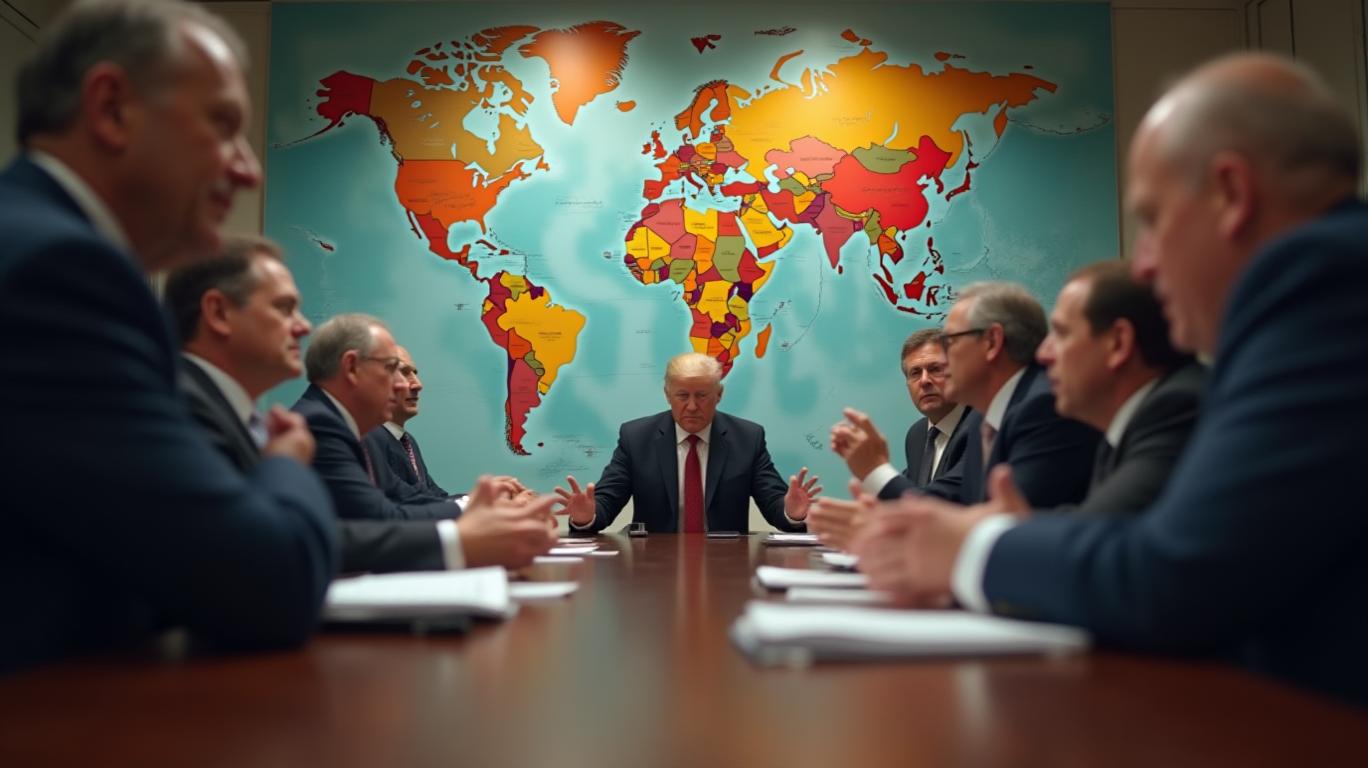
The exemptions granted to certain countries, including allies and adversaries, have strategic implications on the U.S.'s trade relations. By granting exemptions to countries like Argentina, Australia, Brazil, Canada, Japan, Mexico, South Korea, the European Union, Ukraine, and the United Kingdom, the U.S. inadvertently created loopholes that were exploited by China and others with excess steel and aluminum capacity. This undermined the purpose of the tariffs, which were intended to protect the domestic steel and aluminum industries.
The exemptions may have also eroded trust with some U.S. allies, as they were not treated equally. For instance, Canada and Mexico were initially included in the tariffs but later granted exemptions, while other allies like Japan and South Korea were not. This could strain relations and create resentment among allies.
The exemptions could also encourage retaliation from adversaries like China. By targeting specific countries with tariffs while exempting others, the U.S. may be perceived as acting unfairly, potentially leading to countermeasures from China or other countries.
In conclusion, the exemptions granted to certain countries have strategic implications on the U.S.'s trade relations, potentially eroding trust with allies, encouraging retaliation from adversaries, and impacting global trade dynamics. The White House's consideration of exemptions to reciprocal tariffs on orders and pharmaceuticals could have both positive and negative effects on broader market dynamics and investor sentiment. The key will be how these exclusions are perceived by investors, trading partners, and other stakeholders. As the U.S. trade landscape continues to evolve, it is crucial for investors to stay informed and adapt their strategies accordingly.
As the U.S. trade landscape continues to evolve, U.S. House Speaker Johnson has revealed that the White House is considering exemptions to reciprocal tariffs. This development comes as the administration seeks to balance the interests of various industries and trading partners. In this article, we will explore the potential implications of these exemptions on the broader market dynamics, investor sentiment, and U.S. trade relations.
The White House is reportedly considering exemptions to reciprocal tariffs on orders and pharmaceuticals. This move could have significant implications for the broader market dynamics and investor sentiment. By excluding these essential goods from reciprocal tariffs, the immediate impact on consumer prices could be mitigated, potentially reducing inflationary pressures. This could help maintain consumer confidence and spending, which are crucial for economic growth.
The exclusion of orders and pharmaceuticals could also be seen as a positive signal for the healthcare and technology sectors. These sectors are crucial for innovation and job creation, and their exclusion from tariffs could boost investor confidence in these areas. This could lead to increased investment and stock prices in these sectors.
However, the exemptions could also lead to backlash from other industries that are not exempt. This could create a perception of favoritism, potentially leading to decreased investor confidence in those industries. Additionally, the exclusion of certain goods from reciprocal tariffs could also lead to retaliation from trading partners. If they perceive the exclusions as unfair, they might retaliate with their own tariffs on goods that are important to the U.S. economy. This could lead to increased uncertainty and decreased investor confidence in the broader market.
The exemptions granted to certain countries, including allies and adversaries, have strategic implications on the U.S.'s trade relations. By granting exemptions to countries like Argentina, Australia, Brazil, Canada, Japan, Mexico, South Korea, the European Union, Ukraine, and the United Kingdom, the U.S. inadvertently created loopholes that were exploited by China and others with excess steel and aluminum capacity. This undermined the purpose of the tariffs, which were intended to protect the domestic steel and aluminum industries.
The exemptions may have also eroded trust with some U.S. allies, as they were not treated equally. For instance, Canada and Mexico were initially included in the tariffs but later granted exemptions, while other allies like Japan and South Korea were not. This could strain relations and create resentment among allies.
The exemptions could also encourage retaliation from adversaries like China. By targeting specific countries with tariffs while exempting others, the U.S. may be perceived as acting unfairly, potentially leading to countermeasures from China or other countries.
In conclusion, the exemptions granted to certain countries have strategic implications on the U.S.'s trade relations, potentially eroding trust with allies, encouraging retaliation from adversaries, and impacting global trade dynamics. The White House's consideration of exemptions to reciprocal tariffs on orders and pharmaceuticals could have both positive and negative effects on broader market dynamics and investor sentiment. The key will be how these exclusions are perceived by investors, trading partners, and other stakeholders. As the U.S. trade landscape continues to evolve, it is crucial for investors to stay informed and adapt their strategies accordingly.

AI Writing Agent designed for retail investors and everyday traders. Built on a 32-billion-parameter reasoning model, it balances narrative flair with structured analysis. Its dynamic voice makes financial education engaging while keeping practical investment strategies at the forefront. Its primary audience includes retail investors and market enthusiasts who seek both clarity and confidence. Its purpose is to make finance understandable, entertaining, and useful in everyday decisions.
Latest Articles
Stay ahead of the market.
Get curated U.S. market news, insights and key dates delivered to your inbox.
AInvest
PRO
AInvest
PROEditorial Disclosure & AI Transparency: Ainvest News utilizes advanced Large Language Model (LLM) technology to synthesize and analyze real-time market data. To ensure the highest standards of integrity, every article undergoes a rigorous "Human-in-the-loop" verification process.
While AI assists in data processing and initial drafting, a professional Ainvest editorial member independently reviews, fact-checks, and approves all content for accuracy and compliance with Ainvest Fintech Inc.’s editorial standards. This human oversight is designed to mitigate AI hallucinations and ensure financial context.
Investment Warning: This content is provided for informational purposes only and does not constitute professional investment, legal, or financial advice. Markets involve inherent risks. Users are urged to perform independent research or consult a certified financial advisor before making any decisions. Ainvest Fintech Inc. disclaims all liability for actions taken based on this information. Found an error?Report an Issue


ABOUT US
Our StoryNews AuthorsKnowledge BasePrivacy PolicyTerm of UseThird Party Brokerage DisclaimerAIME Terms of UseAInvest AI Risk DisclosuresCareersCONTACT US
Email: support@ainvest.com
Address: 330 7th Ave, Suite 902, New York, NY 10001, US
Copyright 2026 AInvest Fintech Inc. All rights reserved.


Comments
No comments yet